Showing posts sorted by date for query fast food places. Sort by relevance Show all posts

Saturday, February 17, 2018

Twelve weird things that surprise Spaniards about the UK

Read article : Twelve weird things that surprise Spaniards about the UK

The UK is one of the most popular destinations for Spaniards who move abroad, but there are some things about their new home that are just impossible to get used to...

Even before the subject of Brexit comes up, the United Kingdom and its people can be a perplexing place for visitors.  For the1.6 million Spaniards that visited British shores last year, and the 130,000 officially registered as residents there, some things of the customs are just downright weird.  

Binge drinking


Photo of poster: Alper Cugun/Flickr 

Instead of drinking alcohol with a meal and over the course of an evening, some young Brits choose booze as their main course and set out early with the intention of getting as drunk as fast as possible, stopping only to get takeaway food on the way home.

Punctuality


Photo: Karlis Dambrans/Flickr 

Be late once and you may be forgiven; be late twice and you'll get a reputation. Spaniards find it hard to believe how seriously Brits take their punctuality."What? I'm only 30 minutes late," a Spaniard may utter in disbelief when addressing his disapproving British friends.

Personal space


Brits prefer a handshake to a kiss when it comes to greeting strangers. Photo: 드림포유/Flickr 

Any Spaniard who's been introduced to someone in the UK has probably picked up on Brits' reluctance to greet with kisses. What's more, physical contact is a big no-no in most social situations, leading Spanish expats to be labelled as touchy-feely if they invade a Brit's sacred personal space with an intrusive pat on the back. Among strangers, a firm handshake is about as touchy-feely as Brits like to get. 

Inappropriate winter dress


Photo: Chewthefat/Flickr 

Miniskirts and skimpy tops when it's minus five degrees outside? Spaniards still hit the town in winter but they wrap up warm without fail. British youth's decision to brave it with the help of a much needed "beer coat" baffles many Spaniards in the UK.

Excessive politeness


Photo: Moonez/Flickr 

Equivalents for 'please', ' thanks' and 'sorry' are common in Spain too but in Britain they are repeated and inserted into conversations much more frequently, often to the point where it can seem absurd to Spanish visitors.

Bad coffee


Photo: torbakhopper/Flickr 
 

Spaniards are often shocked by the quality and quantity of coffee served in the UK. Massive mugs of watery, tasteless liquid are not what you'd call their "cup of tea".

Fake tan


Photo: YouTube

Britain's obsession with being tanned is quite literally beyond the pale for many Spaniards. Fake tan and excessive make-up seem odd and somewhat tacky for Spanish expats.

Bathroom carpets


Just no. Photo: Rick/Flickr 

Carpets help keep British homes warm in winter but can surprise Spanish visitors who are not only more used to wooden floors or tiles, but find bathroom carpets very unhygienic.

What's with the separate hot and cold taps?


Photo:Eltpics/Flickr

And while we are on the subject of bathrooms, Spaniards are left perplexed at the number of sinks that still have separate hot and cold taps, leaving visitors faced with the choice of washing their hands in either a freezing cold or scolding hot flow. While there are historic reasons for this (something to do with the water in houses with ancient plumbing systems coming from different tanks and therefore the hot being unsafe for drinking), one Spaniard suggested an easy fix with a plastic bottle and two elastic bands:

Bathroom electricity

Yes, we are still in the bathroom with this one. Spaniards living in the UK are surprised to learn that they have been toying with danger all their lives, just by plugging in their hairdryers / straighteners over the sink and conveniently using the bathroom mirror to style their hair. British health and safety rules means no electric sockets should be placed within three metres of a water source, so you'll rarely find an electricty outlet bar the low voltage one specifically designed for electric razors.

Takeaway food


Photo: elhombreroto/Flickr 

Whether its the abundance of fast food joints or the often atrocious quality of the grub served, Spaniards often yearn for a fresh, wholesome meal when living in Britain. What's often most surprising to them is that curry has become the national dish, rather than fish and chips or roast beef and Yorkshire pudding.

Respecting queues


Photo: Philip Evans/Flickr 
 

Rather than being surprised by how Brits queue in an orderly fashion for almost everything, Spaniards are usually more surprised by how riled they can become if someone dares to skip a few places.

So what would you add? What else did you find surprising on a visit to Britain? Leave your comment below or join the discussion on The Local Spain's Facebook page. 

Sunday, February 11, 2018

When we were there for the wedding, as many... - Review of Ayres Hotel Seal Beach

Read article : When we were there for the wedding, as many... - Review of Ayres Hotel Seal Beach

The Ayres Seal Beach is an elegant hotel at a family price. An internet discount made my cost far less than any other comparable, surrounding area hotels that still didn't live up to the quality of Ayres Seal Beach. I have very high standards for customer service and cleanliness. The Ayres exceeded those standards. I appreciated no charge for using the parking lot that so many other like-hotels charge. The lobby is beautiful and comfortable. Check-in and check-out are very quickly handled by the friendly and helpful staff.

The location is smack in the center of 3 freeways that will connect you to many popular areas of So Cal. Having a full breakfast included in the price can save a family money. The only thing I would suggest is for the chef to alternate each day the bacon and sausage rather than offering the same meat for a whole week. I only had time once to enjoy the evening snacks. Bottled water should be added in with the other drinks as well.

Being there for 10 days/9 nights was like a home away from home. I appreciated the laundry room down the hall from my room since I had many clothes to wash. This immaculate room also includes the ice and soda machine. Housekeeping does an excellent job keeping the entire hotel clean, sanitary, and looking brand new. I think they even change out the comfy quilt before new customers check in. It appalls me how many hotels avoid cleaning blankets, quilts, bed coverings until they are really disgusting. I won't go into that....

I was working 2 different laptops at the comfortable desk in my room and did not have a problem with Ethernet or Wi-Fi. It was nice to have a good size refrigerator, microwave, and coffee maker.

The marble & tile bathroom is huge. It privately separates the shower/tub and toilet from the sink area. Again, it's all very clean with lots of fluffy towels changed daily if you so prefer. The sitting area includes a sofa, coffee table, and small marble-top table with two chairs where you can eat or even do more business tasks. The flat screen TV is nice and located inside a huge Armoire that contains plenty of drawers for all your clothing. The mirrored closet is also roomy with lots of hangers and iron/board.

I didn't have a chance to use the outdoor pool and spa but they looked refreshing. The covered, outdoor courtyard is very pleasant with lots of sturdy tables and chairs. Many chose to eat their breakfast here rather than inside. There's even a working outdoor fireplace to add to the ambiance.

There are plenty of banks/ATMs, shopping centers, gas stations, churches, restaurants, and fast food places, some located within walking distance and the rest all along both sides of Seal Beach Blvd./Los Alamitos Blvd. Unlike many other 3-story hotels, this one has two elevators. Yes, I feel spoiled from my stay and miss the housekeeping now that I'm back home. :-)

If I could suggest just one main thing in the future, it would be for the Ayres Seal Beach to offer Concierge service. I had lots of luggage for my long stay and it was not easy putting it all onto the cart and then trying to push it back inside to fit into the elevator and down to my room. I also had a good distance to take the cart outside as there is not a designated zone for loading and unloading and I certainly wasn't going to park in one of the nearby handicap spaces.

As much as I also enjoy the DoubleTree Hotel Spectrum in Irvine, Ca., the Ayres Seal Beach far surpasses the good things they also have to offer (except for the cookie!!).

Without hesitation, I highly recommend the Ayres Hotel Seal Beach and look forward to one day cashing in my Stash Points (once they build up) for a "free" room. Thank you, Ayres Hotel Seal Beach for having a large, bedroom window that fully opens for that fresh, cool, beach air! It kept me from using the wall A/C most of the time.

Monday, October 9, 2017

Driving in the U.S.'s Only All-Female Endurance Road Race

Read article : Driving in the U.S.'s Only All-Female Endurance Road Race

It was 4 p.m. and 90 degrees when we finally decided to give up. For hours, Jaclyn and I had been inching our Jeep Rubicon along a dusty unmarked road in the Mojave National Preserve, eventually finding ourselves trapped in a high-walled canyon. We had no idea how far off course we were: Two miles? Twenty? We hadn't seen another human all afternoon. Soon it would be dusk, then nightfall.

We were lost. Not Can you pull up Google Maps?lost, or Do we still have a road atlas somewhere?lost. No, we were Are we in California or Nevada?lost; Thank god we have emergency supplieslost; This landscape would be gorgeous if it weren't so apocalyptic lost. The Jeep's GPS system had been disabled, and our phones and laptops were turned off and sealed in envelopes. We had a collection of specialized large-scale topographical maps, but to figure out where you are on a topo map (a relief map that shows a region's geographical features), you have to know how to read it. I was supposed to be the better topo reader in our pair, and I could barely pick out the most prominent landmarks. If coyotes or unfriendly strangers appeared, we'd be completely, royally screwed.

Advertisement - Continue Reading Below

Is that the road?

Nicole Dreon

We sat in the Jeep with the air conditioning on high, eating sugary energy chews and gulping down coconut water.

We'd signed up for this. Willingly. For fun.


That was day four of the inaugural Rebelle Rally, a female-only navigational road rally—the first of its kind. For seven days last fall, 72 women—36 teams of two—off-roaded over 1250 miles, through two national parks and five Bureau of Land Management areas (government-managed public lands). We started in Nevada's Lake Tahoe and ended in Glamis, California; in between, we rambled down dirt roads, clambered over dry riverbeds and mountain passes, and coasted over terrifyingly high sand dunes.

This all called for a set of navigation skills no one uses anymore—unless you're a sailor or a fifth grader prepping for a social studies test.

Throughout the course, 140 checkpoints were hidden behind broken-down mine shacks, just beyond hairpin turns, deep inside mountain crevices, and sometimes, blessedly, directly on the route. Large green flags marked the easiest-to-find checkpoints; smaller blue flags identified intermediate ones. Black checkpoints, the most difficult to find, weren't marked at all. Each was worth a certain number of points. The goal: Rack up as many as possible.

Every morning we were given a list of checkpoints to find that day (one day there'd be 12; another day, 22), defined solely by their latitudinal and longitudinal coordinates. We had to plot them on our topo maps, then use geometry to strategize how to get from one to the next. This all called for a set of navigation skills no one uses anymore—unless you're a sailor or a fifth grader prepping for a social studies test. We weren't allowed phones, GPS, or outside help. Kind of like an adult female Eagle Scouts on steroids, or Survivor meets The Amazing Race in the American West.

One of our topo maps; early morning plotting at camp.

Whitney Joiner; Nicole Dreon

The automotive world is notoriously male-dominated, making a women-only motorsports event revolutionary. (There are a few all-women rallies and races scattered across the globe, out of hundreds of annual motorsports events overall; the Rebelle is the only one in the U.S.) "I've been in races where I was the only woman driving," the Rebelle's founder, 50-year-old Emily Miller, told me. "I've had people recommend I wear a tight pink race suit."

Miller grew up between Arkansas and Colorado, skiing, biking, and reading her father's car magazines. In her 30s, she launched a sports marketing firm and started to race cars and teach at racing and off-roading schools. When creating the Rebelle—which took three years of planning, 40 Bureau of Land Management permits, and 60 staffers to pull off—Miller combined her favorite aspects of the rallies and races she'd participated in over the years.

Advertisement - Continue Reading Below

She was determined to create an event where women could test their mettle. "Most automotive events are designed from a man's perspective," Miller said, meaning that they're usually speed races, where the goal is to get from Point A to B as fast as possible. But the Rebelle isn't a race, she reminded us daily. It demanded endurance, accurate navigation, and communication. "Women excel in endurance events," she explained. "Women think about the rules and the challenge. They want to win, but they're not there to prove how fast they can go."

My team's combined experience was…limited. "Winning" never crossed our minds; we just hoped to finish without killing the Jeep—or one another. My teammate, Jaclyn Trop, is an auto reporter who reviews luxury cars, but we both quickly realized that her professional expertise didn't translate into real-world driving and car maintenance knowledge. While she knows her way around a racetrack, she didn't know how to read a map.

Naïve enthusiasm seemed like a perfectly legitimate qualification to enter a highly-detailed endurance event requiring a complex Venn diagram of skills I didn't possess.

Not that I know anything about cars. I can sort of drive a stick shift, and sort of change a tire. I'd signed up for the Rebelle Rally because tooling around isolated Southwestern back roads is one of my all-time favorite activities, something I discovered during the six years I lived in Far West Texas. (Aimless desert driving is terrible for the environment, but good for the soul.)

At first, my lack of experience didn't faze me. Naïve enthusiasm seemed like a perfectly legitimate qualification to enter a highly-detailed endurance event requiring a complex Venn diagram of skills I didn't possess. This blind optimism buoyed me for months: the Rebelle was just a crazy-sounding adventure, far off in the distance, something to think about later.

But six weeks before the rally, during a training weekend with a handful of other competitors in California's Borrego Springs, my optimism cratered into a black hole of fear and self-loathing. Surrounded by women far more experienced than me, all of whom could probably MacGuyver a tire blowout with a piece of gum, my lack of preparation smacked me in the face. Latitude and longitude felt like a maddening mathematical language I'd never master, and I didn't believe that Jaclyn or I would have the stamina and resilience to handle potential crises. (I live in Brooklyn! I don't even have a car!) Instead of bonding with the other participants, I disappeared into my tent, clutching my iPhone for comfort. Miller stopped by: "You okay?" she called from outside my tent. "Yeah," I squeaked. "Just tired." This is going to be a disaster, I told myself. You didn't think this through.

Mood for most of the week.

Rebelle Rally

I was certain the rally would bring out my worst self. I'd be a dehydrated raw bundle of neuroses, throwing my helmet in the dust and indulging in nonstop Carrie Mathison-like angry-crying. I spent the month before the rally nursing a never-ending migraine, holing up at home ruminating on my certain failure, and having bouts of ill-advised anxiety sex with a highly inappropriate partner I thought I'd successfully sworn off months before.

"It's only overwhelming because you've never done it before," my mother, always a voice of reason, said. "Once you're there, you'll get in the swing of it. You'll be fine. You always are."


The rally began on a Saturday morning in early October, but Jaclyn and I arrived in Lake Tahoe—bright and sunny and permeated with the smell of pine—on Tuesday night to prepare. Buying our required provisions took an entire day: We'd need a five-gallon jug of water, emergency blankets, a fire extinguisher, first aid kits, food to last at least five days (in case something went terribly awry), a laundry list of auto supplies, and helmets—required for safety's sake whenever we were on the Rebelle course—that squished our faces into chipmunk-cheek blobs. Thursday was "technical inspection," during which rally staffers ensured each vehicle was properly equipped. On Friday afternoon, all 36 teams caravanned out to our first base camp, a sprawling settlement a few hours east of Lake Tahoe, with a vehicle impound, a maintenance tent and gas refill area, a food truck manned by a Michelin-starred chef, and the main gathering space—a shelter filled with tables and butterfly chairs, decorated with gauzy curtains and wildflowers.

Advertisement - Continue Reading Below

Miller briefs competitors; a green checkpoint on the course; Rebelle cars on a dry lake bed in California.

Paolo Baraldi; Whitney Joiner; Nicole Dreon

I woke on Saturday at 4:30 a.m. and launched into what would become my daily routine: wiggling into my Rebelle uniform (sports bra, tank top, long-sleeved shirt, hiking pants, lace-up canvas boots), rushing to the portable bathrooms to brush my teeth and splash water on my face; running back to pack up camp. While I dragged our gear down to the Jeep, Jaclyn picked up the day's list of coordinates and started plotting. I joined her under the main tent, staring helplessly down at the table where she'd spread the coordinate list, colored pencils, and distance-measuring rulers.

We experienced the singular thrill of spotting a green checkpoint: a mix of relief, pride, and elation that never got old.

Jaclyn understood latitude and longitude in a way I didn't, so it was obvious that she'd be the navigator, while I'd drive. We crept up to the starting line, my heart beating wildly from nerves, and waited to be let loose into the desert. (To discourage blindly following other competitors, teams were given different sets of checkpoints, and cars set off at two-minute intervals.)

"Turn left," Jaclyn said once we set off. "Our first checkpoint should be in 13 miles." A few minutes later, we experienced the singular thrill of spotting a green checkpoint for the first time: a mix of relief, pride, and elation that never got old.

Jaclyn in a Nevada ghost town, planning our next move.

Nicole Dreon

Later that afternoon, after meandering through a maze of dirt roads, we turned into a wide canyon, shot through with dry washes (empty creek beds that can easily be mistaken for trails or roads). "Should we be in four-wheel drive?" Jaclyn asked. Four-wheel drive gives you extra traction; it's used for rougher, rockier terrain. I felt silly for still being in 2WD—the everyday, highway-driving gear—and jerked the gear shaft up. We slowly rambled through the canyon down to a lake, where we found our final green checkpoint of the day.

We hit our tracker—sending our coordinates to staff at base camp, who monitored each vehicle, just blinking blips, on a GPS system—then realized that we'd fallen behind the other competitors. We could only see one team, off in the distance in a huge pickup. We watched as they scaled an incline effortlessly, as if filming a car commercial.

"If they can do it, so can we," I said, hitting the accelerator and heading up the incline. Within 30 seconds, our tires started to spin. Day one, and we were already stuck. We grabbed shovels from the back of the Jeep and started clearing dirt from underneath the tires. Nearby, a rally staffer pulled up in a pickup.

Advertisement - Continue Reading Below

"Are you in four-wheel drive?" he asked.

"Of course," I answered.

"You sure?" he said. "I'm not supposed to help you, but…you might want to check."

We climbed back inside the Jeep: the gear shift looked likeit was in the right place. Jaclyn pulled the manual out of the glove compartment. "It says we should see a 4WD light on the dashboard. Do you see it?"

"Oh," I said. "No." Hours spent crawling over boulders and sharp rocks, and we'd been in the wrong gear the whole time, an embarrassingly amateur mistake. We pledged not to tell anyone back at base camp.

Day One: stuck. (I promise this was steep IRL.)

Paolo Baraldi


By day four, we'd improved dramatically. We knew when we were and weren't in four-wheel drive. We knew that our odometer was off, making precise calculations nearly impossible—a significant drawback. And we knew that spotting a particular road on our topo map didn't mean we could match it to one on the ground. What looked like a road on the map could be a dry wash; what looked like a dry wash on the ground could be a road. We constantly scouted the horizon for dust clouds, knowing they'd be from Rebelle cars, a sign that we were on the right track.

Then came our accidental vision quest in the Mojave, when we'd drifted so far off-course that we hadn't seen a friendly dust cloud for hours.

After mainlining the energy chews, we got out of the Jeep to scout. Jaclyn jumped on the hood to survey our surroundings; I took off by foot. A railroad crossed in front of us, with a steep drop-off underneath. We were definitely stuck.

Then I saw it: a campsite, off in the distance, across a weedy wash. Trucks! People! A dog! Life!

I found Mojave River Campgroundin miniscule print in the lower left-hand corner of the map. So that's where we were. "If we can get to that campground, we could find our way to the highway," I said. It wasn't our designated route back to base camp, but the sun was dropping by the minute.

The weedy wash was actually the Mojave River, according to the map. It wasn't a river so much as a morass of swampy vegetation with a lone, murky crossing. Back home in Brooklyn, in my haste to somewhat prepare, I'd watched a YouTube video of a Jeep wading through water. I knew it was possible; I just didn't know if I could do it. "No way," Jaclyn said. "We're not going to drown here."

"What if it's easier than it looks?" I argued.

Jaclyn thought for a minute. "What would Emily do?" she asked. Miller is a 5'1" blond powerhouse who gave decidedly non-cheesy pep talks every night that sometimes brought me to tears. I'd never met anyone who inspired such devotion and admiration, who made you want to succeed just to tell her you had. "If this was easy, everyone would do it," she told us repeatedly, and we felt like intrepid, ground-breaking explorers.

Advertisement - Continue Reading Below

Miller encouraged calculated risks. "Emily would try it," I said. "But I think she'd check the depth first."

I stripped off my boots, socks, and pants. In just a tank top and underwear, I splashed into the crossing, mud squishing beneath my toes. The water quickly came up past my knees. I pictured the Jeep filling up with contaminated river sludge while Jaclyn and I popped Klonopin and prayed that the satellite phone actually worked.

"If this was easy, everyone would do it," the Rebelle's founder told us repeatedly, and we felt like intrepid, ground-breaking explorers.

Okay, so we weren't going to ford the mighty Mojave. But at least now we knew where we were. (Another favorite Emily saying: "You're never as lost as you think you are.") From the map, the highway back to base camp was vaguely northeast; if we headed that direction, we'd surely find a way onto the road.

Two interminable hours later, we saw what we'd been looking for all afternoon: the day's final green flag, and behind it, the entrance to the highway. Our euphoric shouts were especially hard-earned this time. As we approached the highway, a car pulled up alongside us. "Thank God!" Shelley, a rally staffer, yelled out from the passenger seat of a broken-down '80s Jeep. "We found you!" Apparently, the staff back at base camp monitoring our blinking blip had become concerned: Where are they going?

"We thought we'd have to rescue you," her husband, Big Rich, called from the driver's seat. "But look: You rescued yourselves."

On the face of it, the day was a complete throwaway. Zero points. But we'd found our way out of the canyon, completely on our own.


My month-long pre-rally panic, while overblown and unsubstantiated in retrospect, served a purpose: It burned out all my anxiety, leaving none for the actual rally. The meltdowns never came. I never threw my helmet in frustration. I didn't angry-cry nonstop. Jaclyn and I each had one brief tearful moment after making a dumb mistake—hers on day five; mine on day six—but we immediately pulled it together.

Rebelle Rally

As usual, my mother was right. Once I was forced to practice my fledgling skills, my fear melted away, replaced by an unabashed excitement that at times bordered on euphoria. Every moment brought something new: a stunning vista, a mountain pass, an abandoned ghost town, an expansive mesa. The entire course was on government property; these same roads were open to anyone. But they're rarely used, and it felt like we were seeing an America many never do, one hidden in plain sight.

I started to trust the Jeep more, and Jaclyn, and myself. One day we were caravanning along a high ridge outside of Joshua Tree, with steep drop-offs and hairpin turns. Wait! I thought, halfway through. I should be scared. If I turn the steering wheel just slightly, we'll sail off.I felt my stomach drop and panic rise up in my chest. But just as quickly, I reeled it back in. Don't let fear take over, I coached myself. You can stop it."You're already way more confident," Jaclyn noted as we dipped and swerved. "If we'd been on this road the first day, you would've freaked out the whole time. Now you're just trucking along."

Advertisement - Continue Reading Below

We were too clueless to be embarrassed about how little we knew.

I'd been so intimidated by the other competitors' credentials before the rally began, but now our lack of experience felt almost freeing. The rally was so out of our league that I was constantly astonished we were doing it at all. How we looked to anyone else didn't matter. We'd ask other Rebelles basic car-maintenance questions, knowing our queries probably sounded elementary. (Only one woman looked at us in disdain after we'd asked for her help installing high neon flags required for dune driving: "You actually don't know how to do this?" she spat. "Why are you even here?") We were too clueless to be embarrassed about how little we knew.

Every night, when the scores for the day were posted, we'd land in the bottom four. But we thought we were champions.

All week, the experienced competitors were itching for the final day, when we'd be competing in sand dunes—notoriously difficult to navigate. We woke up that last morning in California's Imperial Sand Dunes (where Return of the Jedi was partially filmed) to a blazing sun, a high in the 90s, and a range of shimmering white sand mountains towering over base camp.

I didn't feel particularly ambitious about the dunes, but Jaclyn wanted to attempt some final point-collecting. We caravanned with a few competitors, helping each other find the safest routes, then ate lunch around a green checkpoint, sitting in the shade cast by our vehicles. It was our last green of the rally.

But when I stood up, I saw the top of a blue flag in the recess of a group of dunes to the south. I nudged Jaclyn: "Let's try it."

Dunes: gorgeous and terrifying.

Paolo Baraldi

We carefully coasted down into the dune's recess by circling the perimeter, as we'd been taught, and clicked our tracker for the last time. The incline we'd just descended looked much higher than I expected, but it was still the easiest way out. I backed up a few feet to give us a running start, then slammed down the accelerator. Halfway up the incline, we felt our wheels spin, digging us into the sand below. We frantically tried to dig out, but as soon as we cleared a space, new sand spilled in.

Two of the Rebelles we'd teamed up with, Sedona and Maria, flew down into the recess, clicked their tracker at the blue flag, and zipped up the incline past us with no trouble. They parked on the dune's crest, then ran down to help dig us out. Finally we had enough room behind our back tires to position our MaxTrax, a pair of ridged, snowshoe-shaped rescue tools, behind our back tires. Slowly, carefully, we eased off the sand and onto the MaxTrax.

Many of my pre-rally fears came true. But I found an intoxicating freedom in taking on a challenge just to take it on, without expecting conventional success.

Sedona pointed out the angle she'd taken: "Back up even more, then punch the accelerator harder," she suggested.

I'd driven for 90 percent of the rally, but I didn't want to attempt the incline again. "I'm scared," I told Jaclyn.

We switched places and she revved the accelerator. Miraculously, she caught enough power to follow Sedona's route. We landed on top of the dune, tumbled out of the Jeep, and grabbed Sedona and Maria for a hug, jumping up and down, triumphant.

In the end, we tied for 29th place, fourth-to-last. And many of my pre-rally fears came true: We made careless mistakes and incorrect calculations; we were lost more often than not; we didn't know what we were doing most of the time. I just didn't react the way I'd assumed I would. Instead, I found an intoxicating freedom in being a complete novice, taking on a challenge just to take it on, without expecting conventional success. I'd never been more exhilarated to fail.

Finish-line euphoria.

Nicole Dreon

The second annual Rebelle Rally will be held from October 12-21, 2017. If you're interested in competing, find more information here.

Sunday, August 6, 2017

Moms Share Pics Of The Worst Places They Had To Pump

Read article : Moms Share Pics Of The Worst Places They Had To Pump

Breastfeeding is touted as one of the best and healthiest things for new babies, so why is it so stinking hard for working moms to find a place to express breast milk? It’s no surprise to many nursing (or pumping-only) moms to find out that mothers everywhere are pumping in weird, uncomfortable, and sometimes downright gross situations.

In fact, there’s even an organization that started in retaliation to milky moms’ fight for clean and appropriate pumping spaces at work. Among other issues, MomsRising advocates for nursing moms to highlight their experiences and demand change.Which is fantastic, because moms who are making milk for their babies shouldn’t be resigned to pumping in their cars or hiding in closets hoping no one walks in.

Here are the fifteen worst places moms have had to pump, and this is just the beginning of awful pumping locations moms have dealt with while nursing.

15Do It Standing

pumping-mom-work

Mom Audrey shared this snap via Twitter, in which she’s standing in her company’s bathroom while pumping. We applaud this mom’s courage in pumping in the wide-open, since a lot of moms are shy about pumping and would prefer to huddle in a corner. We’d hazard a guess that she could be walked in on any time, since this looks like a bathroom with multiple stalls.

Obviously the outlet location isn’t ideal, since she’s forced to stand to pump, and there’s no way she can hide if someone walks in. Plus, when women are washing their hands at the sink, she could get spritzed with water. Luckily, Audrey says this was at her last job, so we hope she’s moved on to a better workplace with a dedicated lactation room!

14McDonald’s Slammed For Bathroom Pumping

mcdonalds-bathroom

Huffington Post reported on a fast-food worker who returned to her job after having a baby. After breast feeding for the three months she was home with her new baby, the mom wanted to continue making milk by pumping on her breaks. Even though her manager required a doctor’s note, which the mom provided, her supervisors refused to give the mom a private area to pump that met the legal requirements for nursing moms on the job.

This determined mama resorted to pumping in the (public) bathroom at the McDonald’s location, which is bad enough, but then her manager forbid her the use of even a dirty public restroom to express milk for her baby. The employee had to clock out, travel to a nearby library, and use their bathroom to pump in. Ultimately legal action earned better conditions for lactating mamas at this particular store.

13While Moving At Top Speeds

amtrak-pumping

Mom Jen shares on Twitter that while on an Amtrak train, she had to pump in a cramped and dirty bathroom. There also wasn’t a lactation room at the Chicago Union Station, which she stopped at during her travels. Being on a train has to be one of the worst places to pump just because it’s moving so fast, and we hope Jen keeps a good hold on the milk so she doesn’t end up sloshing it all over the place.

Being in close quarters with a bunch of other people isn’t fun anyway, but being stuck on a train and needing to pump, only to find out that you have to use the bathroom truly sucks. Maybe this tweet will spur change with Amtrak, and they’ll at least add some lactation rooms to their station facilities.

12Stains Of Past Pumpers

server-room-pumping-station

Mom’s serving up milk for her baby, so the name might be appropriate, but the location is lacking in a few basic pumping amenities. Apart from an outlet, nursing moms need a (somewhat clean) surface to set their pump and the resulting milk on. As KUOW employee Isolde Raftery wrote after her return to work following maternity leave, lactating moms plug their pumps in to an extension cord that hangs from the ceiling.

The dated office chair is stained with old milk spills, and there doesn’t appear to be a sink or other counter space. Any mom who’s done the pumping and pouring routine knows that there’s a high chance of spilling milk if you’re trying to hold one bottle between your knees while pouring the other one into it. But hey, at least this location has a door that locks.

11The Irony Of Dairy Storage

dairy-closet-pumping-room

KUOW shared this image of mom Stephanie Parker’s pumping space, which happens to be a storage room at the dairy export company she works for. This pumping mom says the irony of pumping in the dairy supply room isn’t lost on her, and the room does have one thing going for it- it’s not in a bathroom.

By the looks of it, there might even be a fridge in the back corner, although that office chair doesn’t look very comfortable for pumping moms. Plus, is there a sink in this room? We doubt it. So mom probably has to wash her pump parts and store the milk in the bathroom, or risk embarrassment or judgment from coworkers if she uses the employee break room. Then again, since it’s a dairy facility, maybe they won’t mind.

10Soggy In More Ways Than One

shower-stall-pumping-space

Every nursing or pumping mom is used to getting a little soggy from time to time from spills, but it looks like this pumping scenario has the potential to turn into a full-body drenching. We suppose that a shower is a step up from a toilet area as far as bathrooms go, but a shower with an uncomfortable chair isn’t our idea of the best milk-producing ambiance.

The worst thing about this pumping setup, a group of moms told KUOW, is that this medical center actually has lactation rooms. A group of moms (eight of them for this one shower stall) can’t make it to the lactation room in the time they have to pump. It’s either don’t pump at all, or pump in the shower room, and for these nursing moms, it’s clear that making milk is a priority.

9This Mom Almost Broke The Internet

pumping-in-hotel-lobby

Mom and social worker Mazzalai Nguyen became internet famous when she shared a pic of herself pumping in a hotel lobby. She told US Magazine that she was fed up with the staff at the hotel she was attending a seminar at, since they shut down every reasonable request she made for a space to pump.

Their excuses ranged from they didn’t have any clean rooms to put her in (Nguyen says she found vacant rooms on Expedia), to the hotel’s conference room doors didn’t lock (Nguyen said she didn’t care), to only the General Manager had a private office and it had glass windows (Nguyen also didn’t mind this option). In the end, Nguyen sat down on what we hope was a comfy chair in the hotel’s lobby, set up her pump, and got to work making her baby’s milk. We hope she gave the staff what-for too.

8Milk Making On The Fly – Literally

pumping-airport

It’s hard to pump when traveling- even if you’re only driving 20 minutes from home. Packing supplies, tubing, the pump, extra bottles, and a cooler with ice is just the beginning. Add luggage and layovers to that mess, and you’ve got a pumping mom who learns to dread traveling. Plus, TSA requirements state moms can take pumped milk on the plane, but we’ve seen one too many social media posts about agents who unceremoniously dump out moms’ milk anyway.

At least this mom found an outlet and was daring enough to pump in a public spot! For moms who travel a lot for their jobs, their first priority is often to find a pumping-friendly location. Even if the bathroom was her first choice for some semblance of privacy (without considering the ick factor), outlets aren’t always conveniently located.

7Flooring It For Baby

pumping-bathroom-floor

This mom will do anything to get her baby fed, including sitting on a germ-infested bathroom floor to pump milk. It’s infuriating to see moms pumping in bathrooms in the first place, but this mom’s employer didn’t even provide a chair. Luckily her pump is a portable, battery-powered one, so she’s not tied to an outlet to get the milk out.

We suppose sitting on the floor is a better alternative than sitting on the open toilet, since it doesn’t seem to have a lid, plus we imagine there are germs on every surface in there. It almost makes me grateful for the times I had to pump in a bathroom, because at least I was responsible for cleaning it, so I knew it would be somewhat sanitary. That, and I had a spot to sit that wasn’t an open toilet.

6Multitasking Like Only A Mother Could

pumping-car

With MomsRising’s hashtag, #ipumpedhere, this mom shares her less-than-ideal pumping situation. We imagine she’s parked for this pumping selfie, but at least she’s handsfree, so she probably pumps on the road too. Of course, many moms do, especially those with a long commute or lack of pumping location if they travel during the workday.

What sucks about this pumping location is she has to either run her AC or heat, depending on the weather, and people walking by can just look in while she’s parked. Definitely not the privacy of those cushy pumping rooms that we’ve seen elsewhere. Plus, she then has to transport the milk, and what happens if she spills some in her car? Rancid mama milk smells just as good as any other spoiled milk, but now it’ll be all over the car.

5School’s In (Pumping) Session

pumping-in-school-bathroom

This pic bugs us for so many reasons, but we’ll start with the fact that there’s an extension cord running under the door for mama’s pump. As if lugging a pump and supplies and bottles around isn’t enough, this mom also has to find and plug in an extension cord, drag a couple chairs into the bathroom, then get started pumping. We sincerely hope she has enough time in her schedule to fit in the actual milk making, because this setup would have us dreading each pumping session.

Whether she’s a teacher or school staff, there’s no excuse for this mama not having a more sanitary and convenient place to pump, considering that many teachers have offices, plus there has to be a nurse’s room or something, right? Wouldn’t a first aid setup room make more sense than an unhygienic bathroom that doesn’t even have counter space or an outlet?

4Unwelcome Visitors

pumping-storage-room

Another contribution to MomsRising campaign, this cluttered photo shows a variety of supplies in a storage room with very little space for mom and her set of milk makers. Is that chair with the box on it where she’s supposed to sit? And are those cords plugged in somewhere, or is there an outlet buried behind the stacks of junk that are piled up?

We’re a little nervous for this mom’s safety, but at least the space has a door that closes and hopefully locks. Still, with the range of supplies that are in here- projector, coffee pots, electrical components- odds are, someone’s going to come looking for an item while this mom is pumping. Every pumping mom dreads hearing someone try the door while they’re pumping, and this is the worst since she’s in storage central for the entire office.

3The Copy Room Cliche

supply-closet-pump-room

This awkward setup has us shaking our heads for a few reasons. First, there’s clearly a copy machine right inside the door, likely the primary use of this room. We can imagine a queue lined up to make copies as this mom exits with her pump and freshly made milk. Then there’s the fact that this is some kind of control room- is that a wireless router we spy on the wall?

We hope that tech support or computer engineers don’t need to get in here for any reason, especially when this mom is pumping, because interruptions while you’re trying to make milk are obnoxious and uncomfortable. However, this mom told KUOW that her agency was planning a location move, and that the new space would have a dedicated lactation room. Hang in there, mama!

2Taking Care Of Business Times Two

airport-casino-pumping

Mom Lee Ann Yonker shared on Twitter that she was going to Vegas for business, and that her little girl was back at home. We’re sorta jealous of this mom because she wrote that she has Freemie Cups, which every nursing and exclusively pumping mom lusts after! Freemies are a hands-free pump that includes cups that fit into your bra. So it’s not that shocking that this mom was pumping in the airport and inside a casino, because her pump is fairly discreet.

Other than the odd tubes coming from her chest, this mom’s pumping situation isn’t that noticeable. However, pumping in a smoky casino isn’t our idea of enjoyable milk making, especially knowing that we’ll probably have to visit a bathroom after to pour the milk into bottles and store it. Then again, maybe this mom has a hotel room and a fridge, in which case this might not be the worst pumping scenario we’ve seen.

1Uncomfortable In Every Way

pumping-in-car

This mom told KUOW that her office is too small for her to pump in, and her company doesn’t offer a lactation room for milky mamas. At least she has a portable pump, so she’s not tied to an outlet for power, but it can’t be comfortable pumping in her car. Trust me, I’ve been there, in 80 degree temps with the windows up and trying to hide from coworkers as they walked past my car.

We also wonder though if this mom shares an office with coworkers, and maybe that’s why she pumps in her car rather than negotiate better pumping conditions. At least this way, her entire office doesn’t know that she’s taking a pumping break, because we know some uneducated types feel squeamish when we talk about making milk for our babies.

Sources: MomsRising.com, KUOW.org, HuffingtonPost.com, USMagazine.com, Twitter

Thursday, August 3, 2017

I vacationed at the East Coast’s quintessential rest stop. It’s more inviting than it looks.

Read article : I vacationed at the East Coast’s quintessential rest stop. It’s more inviting than it looks.
image
Breezewood caters to all motorists, but the town is especially trucker-friendly. In the half-mile strip, drivers find two truck stops, both with laundry facilities and showers. (Melanie D.G. Kaplan/For The Washington Post)

I expected to live my entire life without price-shopping for truck-stop showers. Then I spent the night in Breezewood.

The adventure began last August when my main squeeze James and I drove to Colorado. We passed through Breezewood, Pa., as do many drivers heading to the Rust Belt and beyond.

“What do you think about vacationing here for a week,” James asked. I laughed loudly and dismissed the idea.

If you’ve been there, you understand why. Breezewood has been a travel hub for centuries. It was a stagecoach stop in the late 1700s and then became a stop on the Lincoln Highway, America’s first cross-country road. The Pennsylvania Turnpike opened in 1940, and thousands of World War II veterans exited at Breezewood, stopping at what now is the Gateway Travel Plaza to trade their unit patches for meals. Today, motorists driving between I-70 and the turnpike are forced off the highway and onto a congested half-mile stretch of expensive gas stations, fast-food joints, truck stops and motels. That’s what people do in Breezewood, I thought. Get a quick caffeine fix, then refuel and get back on the road. They don’t sleep there.

“I’m game,” I said last summer, accepting James’s challenge. “But only for one night.”

By the time we finally rolled into town last month, I was excited about our adventure.

I had learned about Pike 2 Bike, a graffiti-covered, crumbling section of the original four-lane turnpike that was abandoned 50 years ago after the two-lane tunnels became bottlenecks. We packed bike shorts and were ready to explore. But on our first day, I was determined to walk up and down the Breezewood strip, U.S. Route 30, to better understand this town people love to hate.

image
Crawford’s Museum, which once displayed hundreds of taxidermied animals, is now a sports souvenir store filled with Pittsburgh Steelers tchotchkes. (Melanie D.G. Kaplan/For The Washington Post)

In the shadow of prominently placed no-pedestrian signs, we set off single file, along the shoulder — looking like hobos — and scuttled across intersections between groaning semis.

During our stroll down the strip, where 18-wheelers often outnumber four-wheelers, James and I counted close to a dozen vacant buildings, including a former Wendy’s and KFC. We wandered around an empty, weed-filled motel lot; inside a chain-link fence sat a pool filled with brown water. Several businesses pleaded for workers. Taco Bell’s sign made me smile: “Need a job? Come taco bout it.”

Among the newest properties was the Holiday Inn Express, which sold in its lobby Hungry Man frozen dinners, build-your-own six packs of beer and a snow globe of Pennsylvania covered bridges. The busiest place (and our lunch spot) was Sheetz, in front of the touch-screen kiosks that facilitate made-to-order food.

At the Gateway — where you can see displays of the soldiers’ patches — we popped into the gift shop, and I bought a miniature license plate with my name on it, skipping “The Complete Venison Cookbook.” Upstairs, we found a laundromat and arcade, and a quiet lounge for truckers that offered complimentary Bibles in Spanish.

image

Having passed Crawford’s Museum many times, I was hopeful about finding some culture in town. Alas, we discovered that the museum sign is simply a leftover from the building’s days of exhibiting taxidermied animals. Today, it’s a sports souvenir shop — offering a frenzy of Pittsburgh Steelers tchotchkes. Some of the animal displays remain, cohabitating in this odd space. A Kodiak bear stands on his hind legs in the sale section; some of his claws were plucked out over the years. An elephant’s head rests on the back wall, its ears splayed, tusks stretching out over the baseball caps.

Before dinner, we left town, driving past farms and orchards, and slowing for bunnies scampering across the road. We stopped at a half-dozen covered bridges just long enough for selfies and found Gravity Hill, an optical illusion that makes cars look like they’re rolling uphill. (It was underwhelming to one of us and delightful to the other.)

That night at the Quality Inn Breeze Manor, a tidy hilltop motel, I found a walking path to the truck-service station, which was lit up like a ballfield. One truck carried 10 colorful Mini Coopers, another logs, another FedEx packages. Standing on a knoll, I watched the endless parade of trucks and was enthralled while listening to their strange noises until bed beckoned.

The next morning, we enjoyed a large and healthy breakfast at the 1788 Inn, a newly renovated bed-and-breakfast just beyond the strip — but not far enough away to escape the constant din of rumbling trucks. Fueled up for biking, we drove to the start of the Pike 2 Bike trail and met Murray Schrotenboer, a gray-bearded entrepreneur who runs Grouseland Tours and has been riding the abandoned section of turnpike for nearly 20 years.

image
The 1788 Inn, recently renovated with fireplaces in every bedroom, was once a stagecoach stop. (Melanie D.G. Kaplan/For The Washington Post)

Under overcast skies, our small group set off. We pedaled at a comfortable pace, with gentle climbs and descents, and Schrotenboer narrated a history of the route starting with William Vanderbilt and a failed railroad project. In the old turnpike median, weeds grew to shoulder height and butterflies darted around wildflowers. Nature was repossessing its land. Locals describe it as post-apocalyptic.

We rode single file through two tunnels — dank, foggy, pitch black stretches, one more than a mile long. Condensation made the interior drippy, in some places like a waterfall. Our headlights shone cones of visibility through the dark droplets of water.

“We’re 400 feet underground,” Schrotenboer said, reminding us that we were under a mountain. We pulled over in an empty asphalt lot and he pointed to some trees. “This was once a Howard Johnson and Esso Station.”

On the return, we passed a dozen other cyclists, including a family of six driving between York and Pittsburgh. Schrotenboer, who stopped us often for stories, pointed out the spots where parts of movies “The Road” and “Zombie eXs” were shot. At one of the tunnel entrances, he unlocked a door and led us to the former control, boiler and ventilation rooms for the tunnel. This surreal steampunk hideaway is accessible only on Schrotenboer’s tour (although trespassers have found a way in), and I considered that alone worth the price. We walked by a fan the size of a jet engine, covered in bright graffiti, and continued about 150 feet into the gritty plenum, or attic, of the tunnel. Echoes bounced eerily back to the entrance.

image
The Pike 2 Bike trail along an abandoned section of the Pennsylvania Turnpike passes through two tunnels, one longer than a mile. (Melanie D.G. Kaplan/For The Washington Post)

After our five-hour, 17-mile tour, we were mud-splattered and sweaty. Inconveniently, we had checked out of our motel that morning. The previous day, we had learned that showers at the Gateway cost $14. (“Pricey,” I had muttered.) I suggested that we check out the less-spiffy Flying J across the street. Sure enough, that saved us $2. I bought a shower pass from the cashier, walked to the basement and keyed in a code at the assigned room. Easy as pie.

With that, our Breezewood adventure was over. Driving out of town, I saw Bob Evans, Shell, Best Western and a fluttering Stars and Stripes in my rearview mirror. In less than a mile, we were driving through green, rolling hills. I thought about the world we’d made — the crumbling facades, the abandoned highway, the declawed bear — and watched trucks across the median speeding toward a momentary stop in a strange yet utterly American town.

Kaplan is a freelance writer based in the District. Her website is melaniedgkaplan.com. Find her on Twitter: @MelanieDGKaplan.

Where to stay

The 1788 Inn

16200 Lincoln Hwy., Breezewood

814-626-1788

the1788inn.com

The Federal-style 1788 Inn is run by delightful hosts who care deeply about renovation and history. Each room has a fireplace and private bath with heated floor. Rooms from $125, including full breakfast; call ahead for a la carte breakfast at $25 for two.

Quality Inn Breeze Manor

16621 Lincoln Hwy., Breezewood

814-735-4311

choicehotels.com

Located on the Breezewood strip, the motel is a quarter-mile from the Pike 2 Bike trail. The Quality Inn has basic rooms, a clean outdoor pool, free continental breakfast, a view of the truck-service plaza and a black Labrador greeter named Sadie. Rooms from $119.

Where to eat

Mother Trucker’s Cafe

167 Posthouse Rd., Breezewood

814-735-4076

mothertruckerscafe.com

Located in the Flying J Travel Plaza, Mother Trucker’s is one of the few non-fast options in Breezewood, although fast it is. Cafeteria-style sides start at $2.36, including mac and cheese, cabbage and blueberry cobbler. Dinner plates, including with ham pot pie and pork sauerkraut, cost $9.43.

Horn O Plenty

220 Wolfsburg Rd., Bedford

814-623-0522

myhornoplenty.com

A short detour from the covered-bridge tour, this farm-to-table restaurant is the antithesis of the Breezewood strip — a beautiful, natural setting with organically grown ingredients. Homemade sourdough and condiments, wood-fired pizza and entrees such as quinoa cakes and stuffed peppers, starting at $16. Open 11 a.m.-8 p.m. Tuesday-Thursday, 11 a.m.-9 p.m. Friday-Saturday and 10 a.m.-2 p.m. Sunday. Closed Mondays.

What to do

Pike 2 Bike Behind the Scenes Guided Tours

Lincoln Highway (U.S. Route 30)

814-784-5000

pike2bike.com

Murray Schrotenboer’s Grouseland offers 17-mile bike tours along the abandoned highway and through its tunnels, as well as otherwise inaccessible parts of the turnpike, such as the control room. Ride and tour last three to five hours, or add on for a deluxe tour with a hike. One rider, $95; two, $110; three or more, $45 per person. Rental Cannondale bikes are available. If you venture out on your own, make sure to bring lights and water.

Covered Bridges of Bedford County Tour

Bedford County Visitors Bureau

814-623-1771

visitbedfordcounty.com/coveredbridges

Download a copy of this 100-minute driving tour or call for a brochure and map. The county has 14 century-old, hand-built covered bridges, nine of which are on the loop. Be sure to visit nearby Gravity Hill, an optical illusion where your car appears to roll uphill.

Bedford County Bike Loops

Bedford County Visitors Bureau

814-623-1771

visitbedfordcounty.com/biking

The county website has five printable maps of bike loops with lengths of 16 to 42 miles. Loops are generally rolling hills with light traffic and some good climbs. The rides pass farms, orchards and covered bridges.

End of the Road Marathon
and Half Marathon

Forbes Road High School

159 Red Bird Dr., Waterfall

pike2bike.com/event

Bring your flashlight or headlamp for this race. Held Oct. 29, the marathon route follows the abandoned turnpike, with water stop volunteers dressed in apocalypse-themed attire. Be prepared for rough patches, potholes and several miles inside the abandoned tunnels.

Information

visitbedfordcounty.com

M.K.

Friday, June 2, 2017

Dispossessed in the Land of Dreams

Read article : Dispossessed in the Land of Dreams


Sometime in July 2012, Suzan Russaw and her husband, James, received a letter from their landlord asking them to vacate their $800-a-month one-bedroom apartment in Palo Alto, California. He gave them 60 days to leave. The “no-fault” eviction is a common way to clear out low-paying tenants without a legal hassle and bring in people willing to pay thousands more in rent. James was 83 at the time and suffering from the constellation of illnesses that affect the old: He had high blood pressure and was undergoing dialysis for kidney failure and experiencing the early stages of dementia.

Their rent was actually a couple of hundred dollars more than James’s monthly Social Security benefits, but he made up the rest by piecing together odd jobs. They looked for a new apartment for two months and didn’t find anything close to their price range. Their landlord gave them a six-week extension, but it yielded nothing. When mid-October came, Suzan and James had no choice but to leave. With hurried help from neighbors, they packed most of their belongings into two storage units and a ramshackle 1994 Ford Explorer which they called “the van.” They didn’t know where they were going.

A majority of the homeless population in Palo Alto—93 percent—ends up sleeping outside or in their cars. In part, that’s because Palo Alto, a technology boomtown that boasts a per capita income well over twice the average for California, has almost no shelter space: For the city’s homeless population, estimated to be at least 157, there are just 15 beds that rotate among city churches through a shelter program called Hotel de Zink; a charity organizes a loose network of 130 spare rooms, regular people motivated to offer up their homes only by neighborly goodwill. The lack of shelter space in Palo Alto—and more broadly in Santa Clara and San Mateo counties, which comprise the peninsula south of San Francisco and around San Jose—is unusual for an area of its size and population. A 2013 census showed Santa Clara County having more than 7,000 homeless people, the fifth-highest homeless population per capita in the country and among the highest populations sleeping outside or in unsuitable shelters like vehicles.

San Francisco and the rest of the Bay Area are gentrifying rapidly—especially with the most recent Silicon Valley surge in social media companies, though the trend stretches back decades—leading to a cascade of displacement of the region’s poor, working class, and ethnic and racial minorities. In San Francisco itself, currently the city with the most expensive housing market in the country, rents increased 13.5 percent in 2014 from the year before, leading more people to the middle-class suburbs. As real estate prices rise in places like Palo Alto, the middle class has begun to buy homes in the exurbs of the Central Valley, displacing farmworkers there.

Suzan, who is 70, is short and slight, with her bobbed hair dyed red. The first time I met her, she wore leggings, a T-shirt, a black cardigan wrapped around her shoulders, and fuzzy black boots I later learned were slippers she’d gotten from Goodwill and sewn up to look like outside shoes. (She wore basically the same outfit, with different T-shirts, nearly every time we met, and I realized she didn’t have many clothes.) Her voice is high and singsongy and she is always polite. You can tell she tries to smooth out tensions rather than confront them. She is a font of forced sunniness and likes to punctuate a sad sentence with phrases like “I’m so blessed!” or “I’m so lucky!” She wore a small necklace and said jewelry was important to her. “I feel, to dispel the image of homelessness, it’s important to have a little bling,” she said.

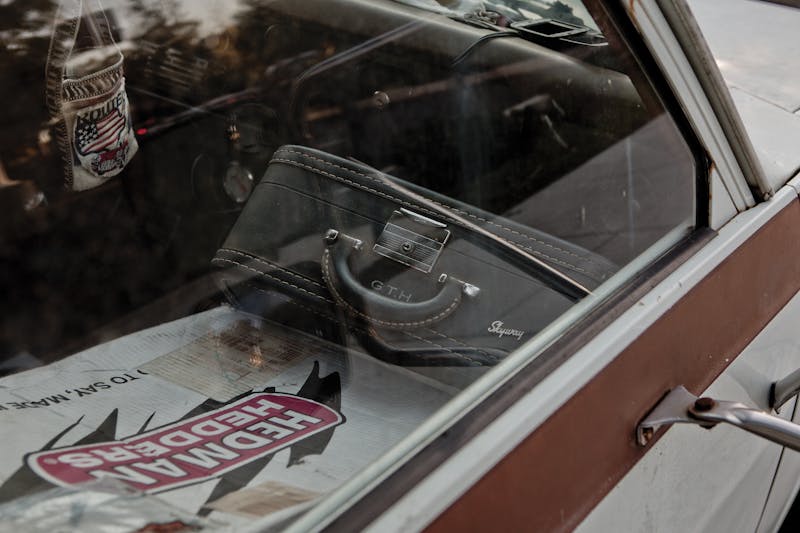
In the van, Suzan was in charge of taking care of everyone and everything, organizing a life that became filled with a unique brand of busy boredom. She and James spent most of their time figuring out where to go next, how to get there, and whether they could stay once they arrived. They found a short-term unit in a local family shelter in Menlo Park that lasted for five weeks. Afterward, they stayed in a few motels, but even fleabags in the area charge upwards of $100 a night. When they couldn’t afford a room they camped out in the van, reclining the backseats and making a pallet out of blankets piled on top of their clothes and other belongings. Slowly, there were fewer nights in hotels and more in the van, until the van was where they lived.

A life of homelessness is one of logistical challenges and exhaustion. Little things, like planning a wardrobe for the week, involved coordinated trips to storage units and laundromats, and could take hours. The biggest conundrum? Where to pull over and sleep. Suzan and James learned quickly not to pull over on a residential block, because the neighbors would call the police. They tried a church or two, 24-hour businesses where they thought they could hide amidst the other cars, and even an old naval field. The places with public toilets were best because, for reasons no one can quite explain, 3 a.m. is the witching hour for needing to pee. They kept their socks and shoes on, both for staying warm on chilly Bay Area nights and also for moving quickly if someone peered into their windows, or a cop flashed his light inside, ready to rouse. Wherever they were sleeping, they couldn’t sleep there. “Sometimes, I was so tired, I would be stopped at a red light and say, ‘Don’t go to sleep. Don’t go to sleep,’” Suzan said. “And then I would fall asleep.”

A few months in, a nice man in a 7-Eleven parking lot told them about a former high school turned community center on the eastern side of town called Cubberley. He’d walked up to their van after recognizing signs of life in the car, tired faces among the junk piling up in the back. Suzan and James were familiar with the community center because they’d taken their daughter to preschool there many years before, but they hadn’t thought about sleeping there. Cubberley had a quiet back parking lot, a flat grass amphitheater with a concrete paddock for a stage, and 24-hour public bathrooms with showers in an old gym. Rumor was that the cops wouldn’t bother anyone.

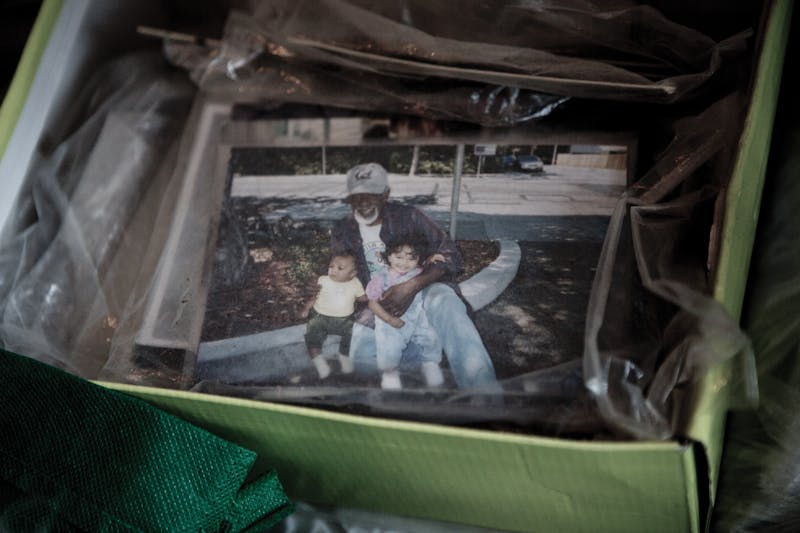
imageSuzan’s husband, James Russaw, pictured with two of their grandchildren.

Cubberley was a psychic relief because it solved so many basic needs: It had a place to bathe in the morning, a place to charge your phone. The parking lot had also formed its own etiquette and sense of community. People tended to park in the same places, a spot or two next to their neighbors, and they recognized one another and nodded at night. They weren’t exactly friends, but they were people who trusted each other, an impromptu neighborhood no one wanted to lose after losing so much. It was safe, a good place to spend the night. But it was next door to a segment of homeowners who were fighting hard to move the car dwellers out.

Normally, wealthy people who move into an area don’t see the results of their displacement because the people who lose their homes don’t stick around; they move to cheaper suburbs and work themselves into the fabric elsewhere. But the folks at Cubberley, 30 people on any given night, were the displacement made manifest. Most weren’t plagued with mental health or substance abuse problems; they simply could no longer afford rent and became homeless in the last place they lived. People will put up with a lot to stay in a place they know. “I’ve been analyzing why don’t I just get the heck on. Everybody says that, go to Wyoming, Montana, you can get a mansion,” Suzan said. “Move on, move on, always move on. And I say to myself, ‘Why should I have to move on?’”

It’s a new chapter in an old story. In his seminal 1893 lecture at the Chicago World’s Fair, Frederick Jackson Turner summarized the myth of the American frontier and the waves of settlers who created it as an early form of gentrification: First, farmers looking for land would find a remote spot of wilderness to tame; once they succeeded, more men and women would arrive to turn each new spot into a town; finally, outside investors would swoop in, pushing out the frontiersman and leaving him to pack up and start all over again. It has always been thus in America. Turner quoted from a guide published in 1837 for migrants headed for the Western frontiers of Ohio, Indiana, and Wisconsin: “Another wave rolls on. The men of capital and enterprise come. The ‘settler’ is ready to sell out and take the advantage of the rise of property, push farther into the interior, and become himself a man of capital and enterprise in turn.” This repeating cycle, Turner argued, of movement and resettlement was essential to the American character. But he foresaw a looming crisis. “The American energy will continually demand a wider field for its exercise,” he wrote. “But never again will such gifts of free land offer themselves.” In other words, we would run out of places for the displaced to go.


Suzan was born in 1945. Her father worked at what was then the Lockheed Corporation, and her mother had been raised by a wealthy family in Oak Park, Illinois. Her family called her Suzi. Though she grew up in nearby Saratogaand spent some time in school in Switzerlandshe distinctly remembers coming with her mother to visit Palo Alto, with its downtown theaters and streets named after poets. Palo Alto more than any other place formed the landscape of her childhood. “It was a little artsy-craftsy university townyou find charming towns are university towns.”

Like many women of her day, Suzan didn’t graduate from college. When she was 24, after her last stay in Switzerland, she moved to Mountain View, the town on Palo Alto’s eastern border that is now home to Google and LinkedIn. She was living off a small trust her family had set up for her when she met James at a barbecue their apartment manager threw to foster neighborliness among his tenants. James had grown up in a sharecropping family in Georgia, moved west during World War II, and was more than 17 years her senior, handsome and gentlemanly. Suzan thought: “I can learn something from him.” They were an interracial couple in the late 1960s, which was unusual, though she says her family didn’t mind. It was also an interclass marriage, and it moved Suzan down the income ladder.

For years, James and Suzan lived together, unmarried. They bought a house on University Avenue, just north of the county line and blocks from downtown Palo Alto, in 1979, and four years later had their only daughter, Nancy. It was the area’s ghetto, and the only source of affordable housing for many years. It was also the center of violence in the region, and, in 1992, was the murder capital of the country.

They never had much money. For most of their marriage, James ran a small recycling company and Suzan acted as his bookkeeper, secretary, and housewife. They refused to apply for most government assistance, even as homeless elders. “My husband and I had never been on welfare or food stamps,” she told me. “Even to this day.”

Suzan’s parents died in 2002 and 2003, and her older sister died in 2009. (“I thank God that they’re gone,” she told me. “They would die if they saw me now.”) It was a hard time for Suzan, who went to care for her dying parents and nearly left James. She felt he’d checked out of the difficulties. In retrospect, she thinks his dementia might already have been setting in; James was already in his seventies. He had taken out a second mortgage on their home, and they couldn’t pay it after he retired. They sold the house at a loss in 2005; it’s now a Century 21 office.

After they moved into the van, they settled into a routine. On the nights before James’s early-morning treatments, they slept in the dialysis center’s parking lot. Otherwise they generally stayed at Cubberley. They were still living off James’s retirement income, but most of it went to the $500 needed to rent the two storage units where their furniture remained, until they lost one for nonpayment. Finally, a few months in, Suzan was able to use a clause in a trust set up by her mother’s father to help her out in an emergency. It doubled their incomemuch of which was eaten up by the costs of gas, the remaining storage unit, parking tickets, and the other expenses of an unsettled life. It was a respectable income, one that technically kept them above poverty, but it still wasn’t enough for rent.

James was increasingly ill and van life was taking a toll. In addition to James’s other problems, both he and Suzan were starting to experience some of the health problems common among the homeless. The backseat of the van filled with bags of clothes, papers, fast-food detritus, pens, old parking tickets, and receipts. As the junk built up, the recline of their seats inched forever upward, until they were sitting up all the time, causing their legs to swell and nerves to become damaged, the medical consequences of not being able to raise your feet at night.


Gentrification used to be about poor neighborhoods, usually black and brown, underdeveloped and full of decrepit and neglected housing stock, run by the occasional slumlord—often described as “blighted,” though that designation has always been problematic—and how they become converted into wealthier ones, usually through the influx of richer white people and their demand for new services and new construction. It’s a negative process for the people who have to move, but there’s occasionally an element of good, because neglected neighborhoods revive. But what’s happening now in the Bay Area is that people who’ve done nothing wrong—not paid their rent late, violated their lease, or committed any other housing sin—are being forced out to make way. Displacement is reaching into unquestionably vibrant, historic, middle- and working-class neighborhoods, like The Mission in San Francisco, a former center of Chicano power. (The Mission alone has lost 8,000 Latino residents in the past ten years, according to a report from the local Council of Community Housing Organizations and the Mission Economic Development Agency.) And it’s happening to such an extent that the social workers who used to steer people to affordable apartments as far away as Santa Rosa or Sacramento, a two-hour drive, are now telling people to look even farther out. The vehicle dwellers I spoke with said they’d heard of friends living in places like Stockton, once a modest working-class city in the middle of the state, receiving notice-to-vacate letters like the one Suzan and James received.

For the most part, the traits that draw people to Palo Altogood schools, a charming downtown, nice neighborhoods in which to raise a family, and a short commute to tech jobsare the very same things that made the residents of Cubberley want to stay, even if it meant living in their car. The destabilizing pressure of a real estate market is also felt by the merely rich, the upper middle class, and the middle class, because the high-end demand of the global elite sets the market prices. “My block has the original owners, a retired schoolteacher and a retired postal worker,” said Hope Nakamura, a legal aid attorney who lives in Palo Alto. “They could never afford to buy anything there now.” Most people told me if they had to sell their homes today they wouldn’t be able to buy again anywhere in the area, which means many Palo Altans have all of their wealth tied up in expensive homes that they can’t access without upending their lives. It makes everyone anxious.

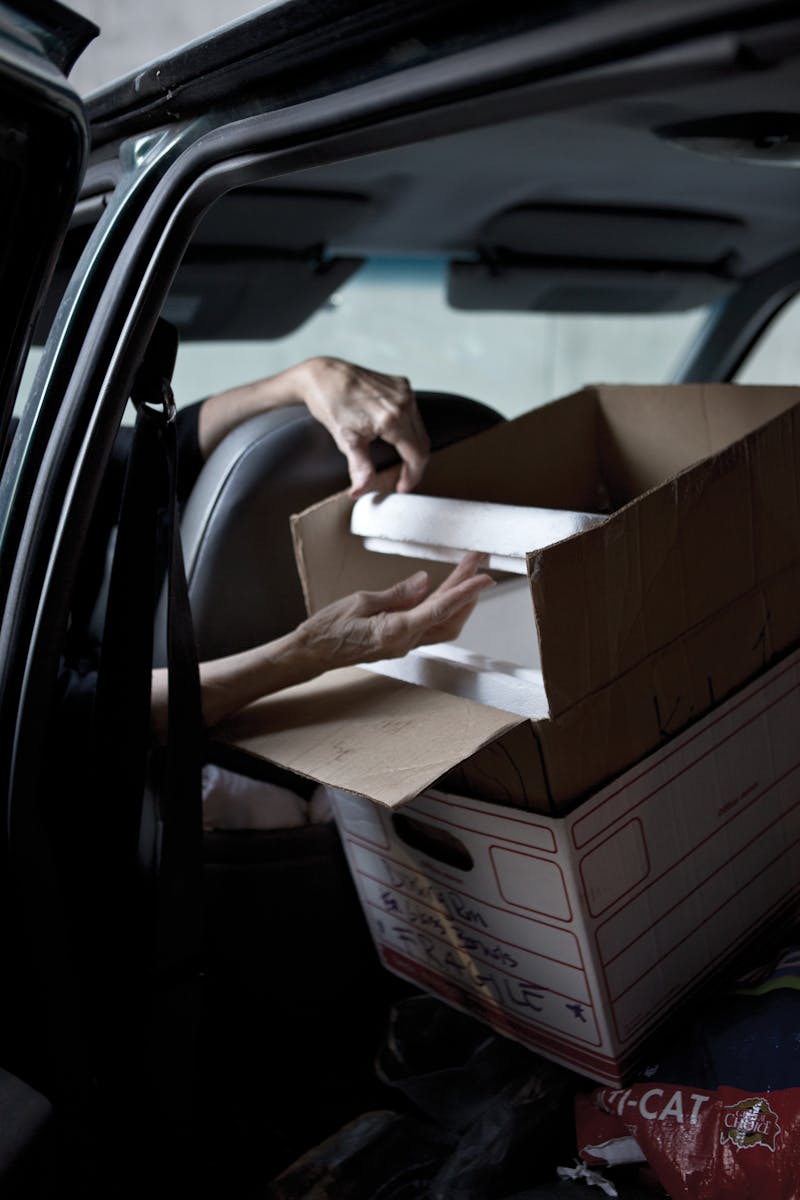
imageThe view inside a van parked outside a Palo Alto homeless organization.

The outcry from the neighbors over Cubberley was so fierce that it reshaped Palo Alto’s city government. The city council is nonpartisan, but a faction emerged that revived an old, slow-growth movement in town, known as the “residentialists.” Their concerns are varied (among them, the perennial suburban concerns of property values and traffic), but their influence has been to block any new development of affordable housing and shoo people like Suzan and James away from Palo Alto. An uproar scuttled an affordable-housing building for senior citizens near many public transit options that had been proposed by the city housing authority and unanimously approved by the city council. Opponents said they were worried about the effect the development would have on the surrounding community—they argued it wasn’t zoned for “density,” which is to say, small apartments—and that traffic congestion in the area would be made worse. Aparna Ananthasubramaniam, then a senior at Stanford, tried to start a women’s-only shelter in rotating churches, modeled after the Hotel de Zink. She said a woman came up to her after a community meeting where the same concerns had been raised by a real estate agent. “Her lips were quivering and she was physically shaking from how angry she was,” Ananthasubramaniam told me. “She was like, ‘You come back to me 20 years from now once you have sunk more than $1 million into an asset, like a house, and you tell me that you’re willing to take a risk like this.”

The trouble for Cubberley began when neighbors went to the police. There’d been at least one fight, and the neighbors complained about trash left around the center. At the time, Cubberley was home to a 64-year-old woman who’d found a $20-an-hour job after nine years of unemployment; a tall, lanky, panhandler from Louisiana who kept informal guard over her and other women at the center; a 63-year-old part-time school crossing guard who cared for his dying mother for 16 years, then lived off the proceeds from the sale of her house until the money ran out; two retired school teachers; a 23-year-old Palo Alto native who stayed with his mother in a rental car after his old car spontaneously combusted; and, for about six months, Suzan and James. “They didn’t fit this image that the powers that be are trying to create about homeless people. They did not fit that image at all,” Suzan told me. “We made sure the premises were respected, because it was an honor to be able to stay there.” She and others told me they cleaned up their areas at the center every morning.

“I said, ‘We have no place to go, and we’re staying right here.’ They were going to know about it.”

Pressured to find a way to move the residents out, the police department went to the city council claiming they needed a law banning vehicle habitation to address the neighbors’ concerns. Advocates for the homeless said that any problems could be solved if police would just enforce existing laws. Local attorneys warned the city council that such laws could soon be considered unconstitutional, because the Ninth Circuit Court of Appeals was hearing a challenge to a similar law in Los Angeles. Carrie LeRoy, an attorney who advocated on behalf of the unhoused, and other attorneys threatened to file a class-action lawsuit if the vehicle-habitation ban ever went into effect. The city council passed the ban anyway, in a 7-2 vote in August 2013, and the police department and other groups in the city started an outreach program to tell people about the law. “All of them had received these notices from the city,” LeRoy said, “And it was basically like, ‘Get out of our town.’”

A few weeks later, the city council also voted to close the showers at Cubberley and give it a 10:30 p.m. curfew, which made it illegal to sleep there. On their last night there, in October 2013, Suzan and James left around 8 p.m. so they wouldn’t get caught past the new curfew. They tried some old haunts and got kicked out. The stress of living in the van was hard on James. Around this time, James decided to end his dialysis. “Of course, we knew what that meant,” Suzan said.

One night, about a month after leaving Cubberley, the police pulled Suzan and James over. Their registration was expired. “This officer, he got a wild hair, and he said, ‘I’m going to impound your car,’ and called the tow truck.” Suzan told me. They got out of the car. Without pushing and demanding, she realized, she was never going to get out of the situation. She told me she said to the officer, “This is our home, and if you impound it we will not have a home.” He insisted. “I said ‘That’s fine. You do that. We will stay right here. I will put the beds out, I will put what we need here, right here on the sidewalk.” Other officers arrived and talked to them. They asked Suzan whether, surely, there was some other place they could go. “I said, ‘We have no place to go, and we’re staying right here.’ I was going to make a stink. They were going to know about it.” Suzan told me people were poking their heads out of their homes, and she realized the bigger fuss she made, the more likely officers might decide just to leave them alone.

Because James’s health had continued to worsen, he and Suzan finally qualified for motel vouchers during the cold weather. They got a room in a rundown hotel. “It had a microwave and a hot bath,” Suzan said. In his last few days, James was given a spot in a hospice in San Jose, and Suzan went with him. “It was so cut-and-dry. They said, ‘This is an end-of-life bed, period,’ ” Suzan said. “And I never said that to James.” He died on February 17, 2014, and a few weeks later a friend of theirs held a memorial service for James at her house. Suzan wore an old silk jacket of her mother’s, one that would later be ruined by moisture in the van, and a necklace Nancy had made. They ate James’s favorite foodscornbread, shrimp, and pound cake. Suzan had a few motel vouchers left, and afterward stayed with friends and volunteers for a few weeks each, but she felt she was imposing.

That summer, she returned to her van. It was different without James; she realized she’d gotten to know him better during their van life than she ever had before. Maybe it was his dementia, but as they drove around or sat together, squished amidst their stuff, he’d started to tell her long stories, over and over, of his youth in Georgia. She’d never heard the tales before, but she’d started to be able to picture it all. On her own, without his imposing figure beside her, Suzan was scared, and more than a little lonely. Most nights, she stayed tucked away in a church parking lot, without permission from the pastor, hidden between bushes and vans. The law wasn’t being enforced, but sleeping in the lot made her a kind of a criminal. “The neighbors never gave me up,” she said.


Suzan told me she was in a fog of denial after James’s death, but it’s probably what protected her because homelessness is exhausting. “You start to lose it after a while,” she said. “You feel disenfranchised from your own society.” The Downtown Streets Team, a local homeless organization, had been helping her look for a long-term, stable housing solution. Indeed, Suzan told me that at various times, she and James had 27 applications in for affordable housing in Palo Alto. (When he died, she had to start over, submitting new applications for herself.) Her social worker at the local senior citizens center, Emily Farber, decided to also look for a temporary situation that would get Suzan under a roof for a few months, or even a few weeks. “We were dealing with very practical limitations: having a computer, having a stable phone number,” Farber said. Craigslist was only something Suzan had heard of. She’d finally gotten a cell phone through a federal program, but hadn’t quite mastered it.

For many months, Farber struck out. She didn’t think Suzan would want to live with three 25-year-old Google employees, or that they’d want her, either. She even tried Airbnb. Because Suzan didn’t have a profile, Farber used her own, and wrote to people who had rooms listed to say her 69-year-old friend needed a place to stay in the area for a couple of weeks. “We got three rejections in a row,” she said. Finally, in November, they found a room available for rent for $1,100about 80 percent of her income from the trust and her widow’s benefits from Social Security. Suzan would have her own bedroom and bathroom in the two-bedroom apartment of a single mother. The mother crowded into the other bedroom with her 16-year-old son and seven-year-old daughter. The only downside for Suzan was that it was in Santa Clara, another charmingly bland suburban enclave in the South Bay, a half hour south of Palo Alto and a world away for Suzan. “It’s out of my comfort zone, but that’s OK!” she told me.

I met Suzan on the day she moved in, and the concept of being able to close a door was almost as unsettling to her as the concept of sleeping in the van had been. “I’m in this kind of survival mode,” she said, and had found a certain comfort in her van. “I’ve got this little cocoon I’m staying in, and everything is within arm’s reach.” She had a big blue mat in the back of the van, like a grown-up version of the kind kindergartners nap on, but soon she’d acquire a bed. She retrieved her old TV from her storage unit. She made a comfortable room, with chairs and a bed and a small table, and decided to eat her meals in there. She only signed a lease for three months, because it wasn’t really sustainable on her fixed income. She’d also applied for an affordable housing complex being built for seniors in Sunnyvale, one that would provide permanent housing for 60 senior citizens from among the 7,000 homeless people in the county at the time. She’d find out in April if she was selected in the lottery. All her hopes were pinned on it.

In the first few weeks after her move to Santa Clara, Suzan spent a healthy portion of her limited income on gas, driving the Explorer back and forth to Palo Alto. After all, her post office box was there, and so were her social workers. Her errands demanded a lot of face time, and in some ways, she still filled her days the way she had before she got her room, moving around trying to solve her problems. Her car was still packed, too, as if she hadn’t let go of the need to drive in it, to move forward, to keep her stuff around her within arm’s reach, as if she were still without a home base.

Two afternoons a week she went to a Palo Alto food closet. She usually made it right before it closed, in the early afternoons. When her number was called, she went up to the counter to watch the volunteer sort through what was left on the shelves, finding the most recently expired itemsthese were older goods grocery stores couldn’t keep past their sell-by dates. Suzan’s politeness was, as always, almost formal, from an earlier era, when being ladylike was a learned skill. The volunteer would ask her if she wanted milk, or peaches, or a serving-size Baggie of cereal, and she’d say, “Yes, very much so!” These days, she got to take raw eggs instead of the boiled ones, a treat reserved for those with kitchens. Her requests were glancing rather than direct. “Have you any lettuce?” and the answer was often no. I said it seemed like an efficient operation. Suzan said, “I really know the drill!”

Suzan needed to visit her social worker, Julia Lang, at the Downtown Streets Team office to get the form that allowed her to go to an even better food bank. She asked the receptionist whether her social worker was in. She wasn’t, and Suzan explained she was looking for the food bank vouchers. Then the receptionist asked for her address. That stopped Suzan. The receptionist explained that the pantry was for Palo Alto residents, and Suzan was considering, for the first time, whether that counted her. Suzan explained that she and her husband had gone to the pantry the year before, and said they should be in the system. We waited while the receptionist looked. Suzan waved at someone she’d seen around for years, from her car-dwelling days. Suzan told the receptionist, again, that they really should be in the system. But they weren’t. Suzan said that was OK, and she would come back. The receptionist said, “Are you sure? I just need your ID and your address.” Suzan demurred. She needed to talk to her social worker. This is what it meant to have to leave her hometown. She was leaving the city where she and James had known people, the city where James had died, the city where she’d grown up and near where she’d raised her own daughter. It was the city where she knew where to go, where she’d figured out how to be homeless. It was the city where she knew the drill.


That homelessness persists in Silicon Valley has puzzled me. It has an extremely wealthy population with liberal, altruistic values. Though it has a large homeless population relative to its size, in sheer numbers it’s not as large as New York City’s or L.A.’s. Some of the reasons could be found in the meeting on November 17, 2014, when the city finally overturned the car-camping ban. It had never been enforced because, as predicted, the Ninth Circuit had overturned L.A.’s ban. In the end, all but one person who’d voted for the ban the first time around voted to overturn it. The lone dissenter was councilman Larry Klein. “The social welfare agency in our area is the county, not the city,” he said. “To think we can solve the homeless problem just doesn’t make sense.”

This idea was repeated many times among city officials—that homelessness was too big an issue for the city to resolve. The city of Palo Alto itself has one full-time staff member devoted to homelessness, and it coordinates with county and nonprofit networks to counsel, house, and feed the homeless.

imageSuzan shows where she stored food in her car while homeless.

During the fight over the ban, the city tried to devise an alternative—a program that would allow car dwellers to park at churches—but then left the details up to the faith community to work out. Nick Selby, an attorney and member of the Palo Alto Friends Meeting House, said he and his fellow Quakers met with community resistance when they tried to accommodate three or four car dwellers on their tiny lot. Neighbors circulated a petition listing concerns like “the high prevalence of mental illness, drug abuse, and communicable diseases in the homeless population” and the risk of declining property values. But Selby said some of their concerns were fair. “People who objected were saying to the city, ‘What’s your program?’” Selby said. “And the city really had no answer to those questions.” Without a solid plan and logistical help from the city, other churches were reluctant to step forward. “The churches weren’t prepared to deal with this,” he said. After the church car-camping plan fell through, the city council said it had no choice but a ban.

Santa Clara County, too, struggles to address the problem. The county is participating in federal programs to build permanent supportive housing for the chronically homeless population, the population of long-term homeless who typically have interacting mental health and substance abuse problems. But land is expensive here, and the area is shortchanged by the federal formula that disperses funds. California, ever in budget-crisis mode, provides limited state funds. There isn’t a dedicated funding stream from the cities, which don’t necessarily pay a tax to the county for these projects, and local affordable housing developments are often rejected by residents as Palo Alto’s was. In September, the city of San Jose and the county announced a $13 million program to buy old hotels and renovate them as shelters, which will make 585 new beds available. While advocates credit the county’s efforts with cutting the estimated homeless population by 14 percent since 2013, the number of people like Suzan, who hide in their cars, is almost certainly underestimated. But most such efforts are centered in San Jose. Chris Richardson, a director of the Bay Area’s Downtown Streets Team, said what needs to happen is not a mystery: Other cities have to fund affordable housing, they have to fund more of it, and they have to do it in their own neighborhoods, without relying on San Francisco and San Jose to absorb all of the area’s poverty and problems. “You can’t just ship them down to the big, poor city,” he said.

When Palo Alto originally passed the car-camping ban, it also devoted $250,000 to the county’s homelessness program. When they voted to rescind the ban, council members asked for an update on what happened to the money. The city staff was not prepared to report on how it had been spent at that council meeting, more than a year into the funding. Members of the council again reiterated their desire to help the homeless. “Helping the homeless” was tabled, as a general idea, for another agenda at another meeting, as it always seems to be, or passed off to the county, or to someone elseand so helping the homeless is something nobody does.


Through the winter, Suzan remained ill; it was a bad flu season. She kept paying the rent on her room, on her storage units, on her P.O. box in Palo Alto, and she tried setting aside money she owed on parking tickets. Some months she’d run out of gas money to drive the 15 miles to Palo Alto and check her mail or visit her social workers. She was waiting to hear about the affordable apartment.

In May, she was denied. Suzan had bad credit, both because of the unpaid storage unit she and James had lost and because otherwise her credit history was so thin. Julia Lang, one of her social workers, told me she couldn’t even get a credit score for Suzan. Lang said people get denied on credit, or because they make too little for affordable housing that’s supposedly intended for extremely low-income people, all the time. “When you’re that destitute and have gone through so many complicated situations, what are the chances that your credit’s going to be good?” she said.

Suzan was livid and despondent, and she decided to appeal. “I wasn’t going to take that lying down,” Suzan told me. “I was proud of myself.” Catholic Charities helped her appeal. Suzan had to write a letter showing how she intended to repair her credit, and that she understood why it was bad in the first place. During the months of back and forth, Suzan bought a new Jeep, only one year newer than the Explorer, in case she needed to sleep in her car again. In July, she learned she’d won her appeal. She had two weeks to get her affairs in order, pay the first month’s rent and security deposit, and move in. Her social workers helped her with some of the move-in costs, and she signed a lease for a year.

I saw Suzan again in August, about three weeks after she’d moved in. Her hair was trimmed. She was wearing a brightly colored muumuu, blue and green with tropical flowers“It’s a housedress but you can wear it out on the street!”and a green sweater tied around her shoulders. She seemed relaxed and rested, and I told her so. Her bed was full of folded clothes, and her room was still in disarray. She was trying to cull her storage unit so that she could get a smaller one and cut down on rent. Most of the people in her complex had been in the same boat as Suzan, or had been worse off. She pays $810 a month, the amount determined to be affordable for her income. It had taken her more than three years, help from at least three social workers, and thousands of dollars, but she was finally stably housed. At least, for a year.