Showing posts sorted by relevance for query Secret Santa party. Sort by date Show all posts

Sunday, April 30, 2017

the year of living with banksy – Demi Adejuyigbe – Medium

Read article : the year of living with banksy – Demi Adejuyigbe – Medium
image
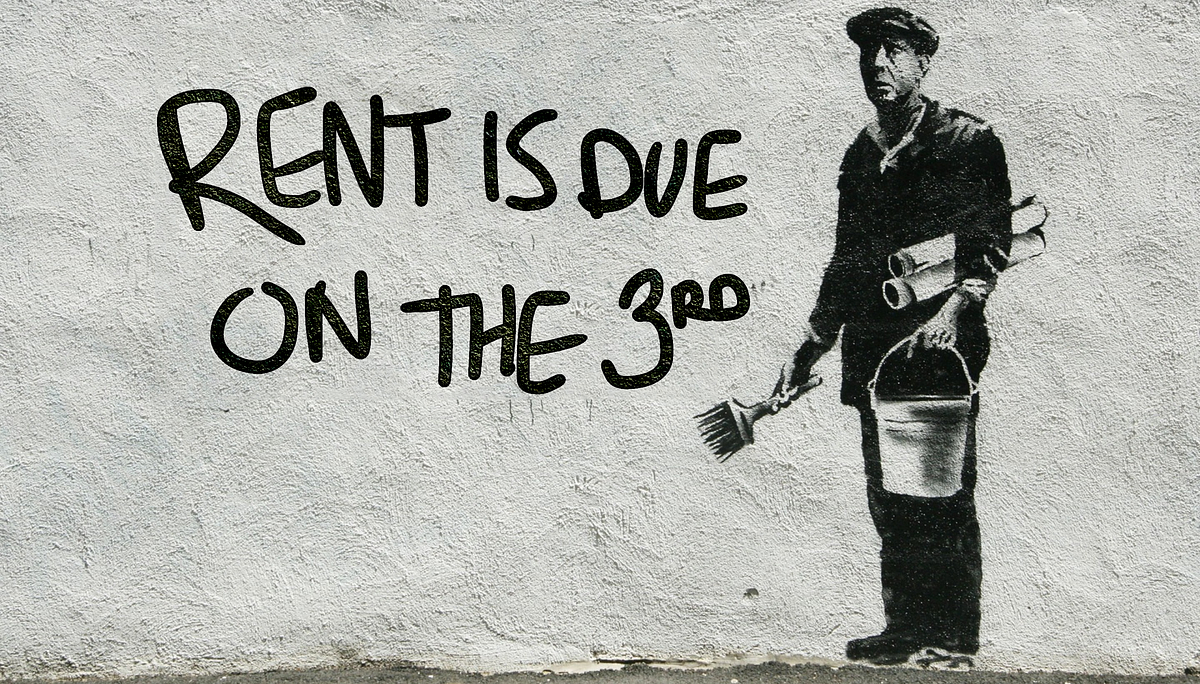
Wasn’t necessary to paint this on any walls, much less one outside my bathroom window.

When I first moved to Los Angeles in July of 2013, I found a room for rent in a house on Craigslist. I soon learned the landlord, and the man I’d be living with, was none other than the famous graffiti artist and incognito street poet Banksy. I never learned his true identity, but I did keep a journal of every strange thing he did in the year we lived together.

JULY 2013 — I toured Banksy’s house and fell in love with the living scenario immediately: my space was a large room in a ornate 2 bedroom craftsman home with a beautiful yard, for only $500 a month. I jumped at the chance, even when Banksy dressed up in a suit and red horns for the lease signing. He cackled devilishly through the whole affair and signed every page as “Lou C. Ferr,” but for $500 a month, I was fully prepared to let him set me on fire.

AUGUST 2013 — I called a plumber when my toilet stopped working. Less than a minute into the job he plunged out twenty tampons, each labeled with phrases like ”childhood obesity” and “the war on drugs.” Upon further inspection, we noticed the word “society” scrawled in Sharpie on the toilet lid. The plumber handed me a pre-typed invoice with a “Banksy fee” of $50 and said “see you next month.”

SEPTEMBER 2013 — Twice a week, I started catching Bansky dressed like a little boy (complete with propeller beanie and cartoonishly-large lollipop) kneeling before a life-sized statue of Colonel Sanders. Every time, he’d notice me watching out of the corner of his eye and say “In Colonel’s name we pray– yum yum.”

OCTOBER 2013 — Banksy painted a homeless man the exact pattern of our bathroom wallpaper and had him stand against the wall next to the toilet for a week. Every afternoon that week, Banksy walked into the bathroom with an American flag hat and exclaimed “Oh– sorry Mr. Homeless Man. I didn’t see you there.” On one occasion I asked if he was paying the guy, and Banksy changed the subject by asking if I saw “that real firecracker of a game last night.”

NOVEMBER 2013 — Banksy got into a routine with one of his art pieces: every few days, he dressed up in maternity clothes and directly called the local police station, saying he was going into labor. When they arrived, he pulled a doll labeled “Justice” from under a skirt and told the cops he “did a fine job delivering it without them.” This backfired spectacularly, as 911 started refusing calls from the house, even when Banksy almost burnt it down at the end of the month by cooking crack cocaine in a latex Nixon mask.

DECEMBER 2013 — For this month and this month only, Banksy vowed to pause all political art. He loved the time around Christmas and New Year’s, and rarely had someone to celebrate it with, so he didn’t want to alienate me and make me indulge in his traditions. Instead, we drove around the town in festive sweaters and looked at lights. We went to a Secret Santa party where he gave my friend Alan a nice cookbook. We stayed up late and made New Year’s resolutions. It was a pleasant little oasis in the often-chaotic time we spent together.

JANUARY 2014 — Bansky brought home a box turtle and put it an afro and a Big Dogs baby tee. I don’t know what it meant.

FEBRUARY 2014 — Banksy was out of town for the month. This was when I found paper bags piled under the sink, with eye-holes and phrases like “CELEBRITY IS A CONSTRUCT” or “FINGER-LICKIN’ GOOD” scrawled on them. It was also around this time we started receiving residual checks for Transformers 3, and calls to the house asking if “Shia” was home.

MARCH 2014 — My parents mailed me a box of home videos from my childhood, but Banksy got to the mail first that day. By the time I saw them, he’d edited in glitches with cartoon videos of Batman having sex with Goku. He mused out loud that the porn must’ve “corrupted” my youth. I asked why he chose such a weird specific porn and he again asked if I saw “that real scorcher of a game last night.” (Also– Alan reached out to tell me he finally opened the cookbook, and only found recipes for “barbecuing the government until it’s well-done.”)

APRIL 2014 — Banksy borrowed my guitar and learned to play The Star Spangled Banner and “Born In The USA,” but in the tuning of BAGDAD. Admittedly, this was the least annoying and most impressive of his weird political metaphors– until he smashed the guitar and printed statistics on veteran PTSD spilled out. I can’t be sure, but I think I also saw an invoice to KFC in there.

MAY 2014 — I got a job at an agency and had to wear a suit every day. This made Banksy… unreasonably upset. I installed a lock on my bathroom door because every morning, he would wake up before me and draw a clown on the mirror to outline my face whenever I looked into it. He changed the label for “work” on my GPS to “the circus.” One day after work, I found nine actual clowns huddled in my Honda Civic. I asked who hired them and they said he never gave his name, but did sign their checks as “B. Anksy.”

JUNE 2014 — Banksy gave me a screenwriting book for my birthday. It was hollowed out and rigged it to blow bleach in my face when I opened it. The dedication read ”Demi– if all you know is from inside a book, you become blind to the world outside of it. xoxo Banksy” I missed a week of work and lost my job.

JULY 2014 — On the 1st, Banksy asked if I wanted to renew, and I said no. I was ready to explode at him with all the reasons why– that he ruined my job prospects, that living with him made me fear for my possessions, that it was hard to be intimate when any girl I brought home had to hear racist Nixon recordings through the walls. But he never asked. He didn’t confront or fight me, or even ask me to stay, because he knew exactly why I was moving. He just paused, frowned, and sighed “okay.”

The following month was quiet. No art, no alarms, no surprises whatsoever. He replaced my guitar, restored my tapes, and washed his drawings of the Instagram UI off all the window frames. When I came home, he would just be sitting in his room solemnly reading a book. And even though he’d made my life a terror for a year, it made me feel bad.

On the 31st, I was packed into a U-Haul and ready to move. I thanked Banksy for the room and bid him farewell, to which he mumbled “no problem” and flashed a toothless smile without getting up from the computer. On his screen, I saw the same Craigslist housing ad I found all those months ago– this time with $100 off the asking price, and a few “pleases” and “sorry in advances” strewn about the ad. It was hard to not feel sympathy for Banksy. I thought about how lonely he must be in this big house, with only paintings of a gun dressed like the Pillsbury Dough Boy to console him. So I gave him something to remember me by.

I pulled my guitar from the U-Haul and cut the lowest string, before tuning the 5 others. I quickly Googled something before scribbling numbers on a Post-It and shoving the note inside the guitar. He was about to go for a walk when I came back in to give him the guitar, calling it a memento of our time together. Then I asked him to play it. He hesitated for a second, then strummed the five uncut strings to hear the tuning– BADGE. Without holding back, he smashed the guitar against a wall, sending fragments of wood and plastic everywhere. And in that mess of fragments, Banksy found a tiny Post-It note with hastily-scribbled police brutality statistics on it.

I hugged Banksy and told him living apart doesn’t mean we can’t still be friends, and with a bright, beaming smile he responded “Okay.” Then he asked me if I wanted to come back and hang out next Thursday. I told him I couldn’t wait. After all, there’s a real barn-burner of a game happening that night.

Wednesday, May 24, 2017

Is water the next 'drug' for Mexico’s cartels?

Read article : Is water the next 'drug' for Mexico’s cartels?

Aug 14, 2017

Tamara PearsonA pipa, or water truck, filling up the underground well for shops in Puebla city. Credit: Tamara Pearson

It's rainy season here in Puebla, Mexico, and water is dripping through my concrete roof, taking chunks of plaster and paint from the ceiling with it. Ironically, we still don't have enough running water to shower everyday. Other people here have no running water at all, and our drainage system is in a state of utter abandonment.

Yet we all pay 10 times the rates of the rest of Mexico, because here in Puebla – unlike the rest of the country – our water is privatized. What's more, the men at the helm of the consortium that run it are a collection of corrupt millionaire and billionaire businessmen who have allegedly laundered money for some of the region's biggest drug cartels.

Throughout much of Mexico large, usually black, tinacos (water tanks) dot the roof tops of our concrete slums and towns. A lot of us have running water for just 15-30 minutes, twice a week, so we fill up the tinacos to cover the rest of the time. Many of the older tanks are made of asbestos, while the newer ones are a solid black plastic. A friend who lives around the corner has only a large container of water in his bathroom, while those in wealthier areas often have underground storage and much more regular water.

Most of us, however, have just 400 litres of water to last the household a week. In the US, a single person consumes that amount per day. In my home, we wash our clothes in a bucket, recycle that water to flush the toilet, collect the water from the shower for flushing, and only flush around once or twice a day. Showers are quick and had every three days or so.

My water bill is 630 pesos per month, while in neighboring Tlaxcala state, people pay 50 pesos per month. Everyone here has stories of being unfairly charged for water, or of going without any water for a year or two – despite constant complaints to the water company, Aguas de Puebla.

I was duly awarded a debt of 115,000 pesos when I first moved into my tiny apartment, located in the poor side of inner-city Puebla. For perspective, that's nearly four years’ worth of minimum wage. I spent four months battling the water company to get that corrected – spending 45 minutes each way on public transport to talk to them directly in their head office, and ringing them on a daily basis. Each time, they asked me to bring in more documents, placing the paperwork burden on me, instead of on themselves as the ones who made the mistake. They gave me excuses and promises that it would be resolved in three weeks’ time and to come back then, and even redirected me to other departments – ‘I'll put you through to water meters, maybe they can help with your case.’

Ultimately, some firm phone calls to the head of public relations of the company, with support from an incredible journalist friend, saw me meeting directly with PR, finally, the figure was fixed in their system in a matter of minutes. At the time, I put it down to the bureaucratic, inhumane habits of private corporations, but later I would realize just how much more sinister the problem was.

Tamara PearsonWater tanks on the rooftops of inner-city Puebla. Credit: Tamara Pearson

Illegal privatization

‘Baja California was the first state in Mexico to plan to privatize its water, but protests and resistance stopped that. Puebla was the second state,’ Fernando, an indigenous water activist in the Peoples Against the Privatization of Water group told me. He asked that I not include his last name, given the arrest warrants pending on a number of water activists, and the risk involved.

In 2013, the Puebla state government justified the privatization of water by arguing that the incoming company would invest the money necessary to improve the service, eliminate leaking pipes that saw 30 per cent of all water lost, and expand the reach of piped water. It passed the Water Law, that would allow the new company to set prices without oversight and to hire other private companies, and put out a call for bids in September that year. The government awarded the bid to Concessions Integrales, also known as Aguas de Puebla, three days before the consortium was actually formed and legally able to participate in a bid for tender. Though the governor had talked about a 30 year deal, that was extended to 60 years.

Narco business

No one imagined that one of the main companies behind Enrique Peña Nieto's presidential election campaign in 2012 would ultimately end up running Puebla's water supply system, in a consortium made up of other corrupt and scandalous companies.

Monex, Epccor, and Grupo Financiero Interacciones are the main companies involved in Aguas de Puebla, though reports of their exact shares in ownership vary. Monex itself told the press that it owned a ‘third’, but added that exactly who has how many shares was a ‘banking secret’.

Monex made news at the time for running Peña Nieto's campaign strategy of buying votes through the distribution of pre-paid cards, and funneling money to his campaigning fund. Reports suggest that this money, however, likely came from the Juarez Cartel – one of the oldest and most powerful criminal organizations in the country.

Mexico's election court ultimately ruled that there hadn't been any fraud, but many are skeptical of this ruling because Mexico's courts are known for their extremely high levels of corruption and political interference. Additionally, it wasn't the first time that Monex had allegedly been involved with major drug cartels. An investigation conducted by newspaper Reforma found a working relationship with the Arellano Feliz cartel in 2003, and with the Colombian cartel, Valle del Norte, in 2006. In 2008, Spanish authorities found that the Beltran Leyva cartel had changed some 78 million euros through Monex and a company called Intercam.

Epccor is owned by Juan Gutierrez, who is also president of Aguas de Puebla, and who also owned the company Gutsa, a key financial backer of the 1994 PRI presidential campaign (Peña Nieto's party). Gutierrez's companies have been repeatedly fined for mismanagement. Epccor, with it connections in the government, regularly receives contracts for public works like hospitals, roads, and airports; consistently spends more than it originally declared in its budget, and delays completion by years. The most recent case was a hospital which has spent nine years so far under construction, and still isn't finished.

Grupo Financiero Interacciones, run by the infamously corrupt and excessive rich Hank family, has strong links to the PRI and to the Juarez Cartel. Grandfather Hank, Carlos Hank Rhon, is a billionaire, and his family has been the subject of numerous reports of drug laundering on a massive scale, as well as assisting cartels with drug shipments, and large-scale public corruption. A World Policy Report from 1995 went so far as to describe Carlos Hank as the "primary intermediary between the multinational drug trafficking enterprises and the Mexican political system,” and Hank has been investigated for money laundering by Mexican, Swiss, and French judges.

One key strategy Hank is alleged to have used, was to buy food products with the money cartels made from selling cocaine in the US. Hank's companies had a monopoly on these food products, which they then sold back in Mexico. The Hank family has also colluded with Mexican state authorities to gain permits for their rooster fighting and horse racing, and to get significant debts pardoned. Son Jorge Hank Rhon has also been accused of using the gambling business for drug trafficking links and to launder money.

Tamara PearsonAn Aguas de Puebla office. Credit: Tamara Pearson

A broken system

With corrupt narcos running Puebla’s water, it's no surprise that the system is beyond dysfunctional. People have accused the company of charging for non-existing debts, of water supply issues and random bill increases, and of charging up to 3,000 pesos (a good month's wage) for meters to be installed. Some areas are supplied with contaminated water, whole suburbs have gone without water for weeks, the company charges to check people's broken connections, and people report that their meters aren't working but the company refuses to repair them and keeps charging an incorrect rate. People facing errors like mine tend to wait a year for a resolution, if they get any at all.

In May this year, communities from the south of the city protested and closed roads after going weeks without water, while Aguas de Puebla still charged them for it. They said that when they did get water, it ‘smelt bad and was yellow,’ while other communities went for three months without water because the company couldn't be bothered to fix the pump.

Businesses have also complained about large bills, pointing out at least six companies in the city that have monthly bills that amount to millions in pesos, ‘without a clear explanation why,’ they told a press conference.

Internally, workers at Aguas de Puebla have also complained stating that they were threatened with being fired on a daily basis and weren't paid promised bonuses. They said they were told not to inform people how rates were calculated, leading to people paying more than they should and they also claimed that the company had cut the petrol budget for company vehicles by 60 per cent, making it difficult for workers to go out and do repairs.

Aguas de Puebla does roll out the red carpet for some of its clients, however. ‘Many years ago, governor Mario Marin signed an agreement with Nealtican and Santa Maria Acuexcomac – towns in the valley of the Popo volcano – for their water,’ Fernando said. In exchange, the towns got sports courts and roads, but their good quality water is delivered by Aguas de Puebla to the wealthy part of town – Angelopolis, while ‘the worst water goes to the poor suburbs, where there's scarcity.’

Tamara PearsonJugs of water for sale. Credit: Tamara Pearson

Nothing lives without water

‘We can live without petrol, without electricity, but not without water. The government and the companies it colludes with think to themselves, if petrol is hugely profitable, how much money can you make from water?’ Fernando explained.

Indeed, even before the narco companies took over our water, it was already a big-profit industry and essentially privatized. Those facing water shortages, and those who can't drink their piped water, are forced to buy bottled water from private companies.

In 2014, Mexico was the largest consumer of bottled water in the world with almost US$8 billion in revenue that year and 234 liters consumed on average per person annually. The companies dominating the bottled water industry here are Danone (47 per cent), Coca-Cola (19.4 per cent) and Epura (7.1 per cent). Many people buy water in 20 litre jugs, or garafones, and in that case, small, local water providers account for around half of the market.

People lacking piped water will also pay pipas – large trucks that look a bit like tanker trucks – to pump water into their roof-based plastic water tanks. In Mexico City, some 40 per cent of water distributed this way is sold illegally.

The bottled water companies have also waged marketing campaigns to promote distrust in the quality of piped water.

Across Mexico, some 9 million people have no water pipes in their homes and a further 13 million people have piping, but the water is contaminated and leads to skin conditions and gastrointestinal infections. Seventy-five percent of the population live with water scarcity, but big business won't be offering a hand any time soon.

Tamara Pearson is a long time journalist based in Latin America, alternative pedagogy teacher, and author of The Butterfly Prison. She blogs at Resistance Words.