Showing posts sorted by relevance for query finding remote work. Sort by date Show all posts

Friday, March 3, 2017

Should you live in an RV? Here’s why some young people are ditching homes for the nomadic life.

Read article : Should you live in an RV? Here’s why some young people are ditching homes for the nomadic life.

The days of living in the same home until you retire are becoming as outdated as that pair of denim jeggings stashed in the back of your closet. Some millennials are ditching the notion of the white picket fence altogether and opting instead for a home that will travel: better known as a recreational vehicle or “RV.”

To cut expenses — think, five-figures for a used RV versus six-figures for a home — and live less tethered to one city, young people are increasingly drawn to the “house on wheels” concept. The chance to take road trips without paying for hotel rooms and restaurant meals doesn’t hurt either.

RV ownership is at an all-time high, with more than 9 million households owning an RV as of April 2017, according to the Recreation Vehicle Industry Association. With ownership up 16% since 2001, buyers between the ages of 35 to 54 make up the largest share of owners.

What would prompt someone to reject the age-old tradition of home ownership? For Chris Trenschel and Tamara Murray, who moved out of their California condo and into a camper van, it was the desire for more meaningful life experiences. “We were dead inside,” Murray told Vice in February 2016. “Travel, learning about new cultures and meeting new people, having meaningful experiences — that’s what is important to us.” Like many millennials, Trenschel and Murray began working remotely so they could travel as much as possible.

Other young professionals have similar stories, where they had previously established what appeared to be the perfect life, only to discover that instead of owning possessions, the possessions owned them. Selling everything, finding remote work and purchasing a house on wheels, such as an RV, trailer or motor home, pushed the reset button on their lives and allowed them to embark on a new life adventure.

What are the upsides to buying an RV?

The movement to bypass or delay a traditional home purchase makes sense as millennials prefer experiences over things. Millennials “aren’t spending our money on cars, TVs and watches,” Taylor Smith, CEO and co-founder of employee benefits firm Blueboard told CNBC. “We’re renting scooters and touring Vietnam, rocking out at music festivals or hiking Machu Picchu.” In fact 78% of millennials in a 2014 Eventbrite poll said they would rather spend money on an experience rather than purchasing an item.

This includes young families like the Podlahová family, who purchased an RV so they could see the country from their RV. While the family lives in a condo in Foster City, California, Michelle Tsai Podlahová said in an interview they purchased their RV so they could continue to camp and enjoy nature with their two young sons.

image

The Podlahová family on an RV adventure

Source: Michelle Tsai Podlavhová

“We decided to get one because we used to camp and hike before we had kids and still wanted to do it with them,” she said. “Camping is really difficult with little ones, but the RV allowed us to still be in nature, but with the added comfort of having our own bathroom, shower and being able to cook food.” Podlahová and her family love their RV so much, they decided to ditch a traditional Christmas this year and instead spend the holiday traveling the countryside with the kids in the RV.

What are the real costs of RV life?

Aside from the allure of travel, RV or mobile living can save you over $139,000 over 15 years, according to calculations from the travel site Wand’rly. First off, a used motorhome can be relatively affordable, with an average cost of about $35,000. But even a new RV would save you money.

Consider this example: You purchase a home for $343,000 (the average home price in 2015), which includes a monthly mortgage payment of $1,310, utilities at $240, property taxes at $150, insurance at $50 and homeowners association fees for about $300 per month. Over 15 years you end up paying around $437,600. (This estimate does not include gas or parking fees.)

Compare this expense to purchasing a new motorhome, which goes for about $122,000. Your monthly payments could be a little higher at $1,380, but you don't have to worry about utilities and property taxes. Insurance could run about $135 a month. Over 15 years, your total approximate expense is $297,900. That’s $139,700 less than you’d spend on your home.

For those interested in just using their RV for a vacation, you still save cash. A party of four traveling by plane, renting a car, eating meals in restaurants and staying in a hotel would spend about $4,045 for a seven-day trip, according to Recreation Vehicle Industry Association estimates. Travel by RV, on the other hand, can get your costs down to $2,035 for a seven-day vacation, for a savings of over $2,000. (This excludes the RV purchase price.)

Before you buy

While you can save money on travel and homeownership living in an RV, do your research before taking the plunge. Here are four key things to consider:

1. Rent before own

If you aren’t 100% sure RV life is for you, rent one for a period of time to see if you like it, Go RVing.com suggested. Typical rent prices can range from $50 to $450 per night for a newer motorhome, RV Share reported. This will also help you figure out which amenities are most important to you and how much you can afford.

2. Decide whether to buy new or used

While a used RV will be significantly less expensive, consider some of the same factors you might ponder if you were to purchase a new or used car. Before purchasing a used RV, consider depreciation, if the vehicle is under warranty and if you can spot any unknown damage, TripSavvy advised.

3. Have a parking spot

Unless you live in a suburban or rural area that allows you to park your RV in your driveway you’ll have to consider where to keep it when you aren’t traveling. RV parking spots can run anywhere from $50 up to $450 a month depending on the size of your RV and needs, Storage.com stated.

4. Factor in extra costs

Maintenance, gas and the sales tax on your initial purchase can all add up. Gas is surprisingly expensive since most RVs only get six to eight miles to the gallon. That means you could drop as much as $10,000 on a 20,000 mile trip around the country, Kiplinger estimated. Maintenance costs include $2,500 for tires, $1,700 to replace carpets, $182 for a new toilet and $120 to upgrade your thermostat, according to AxleAddict.com.

Is the nomadic life right for you?

After you’ve figured out the practical side, it’s time to do some soul searching on whether RV life is really what you want. Although you can save cash and travel, it’s wise to have a serious talk with your partner (and yourself) about whether life on the road is your true calling. Make sure you can deal with living in a small space without a large shoe closet and room for a lot of clothes and accessories, as well as put up with your partner's items or clutter.

No matter how fun it might sound to travel at the drop of a hat, it’s definitely not for everyone. “Trulia’s research shows that many millennials would rather live in a more traditional home and neighborhood,” Lynnette Bruno, Trulia’s real estate and lifestyle expert said in an email. “The inclination that we see among young adults to live in RVs, yurts, shipping containers, micro-apartments and tiny homes is more of a reflection of how hard it is to find and buy an affordable home in today’s market.”

Be realistic about the nuisances you may encounter. Those with olfactory issues may be put off by some smells that are amplified in a small space, plus you may have more mold and mildew than what you’d find in a regular home, the RV Nomads notes. You may also encounter noisy neighbors at some campgrounds, and you should be open to rotating through a variety of doctors, dentists and mechanics, since you’ll be moving a lot.

image

See the country in your RV.

Source: Travel Math/Pinterest

But for those who find the journey to be more exhilarating than the destination, RV ownership may be ideal for you. Just do your homework and have a budget to ensure you can not only afford to purchase an RV but maintain it for years to come.

Sign up for the Payoff — your weekly crash course on how to live your best financial life.

Sunday, July 2, 2017

In Search of Dragons and Gods with the WAOW Liveaboard

Read article : In Search of Dragons and Gods with the WAOW Liveaboard

A coral cat shark peeks out from under a ledge
 

Most of us are not exclusively shooters of the world below the waterline. Whisk us off to some exotic destination, and we’ll snap our cameras out of their housings, and indulge in some topside photo adventures, as much as anyone. So when my recent trip aboard the MSY WAOW turned into an expedition in multiple types of photography, I was in my element.

To begin with, the enchanting ship itself was so photogenic, a photographer could be satisfied for days above water enjoying photographing her from every angle. The attention to detail made it a true luxury experience, with things like live orchids in the dining room, lovely art on the walls, and even wood and stone accents in the bathrooms. Meals were an event in culinary beauty that had me leaving the table to rush to my cabin to get my camera. And, of course, the diving in Komodo National Park is a journey in color and life—with wide-angle and macro opportunities galore. There wasn’t a moment during the trip I didn’t have my camera—or if I didn’t, wishing I had it.

A traditionally built phinisi-style sailing vessel, the WAOW is entirely constructed using beautiful—and seemingly almost indestructible—ironwood. The 850-ton vessel is just under 200 feet long, with a beam of 36 feet, and has three masts, making it one of the largest in Indonesia and giving divers the ultimate experience in spacious luxury. With 10 cabins and the possibility of 20 passengers (though there were only nine on my trip), the ship has a crew of 25 that makes every part of the voyage lavish and run seamlessly.
 

The WAOW is a photographer’s dream—every detail is picture-perfect
 

I was in a state of pure bliss as I lounged about the large sundeck, surrounded by comfortable pillows and towels, gazing off into the cobalt water. Or maybe it was from the massage I’d had—which were available throughout the trip. I found myself continuously wandering up to the bow of the vessel, taking the same photo with the boat in the middle and the gorgeous backdrop of the ocean and green, hilly islands of Komodo to the sides, ever-changing as we journeyed from Bali to Flores. It was tough to stop taking photos. We were blessed with sunny days throughout the trip, with cotton candy pink sunrises and sunsets, and the boom, masts, sails, and every coiled line all seemed worthy of an image.

The beauty of the ship was surpassed only by the excellent service provided on-board. My morning egg order was already remembered by the second day, and no matter what time of day you wandered around the charming ship, you were met with smiles and requests to see if you were okay or needed anything. The crew quickly made us feel at home on their ship—and a lovely home it was.

My cabin was spacious and comfortable, with a king size bed (that could be two singles if necessary), a big couch for relaxing and even an ample desk, which was great for post-dive photo editing. Port holes let in natural light and views of the ocean. The large bathroom area was decorated elegantly with a granite sink; stone, wood, and tile accents in the shower; and big fluffy towels. The rooms also have robes and slippers, flat-screen TVs connected to media servers with movies and music (though I didn’t even turn mine on once), and several lighting options to set the perfect mood.
 

The lovely WAOW under full sail
 

The comfortable and spacious cabins make you feel at home
 

The WAOW offers three different cabin types; mine was a deluxe cabin. On the main deck are two roomy superior cabins with semi-private sundeck areas. The upper deck has one stunning master suite with its own private lounge and sundeck area, massive bathroom, sofas, and more. I know this because the lovely couple staying there during my trip were kind enough to let me take a look. They commented that it was bigger than their apartment in Paris, and I nodded my head in agreement, as it was also larger than several apartments I’ve lived in as well. (On the last night of the trip, they threw a little cocktail party for everyone on their private sundeck, which really went to show how comfortable we all had become on-board.)

The dining room area also became a favorite spot of mine. With comfortable couch-like seating, plenty of table space, and lots of light, it was the perfect spot to work on photos or read a book when it was too windy to be on the sundeck. And then there was the food. Every meal was a foodie photographer’s dream. (I’m really not the “photograph-your-food” type of person, but WAOW turned me into one!) The variety of dining included elegant traditional Indonesian meals served on banana leaves, Western-style meals like pasta, and even an excellent sushi night. Beyond the mouthwatering cuisine, each meal was paired with carefully selected wines, and afterwards, a perfect cup of coffee to help you wake up from your sublime food coma.
 

The reef life in Komodo National Park is an endless lesson in color

Diving in Style

With its spacious deck area, the WAOW makes it easy to get ready for diving. The crew takes care of all your dive gear, including changing tanks, bringing gear to the tenders, and rinsing it each night. Our wetsuits were laid out waiting for us before each dive, with the cruise director providing informative site briefings. Diving was done from three dive tenders, two of which were ridged fiberglass, making them very stable.

After the dives, our wetsuits were taken by the crew to rinse and hang up, and the two hot water showers and dry towels made us quickly forget the chilly wind. Attention to safety, in all aspects, was impeccable: I was pleasantly surprised that the crew provided Nautilus Lifelines free of charge to each diver in the unlikely event of a problem.
 

At Siaba Besar, a turtle finds a soft bed of coral to rest on
 

Diving is done in groups of up to four, and with our small group of passengers, there were no more than three of us to a dive guide. I can’t say enough about the dive guides and their experience in these waters. They were excellent at critter finding and made the sometimes more-challenging conditions seem easy and safe. At one point, in a moderately strong current, I was trying to take a photo and kept drifting past. The dive guide came over and held the back of my tank to help steady me. That’s what I call service!

I’ll admit that I’m usually weary of letting my camera out of my sight, but after a day I was confident in the crew’s care for the photo gear—I think they might have actually treated it even better than I do. Each camera had a separate carrying container, used to move it to and from the tenders, and cameras were rinsed in two different tanks after every dive. There is also a well-equipped camera room with lots of shelves, towels, and electrical power points, which was perfect for setting up gear, charging, and downloading photos.
 

Komodo has some of the most biodiverse waters on Earth—you never know what you might encounter, such as this cuttlefish
 

Looking at WAOW’s itineraries, I get the same feeling as when I see airline in-flight magazine routes: “I want to go there, and there, and there!” The WAOW doesn’t just visit popular Indonesian dive spots such as Komodo and Raja Ampat; it also journeys to some lesser-known and more-remote locations like the Forgotten Islands and the Banda Sea. Indeed, the boat traverses almost every corner of Indonesia, and I would like to sign up for them all.

The trip I took part in, romantically entitled “Dragons & Gods,” explored Komodo National Park, starting in Bali and ending in Flores. It wasn’t just a dive trip though; it felt like an expedition. Not only did we go diving on all the famous sites Komodo is known for, but we also went on land excursions looking for the infamous dragons and spent another evening hiking to the top of Gili Lawa Darat for a postcard-worthy sunset—especially since we looked down to the harbor to see the lovely WAOW accenting the photo perfectly. And who could forget being met by the crew on the beach afterwards—with sangria and appetizers—and being serenaded under a star-filled sky?
 

A corallimorph decorator crab: Night dives with the WAOW were just as exciting as the day dives

Komodo Mojo

The diving around Komodo National Park is some of my favorite because it offers so much variety. You don’t want to miss a dive because each one can be drastically different than the next. Some of the dive sites are known for their current and the pelagics that show up, such as Manta Alley (we must have seen at least 40 mantas on one dive), while others, such as Torpedo Alley in Horseshoe Bay, are perfect muck-diving macro dives, with Coleman shrimp in fire urchins, nudibranchs, and the occasional octopus. Dive sites such as Batu Bolong attract massive fish schools, with sharks and eagle rays swimming by, making it impossible to choose what lens to shoot.

A UNESCO World Heritage Site sitting right in the middle of the Coral Triangle, Komodo National Park is about 200 nautical miles from Bali and in-between the islands of Sumbawa and Flores. It includes the three large islands of Komodo, Padar, and Rinca, as well as 26 smaller islands. It’s also one of the driest regions in the country, and the landscape is very different from the lush greenery you usually expect from Indonesia. While the park was primarily established for the protection of the Komodo dragon, the life in the water—no disrespect to the planet’s largest lizard—has a beauty on a whole other level. 
 

The dive guides aboard the WAOW are masters at finding tiny critters like this juvenile frogfish—about the size of a thumbnail
 

A crab poses for a photo
 

Our trip began in Bali, where the boat has just finished its yearly dry dock for standard maintenance, and we sailed over 24 hours past Lombok and around Sumbawa for our first dive. Several white sand muck dives got us off to the right start with three frogfish, seahorses, and even a rare Halimeda ghost pipefish. We continued to move east, diving along the way and entering Komodo National Park. Due to a forecast of strong winds, it was decided that we go to southern Komodo early in the trip in case it was too windy to get there later.

Arriving at Manta Alley, at the southern tip of Komodo Island, we back-rolled off the tender and were met with water a bit chillier than we’d experienced so far. But our shivers were soon forgotten when a dozen mantas glided in and strobes began firing. After snapping dozens of photos, my guide motioned us to swim and we headed around the reef area. It really was like being in the middle of a manta highway: Mantas came directly towards us and every time I looked behind me there were mantas coming from behind us, too. We happily did three dives at this site, and I think I could have spent several days if they’d have let me.
 

The famed Manta Alley, on the south end of Komodo Island, is wholly deserving of its moniker
 

A school of yellowmask surgeonfish at Castle Rock
 

For our next stop, we moved to the southern part of Rinca Island, to the famous Horseshoe Bay. Water clarity wasn’t so great—which is common in the colder months—but the marine life was spectacular. On one dive, we came across dozens of fire urchins, home to Coleman shrimp and zebra crabs. Examining each one, I found two of the crabs and then hit the jackpot with a pair of Coleman shrimp. After taking a few shots, I noticed the smaller one was acting a little strange, and then I realized that it had just removed its exoskeleton—a most unusual sight to witness.

With the wind picking up, we headed north to the well-known sites of Castle Rock and Crystal Rock. Both underwater pinnacles are subject to strong currents and are teeming with life, both large and small. Big schools of yellowmask surgenfish, trevally, and batfish swarmed the pinnacles as sharks, turtles, and eagle rays swam by in the blue.
 

A Coleman shrimp after shedding its exoskeleton
 

The fabulously colored Nembrotha chamberlaini nudibranch
 

The next morning we ventured on shore to get a glimpse of the Komodo dragon. These ambush predators are at the top of the food chain on their islands, and their bite can deliver toxins that slowly kills their prey while the dragon waits patiently for its meal. We were treated to a walking tour by a local ranger (toting a stick with a V-shaped end to deal with any overzealous lizards, if necessary), and we saw five different dragons plus lots of crab-eating macaques. We were also warned of saltwater crocodiles and a dozen species of snake—including cobras, pythons, and vipers—and the boat looked better and better after a few hours on land.

After our reptilian excursion, we dived a site known as Shotgun, which is an incredibly fun dive between two islands. Their proximity causes the current to increase throughout the dive and “shotgun” you through a small channel in the reef. After we flew past the narrowest part, a manta was in the channel, and it stayed alongside us for several minutes as we used our reef hooks to cling on—fabulous! (We heard that at the same spot, two days later, some lucky divers encountered the extremely rare megamouth shark. Oh well, day late and a dollar short, I suppose, but definitely something to go back for!)
 

If you go night muck diving, you can only blame yourself for finding creepy critters like this!
 

A flamboyant cuttlefish shows off its exuberant colors
 

A longnose hawkfish with some unwanted interlopers
 

Quick Shooting Tips for Komodo

  • Bring every lens you have. In fact, bring more than one camera on every dive with you. I’m serious. The hardest decisions you will have to make on the WAOW is what lens to use (and maybe whether red or white wine with dinner).
  • Komodo is biodiversity overload, and when you’re shooting wide angle, you can almost guarantee you will see a nudibranch you’ve never encountered before. Or when you’re shooting macro, a megamouth shark might just swim by. At almost every dive site, you can’t go wrong with either, and no matter what you choose, there will be plenty to shoot.
  • Sometimes shooting conditions are difficult in Komodo. Visibility can vary with incoming and outgoing currents as well as the warm and cold currents that frequently change throughout the dive. Ask the cruise director and dive guides their recommendations, as they can usually predict current conditions.
  • If there’s a strong current, macro can be difficult. If there’s a dive site that often has strong current but the tides aren’t correct for a current dive, the large animals are less likely to show up, so shooting macro may be the best option.

Costasiella sp., otherwise known as the sheep nudi
 

A tiny juvenile filefish nosing around the muck
 

Throughout the trip, we did several night dives, which I highly recommend. A nice change from the current we usually experienced during the day, the night dives were in protected bays and made for great muck diving. As well as numerous species of flatworms and nudibranchs, we saw squid in the water column, flamboyant cuttlefish, and countless other weird and wonderful critters.

The WAOW also has kayaks and stand-up paddle boards for those looking for something else to do—not that there was much free time between the diving, the land expeditions, the on-board massage service, and just general chilling out around the boat and taking in all the beauty.
 

The twinkling eggs of the golden damselfish
 

A squid poses for a perfect portrait on a night dive
 

In Komodo, strong currents that change drastically during a dive are common and that can make the diving a bit challenging—as can taking photos in such conditions. But I was constantly impressed by how easy the crew made it for us. Yes, the current was ripping, and we had some rough seas and wind, but you wouldn’t have even known the conditions weren’t easy and perfect by the way the crew handled everything.

Rest assured, you will be thoroughly spoiled aboard the WAOW. The indulgence of every aspect of the trip—from the exquisite ship, the incredible food, and the excellent crew, to some of the best diving Indonesia has to offer—will make you want to move right into your cabin for an extended trip and not leave until you’ve seen every corner of Indonesia. Can I sign up for that please?
 

Komodo’s iconic dragon
 

Sunday, March 11, 2018

11 Most Badass RVs You Can Buy Today

Read article : 11 Most Badass RVs You Can Buy Today

Driving cross-country in a multi-million dollar RV is an experience few Americans will ever get to enjoy. While many may fawn over massive machines like the unstoppable Zetros 6×6, few of us have the means to obtain a purpose-built doomsday machine. Sure, there’s the obvious financial obligation, as luxury RV setups can run north of $3 million, but concerns about parking, maintenance, winterizing, insurance, and who’s going to drive the damn thing are also factors to consider.

Riding atop a Ford F-750 chassis, the <a href=Earthroamer XV HD is about as ferocious as it gets outside of military spec | Earthroamer" />

Riding atop a Ford F-750 chassis, the Earthroamer XV HD is about as ferocious as it gets outside of military spec | Earthroamer

Fortunately, many of the world’s elite moneymakers have the means to hire a trained driver, and with some of these land yachts running well over 40 feet long, merging and parking can be a real pain for the untrained. But RV enthusiasts aren’t just into slate tile floors and crystal chandeliers, and hardcore 4×4 vehicles are still a hot commodity as they crush terrain by day and then raise their rooflines at night for spacious living.

Newmar's <a href=King Aire line takes a unique, but very ornate approach to RV-making, and the amount of time, money, and energy that goes into making one is insane | Newmar" width="757" height="482" />

Newmar’s King Aire line takes a unique, but very ornate approach to RV-making, and the amount of time, money, and energy that goes into making one is insane | Newmar

We recently took the time to peruse the web in search of some of the most over-the-top RV options money can buy, and came up with a surplus of unique options. There really is something out there for everyone, and if your pocketbook is up to the challenge, you can have an entire penthouse suite on wheels built to your personal taste.

1. IKON by Renegade

The IKON by Renegade is one purpose-built RV, with trailer towing being one of its strongest suits | Renegade

The IKON by Renegade is one purpose-built RV, with trailer towing being one of its strongest suits | Renegade

The IKON by Renegade takes semi-truck styling and combines it with luxury amenities and industry leading self-sufficiency. From handcrafted solid hardwood cabinetry and plush Villa Ultraleather furniture to quartz countertops and heated porcelain tile floors, the good life comes standard in this RV. Tech-wise, it also features things like Samsung 4K LED TVs, Bose Home Theater Sound, and a set of high-tech stainless steel appliances that deliver the goods when it’s time to eat.

It also features VegaTouch control systems, which have dual 10-inch touchscreen controllers with iPad, smartphone, and tablet compatibility. This means you can integrate interior lighting, systems monitoring, HVAC controls, window coverings, awning and slide-out controls, and a whole lot more into an all-in-one touchpad that doubles as a monitor for the perimeter observation camera system.

The Renegade IKON can be outfitted with all manner of amazing interior amenity | Renegade

The Renegade IKON can be outfitted with all manner of amazing interior amenity | Renegade

Buyers will love finding features like hand crafted hardwoods, and a Theater Mode that automatically lowers the shades, dims lights, and raises the 50-inch Samsung UHD 4K TV so it can automatically tie into the Bose home theater system. While a porcelain tile shower and adjustable LED vanity lighting systems are also nice, it’s the Renegade’s attention to towing capacities and ability to be lived out of for weeks on end thanks to its oversized water, septic, and fuel tanks that make it a preferred RV for motorsport enthusiasts.

2. Winnebago Brave

The <a href=Winnebago Brave takes vintage styling and applies modern technology and mechanics to form a restomod RV | Winnebago" width="757" height="424" />

The Winnebago Brave takes vintage styling and applies modern technology and mechanics to form a resto-mod RV | Winnebago

Back in the late 1960s and 1970s, there was no mistaking a Winnebago motorhome for another RV thanks to its bold “Flying W” badging, iconic “eyebrow” designs, clever interior, and boxy body lines. But over time the iconic styling of yesteryear began to morph into a mish-mash of ho-hum engineering and bland RV styling.

But now it’s time to fall in love with classic RV styling all over again, because Winnebago has followed in Dodge’s Challenger footsteps and has rolled out a resto-mod version of the machine that got America hooked on RV life in the first place.

Vintage interior within the Winnebago Brave looks straight out of the 1970s | Winnebago

Vintage interior within the Winnebago Brave looks straight out of the 1970s | Winnebago

The all-new Winnebago Brave takes vintage styling cues and blends them with modern practicality, efficiency, safety, and useful amenities in order to give the next generation of motorhome enthusiast an RV that is both retro and reliable. While you won’t be able to pick one up for the $4,000 price tag associated with the original, these classic and quirky motorhomes are priced to fit a more modest budget, and can be customized in a wide array of colors and interior design layouts.

3. Global X Vehicles Pangea “Perky Mog”

Global X Vehicles takessafety orange and gives it a new purpose on this <a href=Pangea roof lifter" width="757" height="504" />

Global X Vehicles takes safety orange and gives it a new purpose on this Pangea roof lifter | Global X Vehicles

Global Expedition Vehicles’ Pangea Lifting Roof version of the unstoppable Mercedes-Benz UniMog can be built on either a medium or heavy duty chassis, and can be tailored around various cab configurations. Referred to as the “Perky Mog,” this clever 4×4 RV has a unique lowered position that allows the windows to be covered with the hard side top section, while maintaining full walking height within. Once in the raised position, a huge loft area becomes exposed, which can be reconfigured to the buyer’s preferred sleeping layout, and can hold up to two queen size beds.

Inside the <a href=Pangea Lifting Roof monster are gorgeous living quarters that feature ornate wood floors, and a loft for sleeping | Global X Vehicles" width="757" height="504" />

Inside the Pangea Lifting Roof monster are gorgeous living quarters that feature ornate wood floors, and a loft for sleeping | Global X Vehicles

Since each vehicle is tailor-made to the buyer’s specifications, there is no cut-and-dry approach to purchasing one of these machines, so be prepared for a lengthy build list and turnaround time. A few of our favorite touches include the G-KAS mounting body isolating mount system, having cab-to-cabin access, exterior tool/utility boxes, how the seating area converts into an additional sleeping space, and how the stair treads are hinged and lift to reveal hidden storage. Add on a duo of high efficiency 200-watt PV solar panels, a 140 gallon fresh water tank, amazing off-road capabilities, and the ability to buy one in 16- to 18-foot lengths, and you’ve got one hell of a capable 4×4 RV on your hands.

4. Newmar King Aire

Engineered to embody “the pinnacle of luxury travel,” the Newmar King Aire takes style, comfort, and technology to a whole new level, with the 2017 model sporting a restyled exterior, and a Spartan K3 tag axle chassis that has been attached to a steel superstructure. Inside, contrast cross stitching highlights the dash, which features a wireless non-slip charging pad, full LCD driver display, and two 12.1-inch touchscreens for system controls and 360-degree outward visibility. Meanwhile, a one-off 11-speaker JBL cockpit audio system and exclusive fabrics from Ralph Lauren add additional flare to the front of the cabin.

Newmar's <a href=King Aire line takes a unique, but very ornate approach to RV-making, and the amount of time, money, and energy that goes into making one is insane | Newmar" width="757" height="482" />

Newmar’s King Aire line takes a unique, but very ornate approach to RV-making, and the amount of time, money, and energy that goes into making one is insane | Newmar

For tailgating purposes, two Girard Nova side awnings extend over a specially designed sidewall housing a 43-inch Sony 4K UHD TV and a Bluetooth-compatible Bose soundbar, which rests atop one of the tallest basements in the Class A segment. Buyers can choose Maple, Cherry, or Rift Oak hardwood cabinetry, while polished porcelain plank tile, heated and cooled Pompeii leather front seats, and a 49-inch Sony 4K UHD TV come standard, with a Blu-ray/DVD player and Bose CineMate home theater system. The King Aire’s master bath is available with an industry-leading 50-by-34-inch shower, complete with full tile and a Fresca panel with massage sprayers and a foot washer, and even comes finished with a Whirlpool stacked washer and dryer.

5. Earthroamer XV HD

Riding atop a Ford F-750 chassis, the <a href=Earthroamer XV HD is about as ferocious as it gets outside of military spec | Earthroamer" width="757" height="409" />

Riding atop a Ford F-750 chassis, the Earthroamer XV HD is about as ferocious as it gets outside of military spec | Earthroamer

EarthRoamer has just expanded its product line in order to offer the highly anticipated F-750-based XV-HD. Designed to accommodate up to eight people comfortably and sleep six, this off-road RV features enough ingenuity to make living off-grid for a few days a breeze, as the HD offers anyone looking for wilderness adventures both driving prowess and fantastic amenities.

Extra windows and a raised roof allows living quarters to feel anything but confined in Earthroamer's XV HD | Earthroamer

Extra windows and a raised roof allows living quarters to feel anything but confined in Earthroamer’s XV HD | Earthroamer

The XV-HD takes luxury off-grid ingenuity and infuses it with solar panels, a monolithic battery bank, 46-inch military tires, 200 gallons of fresh water, a compact washer/dryer, and a whole lot more. At just over 35-feet long this is no mini RV either, giving all the more reason for Earthroamer to utilize Ford’s 6.7-liter PowerStroke Diesel engine and all 725 pound-feet of torque.

6. Bespoke Coach Sprinter Van

A <a href=typical Bespoke Coach Sprinter is not overtly adorned with external upgrades, but leans more toward a VIP look | Bespoke Coach" width="757" height="466" />

A typical Bespoke Coach Sprinter is not overtly adorned with external upgrades, but leans more toward a VIP look | Bespoke Coach

This next road trip specialist is a bit of a hybrid, because while it isn’t a massive RV, it isn’t really a van either. Bespoke Coachworks has been customizing vehicles in Southern California since 1985, and over the past 30 years has created countless custom audio, video, interior, and exterior solutions for celebrities and the elite. So when the Sprinter van finally began getting imported and badged by Dodge and Freightliner back in 2007, requests for customized versions flooded their ears.

After decades of working with companies like Bentley, Rolls Royce, and Mercedes-Benz, the thought of pimping out vans seemed a bit strange, but after one luxury van conversion spawned the next, Bespoke Coachworks knew it was on to something. From opulent mobile offices, to family coaches with built-in beds and entertainment suites, this unique chassis offers an endless array of options for anyone wanting a small and swanky RV, all without the headaches associated with piloting a land barge.

The interior of one of Bespoke Coach's Sprinter vans may not be large, but it certainly is luxurious | Bespoke Coach

The interior of one of Bespoke Coach’s Sprinter vans may not be large, but it certainly is luxurious | Bespoke Coach

Bespoke Coach’s luxury mobile office incorporates the best technology, design, and materials into a first-class experience, tasking top engineers, designers, and fabricators to make coaches that are both user friendly and innovative. A few of our favorite options include the driver wall partition with motorized privacy window, custom upholstered walls and ceilings, the marine-grade circuit breaker panel, and those Maybach inspired captains chairs. There are also standard iPads, Samsung TV screens, power inverters, customizable lighting, Focal audio upgrades, and Dynamat sound deadening throughout, with a laundry list of unique upgrade options waiting on the wing for the right price.

7. Marathon Show Coach

Marathon Coach, Inc. is widely revered as the world’s largest luxury bus converter and dealer, and specializes in taking commercial buses supplied by Prevost and customizing them into the most opulent RVs imaginable. Built around a Prevost H3-45 chassis, these custom buses feature engineer-driven technologies and a unique “California design viewpoint” that leans toward shades of warm taupe and rich chocolate brown, with deep indigo blue accents inside and out.

Inside, buyers will find things like a marble, limestone, and travertine “basket weave” floor inlay that has been surrounded by Italian porcelain tile, as well as a custom fireplace enclosure designed for both ambiance and warmth. There are soft touches like velvet tufted sofas finished with chrome nail heads, and a stitched leather recliner at the large work desk for when duty calls on the open road.

The <a href=Marathon Show Coach is a swanky, multi-million dollar cruiser designed for the world's elite | Marathon Coach Inc." width="757" height="504" />

The Marathon Show Coach is a swanky, multi-million dollar cruiser designed for the world’s elite | Marathon Coach Inc.

In the back you will find features like an oversized glass and limestone mosaic shower with a telescopic, glass pocket door that goes opaque at the touch of a button, an integrated, 8-inch rain shower head, as well as a hand-held shower wand. There also are Hans Grohe faucets and fixtures, custom-made hammered stainless steel sinks, a walk-in closet, a TechLink electrical system, and Crestron controls.

8. Sportsmobile Classic 4×4

With the camper lowered and doors closed, this house on wheels turns into a 4x4 Ford battering ram | Sportsmobile

With the camper lowered and doors closed, this house on wheels turns into a 4×4 Ford battering ram | Sportsmobile

The Sportsmobile Classic is one of the most recent creations in a long line of heavy duty 4×4 “Adventure Vans” coming out of Sportsmobile. After a successful prototype testing phase, the Classic 4×4 can now be had in a Ford Cutaway body that molds it with a steel reinforced fiberglass shell and an integrated penthouse top that drops flush into the shell for streamlining purposes.

The Sportsmobile 4WD Vehicle is designed to appeal to the most discerning off-road enthusiast, and in order to do so only the best heavy-duty components are installed for a balance between maximum off-road performance and on-road comfort. Over five decades of experience in the designing and manufacturing of van campers has led to this point, and while these machines can only be had on 2008–2014 Ford E-350 models equipped with the 6.8-liter V10 and barn doors, sourcing a gently used donor shouldn’t be an issue.

Sportsmobile has long been synonymous with hardcore off-road vehicles that can be lived out of | Sportsmobile

Sportsmobile has long been synonymous with hardcore off-road vehicles that can be lived out of | Sportsmobile

Full production of the Classic started in late 2016, and the 4WD Conversion model includes a lot of hardcore 4×4 upgrades. A few key features include an Advance Adapter Atlas II All Gear Driven transfer case, a Dynatrac Pro-Roc 60 front axle, Dana 60 rear axle, Fox 2.0 Performance Series Shocks, a high knuckle front end for extra tie rod clearance, and an extra heavy duty steering arm.

We could go on about the military wrap springs that were specifically designed for this van, or how the front sway bar comes with a quick disconnect system and custom shocks, but it would take forever to go over this list of performance upgrades. Finished with a practical and rugged, adventure-ready interior, this RV is a pop-top for the most discerning 4×4 enthusiast.

9. ShowHauler Motorhomes

ShowHauler specializes in <a href=melding semi tractor trailer strength with high dollar RV resplendency | ShowHauler" width="757" height="568" />

ShowHauler specializes in melding semi tractor trailer strength with high dollar RV resplendency | ShowHauler

ShowHauler Motorhomes are heralded as “the safest motor coach on the road,” and their coach frames utilize a unique tubular steel structure consisting of super strong floors, sidewalls, and ceilings. The underbelly is completely undercoated, block foam is placed between steel side-wall supports prior to bonding aluminum exterior walls to the frame, no rivets are used, interior walls are reinforced to create a structural cage, and adhesive bonding is used to apply a bubble type insulation.

Being built on a standard truck chassis with a higher Gross Vehicle Weight Rating (GVWR) than a typical motorhome allows for greater carrying capacities, so weight is never a concern and neither are highway crosswinds nor oncoming traffic. Internally, buyers get to choose the hardwood they want for cabinets and fabric patterns and colors, all window framing is finished with hand-formed hardwood, counter-tops are genuine Corian, and buyers can choose either polished ceramic tile floors or carpet.

A ShowHauler interior can be outfitted with anything the buyer desires, it just depends upon how deep your pocketbook goes | ShowHauler

A ShowHauler interior can be outfitted with anything the buyer desires, it just depends upon how deep your pocketbook goes | ShowHauler

We personally dig the cab pass-thru, having 7-feet of interior headroom, the cab-over bunk and vent, the 12 gallon gas/electric water heater, 30,000 BTU ducted gas furnace, and the ability to tow damn near anything. ShowHauler Motorhomes are part luxury living quarters, part big-rig, and all cross-country cruiser.

10. Mercedes-Benz Zetros 2733 A 6×6

Mercedes-Benz Zetros 2733 A 6x6 is one hell of an intimidating RV

Mercedes-Benz Zetros 2733 A 6×6 is one hell of an intimidating RV | Daimler

We eluded to it in our intro, and here it is up close. The all-wheel drive behemoth commonly referred to as the Mercedes-Benz Zetros 2733 A 6×6 is based off a semi with a cab-behind-engine layout, and offers sensational traction and versatility, plus customizable living arrangements.

This triple-axled truck typically weighs in between 25 and 27 tons, and while its powertrain and chassis configuration either come out of the Actros and Axor series of full-size work trucks, it also utilizes a unique Unimog/G-Class 6×6 approach. Powered by a 7.2-liter inline six-cylinder engine, this lumbering beast only puts down around 326 horsepower, but generates around 1,000 foot-pounds of torque in the 1,200–1,600 RPM range.

With room for ATV loading in the rear, this 27-ton monster is all you need to dominate the wild

With room for ATV loading in the rear, this 27-ton monster is all you need to dominate the wild | Daimler

Buyers can opt for either a hydraulically/pneumatic nine-speed manual transmission (eight forward gears plus crawler), which has a direct-ratio top gear, or they can get the six-speed Allison 3000 SP/PR automatic. The permanent all-wheel drive VG 1700 transfer case has an off-road ratio that is about 20% lower than its all-wheel drive cousins, so crawl control is a strong suit here. Towing capacity has also been increased by about 70% when compared to the on-road gears, and torque distribution between the front and rear axle(s) is 1:3.21 thanks to the splitter box, which becomes 1:1 if the differential lock is engaged.

All told, the Zetros has three mechanical differential locks, all of which can be easily selected via a rotary control that shows the logical sequence in which they need to be engaged. Drivers must start with the center-axle before engaging the rear, with the front remaining the final option, reserved for when terrain is at its most extreme.

11. Iveco Astra HD8 8×6 Expedition Truck

Expedition Trucks always has something insane on its for sale page, like this 8x6 behemoth for instance | <a href=Expedition Truck Brokers" width="757" height="505" />

Expedition Trucks always has something insane on its for sale page, like this 8×6 behemoth for instance | Expedition Truck Brokers

Our final contender today comes from Expedition Truck Brokers, a company that has specialized in connecting buyers and sellers of expedition trucks for over 20 years thanks to a crew that tackles every aspect of the purchasing and customization process. Everything from buying and building, to long distance overland travel and selling transactions get attended to by this highly trained team of 4×4 specialists, and getting things right requires “first hand experience with vehicle based travel in rough conditions through remote regions.”

Simply put, Expedition Truck Brokers sources hardcore off-road “wheel estate” for private individuals and professionals in order to provide the ideal vehicle for overland journeys, expedition support, promotional events, and film. While most people would never need something as insane as an 8×6 diesel behemoth, there is a very particular kind of clientele out there that has the bankroll and need for something like what you see here.

It may take 8 hours to parallel park, but this <a href=Iveco Astra HD8 8x6 also features 8 wheels and more torque than an ocean liner | Expedition Truck Brokers" width="757" height="504" />

It may take eight hours to parallel park, but this Iveco Astra HD8 8×6 also features eight wheels and more torque than an ocean liner | Expedition Truck Brokers

While plenty of other heavy-duty RV options are available on the Expedition Truck Brokers’ website, it’s this Iveco Astra HD8 that has our vote for most badass of the bunch. Professionally manufactured in Germany, this chassis has been widely revered internationally as a construction and mining industry staple, but never a weekend getaway machine … until now.

A few of our favorite highlights and features outside of the Astra’s massive cabin and practical living quarters are the highly autonomous multi-climate design that handles both tropical and frigid environments, and the 600 horsepower EURO-5 Cursor 13 diesel engine. There’s also that dedicated motorcycle platform, all those external storage units, and a slew of locking differentials designed to tackle any terrain.

(cheatsheet.com, https://goo.gl/I0gYaI)

Comments

comments

Friday, June 2, 2017

Dispossessed in the Land of Dreams

Read article : Dispossessed in the Land of Dreams


Sometime in July 2012, Suzan Russaw and her husband, James, received a letter from their landlord asking them to vacate their $800-a-month one-bedroom apartment in Palo Alto, California. He gave them 60 days to leave. The “no-fault” eviction is a common way to clear out low-paying tenants without a legal hassle and bring in people willing to pay thousands more in rent. James was 83 at the time and suffering from the constellation of illnesses that affect the old: He had high blood pressure and was undergoing dialysis for kidney failure and experiencing the early stages of dementia.

Their rent was actually a couple of hundred dollars more than James’s monthly Social Security benefits, but he made up the rest by piecing together odd jobs. They looked for a new apartment for two months and didn’t find anything close to their price range. Their landlord gave them a six-week extension, but it yielded nothing. When mid-October came, Suzan and James had no choice but to leave. With hurried help from neighbors, they packed most of their belongings into two storage units and a ramshackle 1994 Ford Explorer which they called “the van.” They didn’t know where they were going.

A majority of the homeless population in Palo Alto—93 percent—ends up sleeping outside or in their cars. In part, that’s because Palo Alto, a technology boomtown that boasts a per capita income well over twice the average for California, has almost no shelter space: For the city’s homeless population, estimated to be at least 157, there are just 15 beds that rotate among city churches through a shelter program called Hotel de Zink; a charity organizes a loose network of 130 spare rooms, regular people motivated to offer up their homes only by neighborly goodwill. The lack of shelter space in Palo Alto—and more broadly in Santa Clara and San Mateo counties, which comprise the peninsula south of San Francisco and around San Jose—is unusual for an area of its size and population. A 2013 census showed Santa Clara County having more than 7,000 homeless people, the fifth-highest homeless population per capita in the country and among the highest populations sleeping outside or in unsuitable shelters like vehicles.

San Francisco and the rest of the Bay Area are gentrifying rapidly—especially with the most recent Silicon Valley surge in social media companies, though the trend stretches back decades—leading to a cascade of displacement of the region’s poor, working class, and ethnic and racial minorities. In San Francisco itself, currently the city with the most expensive housing market in the country, rents increased 13.5 percent in 2014 from the year before, leading more people to the middle-class suburbs. As real estate prices rise in places like Palo Alto, the middle class has begun to buy homes in the exurbs of the Central Valley, displacing farmworkers there.

Suzan, who is 70, is short and slight, with her bobbed hair dyed red. The first time I met her, she wore leggings, a T-shirt, a black cardigan wrapped around her shoulders, and fuzzy black boots I later learned were slippers she’d gotten from Goodwill and sewn up to look like outside shoes. (She wore basically the same outfit, with different T-shirts, nearly every time we met, and I realized she didn’t have many clothes.) Her voice is high and singsongy and she is always polite. You can tell she tries to smooth out tensions rather than confront them. She is a font of forced sunniness and likes to punctuate a sad sentence with phrases like “I’m so blessed!” or “I’m so lucky!” She wore a small necklace and said jewelry was important to her. “I feel, to dispel the image of homelessness, it’s important to have a little bling,” she said.

In the van, Suzan was in charge of taking care of everyone and everything, organizing a life that became filled with a unique brand of busy boredom. She and James spent most of their time figuring out where to go next, how to get there, and whether they could stay once they arrived. They found a short-term unit in a local family shelter in Menlo Park that lasted for five weeks. Afterward, they stayed in a few motels, but even fleabags in the area charge upwards of $100 a night. When they couldn’t afford a room they camped out in the van, reclining the backseats and making a pallet out of blankets piled on top of their clothes and other belongings. Slowly, there were fewer nights in hotels and more in the van, until the van was where they lived.

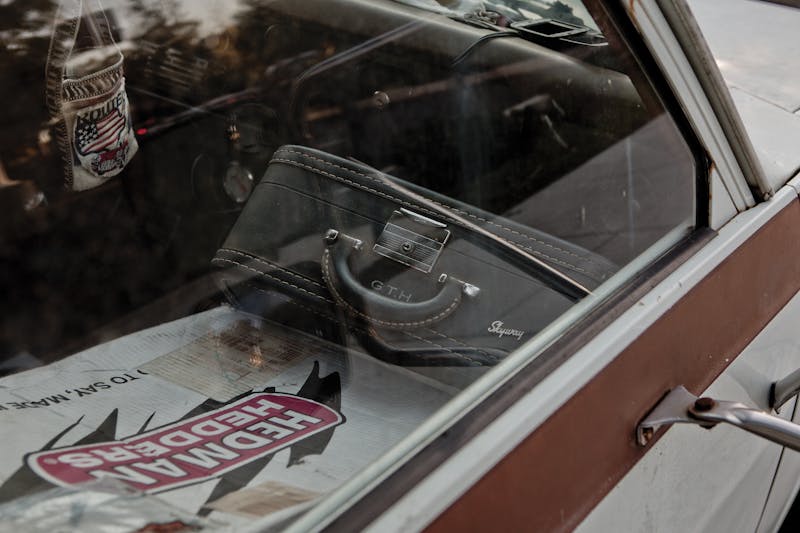
A life of homelessness is one of logistical challenges and exhaustion. Little things, like planning a wardrobe for the week, involved coordinated trips to storage units and laundromats, and could take hours. The biggest conundrum? Where to pull over and sleep. Suzan and James learned quickly not to pull over on a residential block, because the neighbors would call the police. They tried a church or two, 24-hour businesses where they thought they could hide amidst the other cars, and even an old naval field. The places with public toilets were best because, for reasons no one can quite explain, 3 a.m. is the witching hour for needing to pee. They kept their socks and shoes on, both for staying warm on chilly Bay Area nights and also for moving quickly if someone peered into their windows, or a cop flashed his light inside, ready to rouse. Wherever they were sleeping, they couldn’t sleep there. “Sometimes, I was so tired, I would be stopped at a red light and say, ‘Don’t go to sleep. Don’t go to sleep,’” Suzan said. “And then I would fall asleep.”

A few months in, a nice man in a 7-Eleven parking lot told them about a former high school turned community center on the eastern side of town called Cubberley. He’d walked up to their van after recognizing signs of life in the car, tired faces among the junk piling up in the back. Suzan and James were familiar with the community center because they’d taken their daughter to preschool there many years before, but they hadn’t thought about sleeping there. Cubberley had a quiet back parking lot, a flat grass amphitheater with a concrete paddock for a stage, and 24-hour public bathrooms with showers in an old gym. Rumor was that the cops wouldn’t bother anyone.

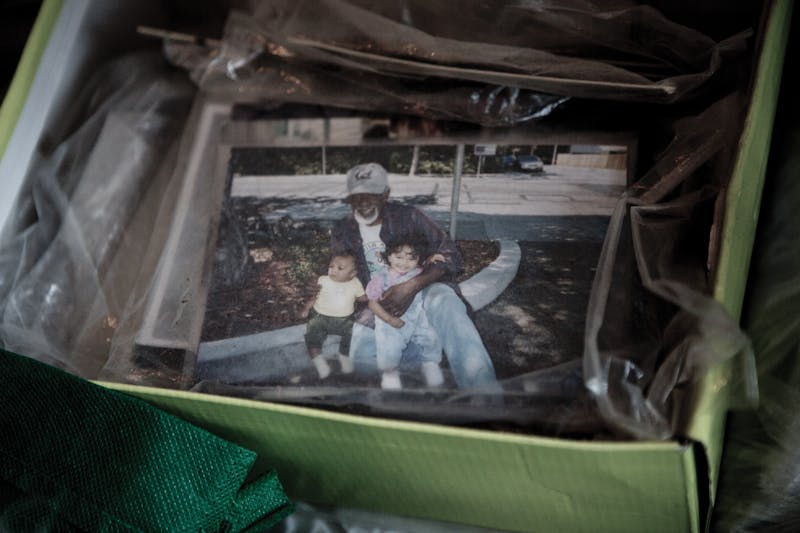
imageSuzan’s husband, James Russaw, pictured with two of their grandchildren.

Cubberley was a psychic relief because it solved so many basic needs: It had a place to bathe in the morning, a place to charge your phone. The parking lot had also formed its own etiquette and sense of community. People tended to park in the same places, a spot or two next to their neighbors, and they recognized one another and nodded at night. They weren’t exactly friends, but they were people who trusted each other, an impromptu neighborhood no one wanted to lose after losing so much. It was safe, a good place to spend the night. But it was next door to a segment of homeowners who were fighting hard to move the car dwellers out.

Normally, wealthy people who move into an area don’t see the results of their displacement because the people who lose their homes don’t stick around; they move to cheaper suburbs and work themselves into the fabric elsewhere. But the folks at Cubberley, 30 people on any given night, were the displacement made manifest. Most weren’t plagued with mental health or substance abuse problems; they simply could no longer afford rent and became homeless in the last place they lived. People will put up with a lot to stay in a place they know. “I’ve been analyzing why don’t I just get the heck on. Everybody says that, go to Wyoming, Montana, you can get a mansion,” Suzan said. “Move on, move on, always move on. And I say to myself, ‘Why should I have to move on?’”

It’s a new chapter in an old story. In his seminal 1893 lecture at the Chicago World’s Fair, Frederick Jackson Turner summarized the myth of the American frontier and the waves of settlers who created it as an early form of gentrification: First, farmers looking for land would find a remote spot of wilderness to tame; once they succeeded, more men and women would arrive to turn each new spot into a town; finally, outside investors would swoop in, pushing out the frontiersman and leaving him to pack up and start all over again. It has always been thus in America. Turner quoted from a guide published in 1837 for migrants headed for the Western frontiers of Ohio, Indiana, and Wisconsin: “Another wave rolls on. The men of capital and enterprise come. The ‘settler’ is ready to sell out and take the advantage of the rise of property, push farther into the interior, and become himself a man of capital and enterprise in turn.” This repeating cycle, Turner argued, of movement and resettlement was essential to the American character. But he foresaw a looming crisis. “The American energy will continually demand a wider field for its exercise,” he wrote. “But never again will such gifts of free land offer themselves.” In other words, we would run out of places for the displaced to go.


Suzan was born in 1945. Her father worked at what was then the Lockheed Corporation, and her mother had been raised by a wealthy family in Oak Park, Illinois. Her family called her Suzi. Though she grew up in nearby Saratoga—and spent some time in school in Switzerland—she distinctly remembers coming with her mother to visit Palo Alto, with its downtown theaters and streets named after poets. Palo Alto more than any other place formed the landscape of her childhood. “It was a little artsy-craftsy university town—you find charming towns are university towns.”

Like many women of her day, Suzan didn’t graduate from college. When she was 24, after her last stay in Switzerland, she moved to Mountain View, the town on Palo Alto’s eastern border that is now home to Google and LinkedIn. She was living off a small trust her family had set up for her when she met James at a barbecue their apartment manager threw to foster neighborliness among his tenants. James had grown up in a sharecropping family in Georgia, moved west during World War II, and was more than 17 years her senior, handsome and gentlemanly. Suzan thought: “I can learn something from him.” They were an interracial couple in the late 1960s, which was unusual, though she says her family didn’t mind. It was also an interclass marriage, and it moved Suzan down the income ladder.

For years, James and Suzan lived together, unmarried. They bought a house on University Avenue, just north of the county line and blocks from downtown Palo Alto, in 1979, and four years later had their only daughter, Nancy. It was the area’s ghetto, and the only source of affordable housing for many years. It was also the center of violence in the region, and, in 1992, was the murder capital of the country.

They never had much money. For most of their marriage, James ran a small recycling company and Suzan acted as his bookkeeper, secretary, and housewife. They refused to apply for most government assistance, even as homeless elders. “My husband and I had never been on welfare or food stamps,” she told me. “Even to this day.”

Suzan’s parents died in 2002 and 2003, and her older sister died in 2009. (“I thank God that they’re gone,” she told me. “They would die if they saw me now.”) It was a hard time for Suzan, who went to care for her dying parents and nearly left James. She felt he’d checked out of the difficulties. In retrospect, she thinks his dementia might already have been setting in; James was already in his seventies. He had taken out a second mortgage on their home, and they couldn’t pay it after he retired. They sold the house at a loss in 2005; it’s now a Century 21 office.

After they moved into the van, they settled into a routine. On the nights before James’s early-morning treatments, they slept in the dialysis center’s parking lot. Otherwise they generally stayed at Cubberley. They were still living off James’s retirement income, but most of it went to the $500 needed to rent the two storage units where their furniture remained, until they lost one for nonpayment. Finally, a few months in, Suzan was able to use a clause in a trust set up by her mother’s father to help her out in an emergency. It doubled their income—much of which was eaten up by the costs of gas, the remaining storage unit, parking tickets, and the other expenses of an unsettled life. It was a respectable income, one that technically kept them above poverty, but it still wasn’t enough for rent.

James was increasingly ill and van life was taking a toll. In addition to James’s other problems, both he and Suzan were starting to experience some of the health problems common among the homeless. The backseat of the van filled with bags of clothes, papers, fast-food detritus, pens, old parking tickets, and receipts. As the junk built up, the recline of their seats inched forever upward, until they were sitting up all the time, causing their legs to swell and nerves to become damaged, the medical consequences of not being able to raise your feet at night.


Gentrification used to be about poor neighborhoods, usually black and brown, underdeveloped and full of decrepit and neglected housing stock, run by the occasional slumlord—often described as “blighted,” though that designation has always been problematic—and how they become converted into wealthier ones, usually through the influx of richer white people and their demand for new services and new construction. It’s a negative process for the people who have to move, but there’s occasionally an element of good, because neglected neighborhoods revive. But what’s happening now in the Bay Area is that people who’ve done nothing wrong—not paid their rent late, violated their lease, or committed any other housing sin—are being forced out to make way. Displacement is reaching into unquestionably vibrant, historic, middle- and working-class neighborhoods, like The Mission in San Francisco, a former center of Chicano power. (The Mission alone has lost 8,000 Latino residents in the past ten years, according to a report from the local Council of Community Housing Organizations and the Mission Economic Development Agency.) And it’s happening to such an extent that the social workers who used to steer people to affordable apartments as far away as Santa Rosa or Sacramento, a two-hour drive, are now telling people to look even farther out. The vehicle dwellers I spoke with said they’d heard of friends living in places like Stockton, once a modest working-class city in the middle of the state, receiving notice-to-vacate letters like the one Suzan and James received.

For the most part, the traits that draw people to Palo Alto—good schools, a charming downtown, nice neighborhoods in which to raise a family, and a short commute to tech jobs—are the very same things that made the residents of Cubberley want to stay, even if it meant living in their car. The destabilizing pressure of a real estate market is also felt by the merely rich, the upper middle class, and the middle class, because the high-end demand of the global elite sets the market prices. “My block has the original owners, a retired schoolteacher and a retired postal worker,” said Hope Nakamura, a legal aid attorney who lives in Palo Alto. “They could never afford to buy anything there now.” Most people told me if they had to sell their homes today they wouldn’t be able to buy again anywhere in the area, which means many Palo Altans have all of their wealth tied up in expensive homes that they can’t access without upending their lives. It makes everyone anxious.

imageThe view inside a van parked outside a Palo Alto homeless organization.

The outcry from the neighbors over Cubberley was so fierce that it reshaped Palo Alto’s city government. The city council is nonpartisan, but a faction emerged that revived an old, slow-growth movement in town, known as the “residentialists.” Their concerns are varied (among them, the perennial suburban concerns of property values and traffic), but their influence has been to block any new development of affordable housing and shoo people like Suzan and James away from Palo Alto. An uproar scuttled an affordable-housing building for senior citizens near many public transit options that had been proposed by the city housing authority and unanimously approved by the city council. Opponents said they were worried about the effect the development would have on the surrounding community—they argued it wasn’t zoned for “density,” which is to say, small apartments—and that traffic congestion in the area would be made worse. Aparna Ananthasubramaniam, then a senior at Stanford, tried to start a women’s-only shelter in rotating churches, modeled after the Hotel de Zink. She said a woman came up to her after a community meeting where the same concerns had been raised by a real estate agent. “Her lips were quivering and she was physically shaking from how angry she was,” Ananthasubramaniam told me. “She was like, ‘You come back to me 20 years from now once you have sunk more than $1 million into an asset, like a house, and you tell me that you’re willing to take a risk like this.”

The trouble for Cubberley began when neighbors went to the police. There’d been at least one fight, and the neighbors complained about trash left around the center. At the time, Cubberley was home to a 64-year-old woman who’d found a $20-an-hour job after nine years of unemployment; a tall, lanky, panhandler from Louisiana who kept informal guard over her and other women at the center; a 63-year-old part-time school crossing guard who cared for his dying mother for 16 years, then lived off the proceeds from the sale of her house until the money ran out; two retired school teachers; a 23-year-old Palo Alto native who stayed with his mother in a rental car after his old car spontaneously combusted; and, for about six months, Suzan and James. “They didn’t fit this image that the powers that be are trying to create about homeless people. They did not fit that image at all,” Suzan told me. “We made sure the premises were respected, because it was an honor to be able to stay there.” She and others told me they cleaned up their areas at the center every morning.

“I said, ‘We have no place to go, and we’re staying right here.’ They were going to know about it.”

Pressured to find a way to move the residents out, the police department went to the city council claiming they needed a law banning vehicle habitation to address the neighbors’ concerns. Advocates for the homeless said that any problems could be solved if police would just enforce existing laws. Local attorneys warned the city council that such laws could soon be considered unconstitutional, because the Ninth Circuit Court of Appeals was hearing a challenge to a similar law in Los Angeles. Carrie LeRoy, an attorney who advocated on behalf of the unhoused, and other attorneys threatened to file a class-action lawsuit if the vehicle-habitation ban ever went into effect. The city council passed the ban anyway, in a 7-2 vote in August 2013, and the police department and other groups in the city started an outreach program to tell people about the law. “All of them had received these notices from the city,” LeRoy said, “And it was basically like, ‘Get out of our town.’”

A few weeks later, the city council also voted to close the showers at Cubberley and give it a 10:30 p.m. curfew, which made it illegal to sleep there. On their last night there, in October 2013, Suzan and James left around 8 p.m. so they wouldn’t get caught past the new curfew. They tried some old haunts and got kicked out. The stress of living in the van was hard on James. Around this time, James decided to end his dialysis. “Of course, we knew what that meant,” Suzan said.

One night, about a month after leaving Cubberley, the police pulled Suzan and James over. Their registration was expired. “This officer, he got a wild hair, and he said, ‘I’m going to impound your car,’ and called the tow truck.” Suzan told me. They got out of the car. Without pushing and demanding, she realized, she was never going to get out of the situation. She told me she said to the officer, “This is our home, and if you impound it we will not have a home.” He insisted. “I said ‘That’s fine. You do that. We will stay right here. I will put the beds out, I will put what we need here, right here on the sidewalk.” Other officers arrived and talked to them. They asked Suzan whether, surely, there was some other place they could go. “I said, ‘We have no place to go, and we’re staying right here.’ I was going to make a stink. They were going to know about it.” Suzan told me people were poking their heads out of their homes, and she realized the bigger fuss she made, the more likely officers might decide just to leave them alone.

Because James’s health had continued to worsen, he and Suzan finally qualified for motel vouchers during the cold weather. They got a room in a rundown hotel. “It had a microwave and a hot bath,” Suzan said. In his last few days, James was given a spot in a hospice in San Jose, and Suzan went with him. “It was so cut-and-dry. They said, ‘This is an end-of-life bed, period,’ ” Suzan said. “And I never said that to James.” He died on February 17, 2014, and a few weeks later a friend of theirs held a memorial service for James at her house. Suzan wore an old silk jacket of her mother’s, one that would later be ruined by moisture in the van, and a necklace Nancy had made. They ate James’s favorite foods—cornbread, shrimp, and pound cake. Suzan had a few motel vouchers left, and afterward stayed with friends and volunteers for a few weeks each, but she felt she was imposing.

That summer, she returned to her van. It was different without James; she realized she’d gotten to know him better during their van life than she ever had before. Maybe it was his dementia, but as they drove around or sat together, squished amidst their stuff, he’d started to tell her long stories, over and over, of his youth in Georgia. She’d never heard the tales before, but she’d started to be able to picture it all. On her own, without his imposing figure beside her, Suzan was scared, and more than a little lonely. Most nights, she stayed tucked away in a church parking lot, without permission from the pastor, hidden between bushes and vans. The law wasn’t being enforced, but sleeping in the lot made her a kind of a criminal. “The neighbors never gave me up,” she said.


Suzan told me she was in a fog of denial after James’s death, but it’s probably what protected her because homelessness is exhausting. “You start to lose it after a while,” she said. “You feel disenfranchised from your own society.” The Downtown Streets Team, a local homeless organization, had been helping her look for a long-term, stable housing solution. Indeed, Suzan told me that at various times, she and James had 27 applications in for affordable housing in Palo Alto. (When he died, she had to start over, submitting new applications for herself.) Her social worker at the local senior citizens center, Emily Farber, decided to also look for a temporary situation that would get Suzan under a roof for a few months, or even a few weeks. “We were dealing with very practical limitations: having a computer, having a stable phone number,” Farber said. Craigslist was only something Suzan had heard of. She’d finally gotten a cell phone through a federal program, but hadn’t quite mastered it.

For many months, Farber struck out. She didn’t think Suzan would want to live with three 25-year-old Google employees, or that they’d want her, either. She even tried Airbnb. Because Suzan didn’t have a profile, Farber used her own, and wrote to people who had rooms listed to say her 69-year-old friend needed a place to stay in the area for a couple of weeks. “We got three rejections in a row,” she said. Finally, in November, they found a room available for rent for $1,100—about 80 percent of her income from the trust and her widow’s benefits from Social Security. Suzan would have her own bedroom and bathroom in the two-bedroom apartment of a single mother. The mother crowded into the other bedroom with her 16-year-old son and seven-year-old daughter. The only downside for Suzan was that it was in Santa Clara, another charmingly bland suburban enclave in the South Bay, a half hour south of Palo Alto and a world away for Suzan. “It’s out of my comfort zone, but that’s OK!” she told me.

I met Suzan on the day she moved in, and the concept of being able to close a door was almost as unsettling to her as the concept of sleeping in the van had been. “I’m in this kind of survival mode,” she said, and had found a certain comfort in her van. “I’ve got this little cocoon I’m staying in, and everything is within arm’s reach.” She had a big blue mat in the back of the van, like a grown-up version of the kind kindergartners nap on, but soon she’d acquire a bed. She retrieved her old TV from her storage unit. She made a comfortable room, with chairs and a bed and a small table, and decided to eat her meals in there. She only signed a lease for three months, because it wasn’t really sustainable on her fixed income. She’d also applied for an affordable housing complex being built for seniors in Sunnyvale, one that would provide permanent housing for 60 senior citizens from among the 7,000 homeless people in the county at the time. She’d find out in April if she was selected in the lottery. All her hopes were pinned on it.

In the first few weeks after her move to Santa Clara, Suzan spent a healthy portion of her limited income on gas, driving the Explorer back and forth to Palo Alto. After all, her post office box was there, and so were her social workers. Her errands demanded a lot of face time, and in some ways, she still filled her days the way she had before she got her room, moving around trying to solve her problems. Her car was still packed, too, as if she hadn’t let go of the need to drive in it, to move forward, to keep her stuff around her within arm’s reach, as if she were still without a home base.

Two afternoons a week she went to a Palo Alto food closet. She usually made it right before it closed, in the early afternoons. When her number was called, she went up to the counter to watch the volunteer sort through what was left on the shelves, finding the most recently expired items—these were older goods grocery stores couldn’t keep past their sell-by dates. Suzan’s politeness was, as always, almost formal, from an earlier era, when being ladylike was a learned skill. The volunteer would ask her if she wanted milk, or peaches, or a serving-size Baggie of cereal, and she’d say, “Yes, very much so!” These days, she got to take raw eggs instead of the boiled ones, a treat reserved for those with kitchens. Her requests were glancing rather than direct. “Have you any lettuce?” and the answer was often no. I said it seemed like an efficient operation. Suzan said, “I really know the drill!”

Suzan needed to visit her social worker, Julia Lang, at the Downtown Streets Team office to get the form that allowed her to go to an even better food bank. She asked the receptionist whether her social worker was in. She wasn’t, and Suzan explained she was looking for the food bank vouchers. Then the receptionist asked for her address. That stopped Suzan. The receptionist explained that the pantry was for Palo Alto residents, and Suzan was considering, for the first time, whether that counted her. Suzan explained that she and her husband had gone to the pantry the year before, and said they should be in the system. We waited while the receptionist looked. Suzan waved at someone she’d seen around for years, from her car-dwelling days. Suzan told the receptionist, again, that they really should be in the system. But they weren’t. Suzan said that was OK, and she would come back. The receptionist said, “Are you sure? I just need your ID and your address.” Suzan demurred. She needed to talk to her social worker. This is what it meant to have to leave her hometown. She was leaving the city where she and James had known people, the city where James had died, the city where she’d grown up and near where she’d raised her own daughter. It was the city where she knew where to go, where she’d figured out how to be homeless. It was the city where she knew the drill.


That homelessness persists in Silicon Valley has puzzled me. It has an extremely wealthy population with liberal, altruistic values. Though it has a large homeless population relative to its size, in sheer numbers it’s not as large as New York City’s or L.A.’s. Some of the reasons could be found in the meeting on November 17, 2014, when the city finally overturned the car-camping ban. It had never been enforced because, as predicted, the Ninth Circuit had overturned L.A.’s ban. In the end, all but one person who’d voted for the ban the first time around voted to overturn it. The lone dissenter was councilman Larry Klein. “The social welfare agency in our area is the county, not the city,” he said. “To think we can solve the homeless problem just doesn’t make sense.”

This idea was repeated many times among city officials—that homelessness was too big an issue for the city to resolve. The city of Palo Alto itself has one full-time staff member devoted to homelessness, and it coordinates with county and nonprofit networks to counsel, house, and feed the homeless.

imageSuzan shows where she stored food in her car while homeless.

During the fight over the ban, the city tried to devise an alternative—a program that would allow car dwellers to park at churches—but then left the details up to the faith community to work out. Nick Selby, an attorney and member of the Palo Alto Friends Meeting House, said he and his fellow Quakers met with community resistance when they tried to accommodate three or four car dwellers on their tiny lot. Neighbors circulated a petition listing concerns like “the high prevalence of mental illness, drug abuse, and communicable diseases in the homeless population” and the risk of declining property values. But Selby said some of their concerns were fair. “People who objected were saying to the city, ‘What’s your program?’” Selby said. “And the city really had no answer to those questions.” Without a solid plan and logistical help from the city, other churches were reluctant to step forward. “The churches weren’t prepared to deal with this,” he said. After the church car-camping plan fell through, the city council said it had no choice but a ban.

Santa Clara County, too, struggles to address the problem. The county is participating in federal programs to build permanent supportive housing for the chronically homeless population, the population of long-term homeless who typically have interacting mental health and substance abuse problems. But land is expensive here, and the area is shortchanged by the federal formula that disperses funds. California, ever in budget-crisis mode, provides limited state funds. There isn’t a dedicated funding stream from the cities, which don’t necessarily pay a tax to the county for these projects, and local affordable housing developments are often rejected by residents as Palo Alto’s was. In September, the city of San Jose and the county announced a $13 million program to buy old hotels and renovate them as shelters, which will make 585 new beds available. While advocates credit the county’s efforts with cutting the estimated homeless population by 14 percent since 2013, the number of people like Suzan, who hide in their cars, is almost certainly underestimated. But most such efforts are centered in San Jose. Chris Richardson, a director of the Bay Area’s Downtown Streets Team, said what needs to happen is not a mystery: Other cities have to fund affordable housing, they have to fund more of it, and they have to do it in their own neighborhoods, without relying on San Francisco and San Jose to absorb all of the area’s poverty and problems. “You can’t just ship them down to the big, poor city,” he said.

When Palo Alto originally passed the car-camping ban, it also devoted $250,000 to the county’s homelessness program. When they voted to rescind the ban, council members asked for an update on what happened to the money. The city staff was not prepared to report on how it had been spent at that council meeting, more than a year into the funding. Members of the council again reiterated their desire to help the homeless. “Helping the homeless” was tabled, as a general idea, for another agenda at another meeting, as it always seems to be, or passed off to the county, or to someone else—and so helping the homeless is something nobody does.


Through the winter, Suzan remained ill; it was a bad flu season. She kept paying the rent on her room, on her storage units, on her P.O. box in Palo Alto, and she tried setting aside money she owed on parking tickets. Some months she’d run out of gas money to drive the 15 miles to Palo Alto and check her mail or visit her social workers. She was waiting to hear about the affordable apartment.

In May, she was denied. Suzan had bad credit, both because of the unpaid storage unit she and James had lost and because otherwise her credit history was so thin. Julia Lang, one of her social workers, told me she couldn’t even get a credit score for Suzan. Lang said people get denied on credit, or because they make too little for affordable housing that’s supposedly intended for extremely low-income people, all the time. “When you’re that destitute and have gone through so many complicated situations, what are the chances that your credit’s going to be good?” she said.

Suzan was livid and despondent, and she decided to appeal. “I wasn’t going to take that lying down,” Suzan told me. “I was proud of myself.” Catholic Charities helped her appeal. Suzan had to write a letter showing how she intended to repair her credit, and that she understood why it was bad in the first place. During the months of back and forth, Suzan bought a new Jeep, only one year newer than the Explorer, in case she needed to sleep in her car again. In July, she learned she’d won her appeal. She had two weeks to get her affairs in order, pay the first month’s rent and security deposit, and move in. Her social workers helped her with some of the move-in costs, and she signed a lease for a year.

I saw Suzan again in August, about three weeks after she’d moved in. Her hair was trimmed. She was wearing a brightly colored muumuu, blue and green with tropical flowers—“It’s a housedress but you can wear it out on the street!”—and a green sweater tied around her shoulders. She seemed relaxed and rested, and I told her so. Her bed was full of folded clothes, and her room was still in disarray. She was trying to cull her storage unit so that she could get a smaller one and cut down on rent. Most of the people in her complex had been in the same boat as Suzan, or had been worse off. She pays $810 a month, the amount determined to be affordable for her income. It had taken her more than three years, help from at least three social workers, and thousands of dollars, but she was finally stably housed. At least, for a year.