Showing posts sorted by relevance for query hard sell earlier. Sort by date Show all posts

Thursday, August 31, 2017

Meditation 101 - Paula Faris on Mindfulness & Meditation

Read article : Meditation 101 - Paula Faris on Mindfulness & Meditation

Ten years ago, I would never have considered meditating. But I wasn't a mom then.

The other day, my 3-year-old licked a popcorn kernel off the floor at Starbucks. And incredibly, that wasn't the moment that drove me to look for some inner peace. No, that came while I was alone in my car one afternoon. I'd pulled off to the side of the road, crying, because in the midst of shuttling my two oldest kids (ages 7 and 9) to this practice and that party, I'd snapped and said some things in anger that I wished I could take back. I wasn't who I wanted to be for my children.

Advertisement - Continue Reading Below

Like so many of my friends, I feel like I'm drowning. I'm a weekend anchor on Good Morning Americaand a cohost on The View, and while I love what I do, it only adds to the chaos of navigating life as a wife and mom. My schedule changes constantly. More than once, I've had to postpone vacations and parent-teacher meetings to hop on a plane to cover breaking news.

At home, I try to be fully present for my children, and as a Christian, I get peace from my faith. But none of that means I'm patient. While of course I'd heard of meditation, it used to make me picture people chanting, cross-legged, in a candlelit room. Then I met Dan Harris, my GMA coanchor and an ambassador for the practice. (He wrote the New York Times best seller 10% Happier.) The more I learned from him — about the scientific evidence behind meditation and how it can rewire your brain, making you calmer and more focused—the more I wanted to try it. Dan calls it "a bicep for your brain."

So, when Redbook challenged me to meditate for an entire month, I jumped at it. I'm the type of person who needs structure and deadlines — someone to hold me accountable. "I used to be you," said Suze Yalof Schwartz, founder of Unplug Meditation in Los Angeles and my designated coach for the challenge. "I wish I'd had meditation when my own three kids were littler," she told me, noting that I could see a difference in as little as two weeks. So off I went to find some calm.

Week 1

This week was about mindfulness, and yay, I already knew what that meant — to really reflect on the moment you're in, to soak in the experience. I had never done it, but I was sure it would be wonderful.

As Suze explained, you can practice mindfulness anywhere and at any time, even while brushing your teeth. To make it easier, she gave me two short daily meditations and access to her studio's Unplug Meditation app so I'd have teachers to guide me.

On the first morning, I cued up a video on the STOP practice. You simply stop what you're doing, take a few breaths, and observe (with your eyes open) for a few seconds before proceeding with your day. When the sound faded out, I couldn't believe the meditation was over already. It was so simple — for days after, I repeated it on my own whenever I needed a reset, like at a stoplight or on set at GMA. One evening, in the kitchen, I found it worked rather well with a glass of wine; I noticed the way it swirled, its color and consistency. (Yes, I drank it.)

With that kind of success, I moved on to a meditation the military calls "tactical breathing." You take a deep breath in through your nose, hold it, and breathe out again. It takes roughly 16 seconds, and the idea is that when you're focused on your breath, the stuff causing you stress can fall away.

The testing ground was dinnertime: The kids were fussy, first about what I was cooking and then about one another. At the table, I took a deep breath, held that tension, and breathed out. "Mommy, are you mad?" my daughter asked, all three of them quiet, eyes fixed on me. Not anymore, sweetheart. Not anymore.Later that night, I did it again to fend off a meltdown (mine) during the hostage negotiations known as bedtime.

It wasn't until the next morning, however, that I found my favorite meditation yet: the three-minute cure. While my toddler watched TV, I slipped into the next room and watched my own video. For the first minute, you focus on your breath. For the second, you imagine being in your happy place — for me, that's Lake Michigan, surrounded by family, wind in my hair. The final minute is for positive affirmations. (I repeated Scripture in my mind: I am fearfully and wonderfully made.) When I emerged, I was quite emotional — there's something cathartic about extending the same grace to yourself that you give to others.

Advertisement - Continue Reading Below

In the days that followed, I had some mishaps: I fell asleep meditating once, and had to skip it another night when I came down with food poisoning on a flight to Utah. As the meditations got longer, I had to fight my share of distractions, which can be frustrating. ("You'll never completely turn off your thoughts," Suze assured me.) All that said, after just one week, I felt calmer. I was starting to understand the hype.

Week 2

I was really eager to tackle this week's meditations — all designed to engage the senses — as soon as I learned that the first couple involved essential oils, which I'd been using for years.

On the first morning, I grabbed two of my favorites (peppermint and orange, which are supposed to help you feel energized), rubbed a few drops in my hands, and breathed them in before starting the three-minute cure. The oils were strong, but immediately I felt more alert, and my nasal passages seemed more open, allowing me to breathe deeper. At night, I did the same thing, but with lavender, to help prepare for sleep.

On Wednesday, I was supposed to try tapping, where you lightly drum different areas of your body with your fingertips while repeating positive affirmations out loud. It took about 30 seconds for me to realize it just wasn't for me. (It's a hard pass for my coanchor Dan too, apparently.) It's not exactly practical for someone who tends to meditate on public transit — and I found I preferred my meditations still and silent anywhere. I also did my own version of a sound bath, where you listen to music and feel the vibrations. Focusing on the rhythms and background instruments of some of my favorite Coldplay and Hillsong music was almost like being at a concert. Seriously— I felt transported.

These were interesting techniques, but I was struck by how I was able to keep using mindfulness in my everyday life. After a celebrity shoot in Miami, a cameraman came to me and said, "We have a problem — we don't have anything." Seemingly the camera had failed to roll on the interview. I noticed his face turning red as he checked the camera; he had to lean against something to steady himself. "You don't look well," I said. "I want you to do something with me for 16 seconds: Take a deep breath in and hold it, then blow it out." A few minutes later, he was calmer, and thankfully — because there's only so much that meditation can fix — we found the video for my segment too.

Week 3

Guided imagery was on my schedule this week, and I was glad it came later in the month. It would have been a hard sell earlier, but now I understood that being able to take yourself to another place when you're under stress can be an incredibly valuable resource.

I started the week out by writing down the things that make me happy. I struggled at first — a painful reminder that, as moms, we often lose sight of ourselves. (What with the floor licking and all.) But after a while, it started to come back to me, and I realized that it's some of the simplest things that bring me the most joy: drinking coffee, watching my kids play sports, picking flowers, hearing my husband laugh. I realized that I just needed to be more present in those moments, to be more mindful.

Advertisement - Continue Reading Below

That insight proved invaluable as I moved into the new meditations, sitting for up to 20 minutes at a time as a teacher asked me to envision things like a movie theater where the best possible version of my life played out on the screen ("What would it look like?"). One day, I imagined being in a tropical paradise — hilariously, even as my train's conductor announced, "Next stop: New Rochelle." The longer the meditations became, the more my mind wandered. Did I turn off the sprinkler? Oh, man — I forgot to call my mom back! When am I going to shower today? Now, however, I just smiled through them and brought my focus back to the meditation. It was like I had been doing this forever.

Week 4

I was due to try transcendental, or mantra-based, meditation for my final week, and honestly, it seemed like the most out-there one yet. That said, I was willing to give it a go.

Suze put me at ease when she explained the practice this way: Man means think, and tra means instrument — so, a mantra is a mind instrument, a word or phrase you repeat silently that helps you stay focused. The videos I was following along with suggested mantras like "Ahh-hum," but since Suze's studio encourages people to BYOM (bring your own mantra), I modified them to things like "Amen" and "Be still." I sat, for fewer than 10 minutes at first, repeating the mantra in my mind with each breath, softer and softer until I could just sit in the silence. And while I finally reached my limit on the last day — the video was 45 minutes long, but I could only do 15 — I finished the week feeling empowered, knowing that I had made this practice my own.

I'm no longer setting reminders in my phone to meditate, because I don't have to. I meditate throughout the day, by pausing to reflect on a leaf outside my window, taking 16 seconds to quiet my thoughts while my kids swirl around me, or focusing on a mantra I desperately need before I lose my mind.

Meditation is one of the few things I do just for me, and it's emotional: I've explored places within myself that were neglected or repressed, like warm memories of my family, feelings of anxiety, the harsh way I judge myself. It's made me more present in every aspect of my life. One of Dan's teachers says life is like a game of whack-a-mole — you tackle one thing and another pops up — and while meditation won't change your circumstances, it can change how you react. Now I see that instead of frantically smashing moles, I can slow them down and focus on one thing at a time.

My kids have noticed: "You're not as cranky," my daughter offered one day, and my older son said I had been giving more kisses than usual. My being more present with them has been a gift for all of us. They like this me better — and so do I.


How do you meditate, anyway?

"There are more ways to meditate than there are to make an egg," says Suze Yalof Schwartz, founder of Unplug Meditation in Los Angeles. But they all boil down (ha!) to three things: You focus on a single point, like your breath or an aroma. Then you let it slip away so you can just be present — feel the air on your skin, listen to the noises around you. And then when your mind starts to wander, you bring it back to that single point and begin again. Seems simple enough, right?

What meditation can do for you

A lot, actually. Research suggests that meditation can help ease pain, anxiety, and depression. In one study, people who practiced it for a short time had fewer inflammatory markers in their blood — lowering their risk for stress-fueled illnesses like heart disease. Scans showed that meditation had improved communication within parts of the brain that maintain calm and focus. Still, the science is evolving, and it isn't clear yet how often or for how long you need to meditate to see the rewards. For now, "it's best to think of meditation as a skill — the more you develop it, the more likely you are to benefit from it," says Madhav Goyal, M.D., of Johns Hopkins Medicine.

Catch Paula on ABC's Good Morning America Weekend every Saturday and Sunday morning on ABC (check local listings).

Follow Redbook on Facebook.

More from Redbook:

Sunday, June 18, 2017

SQUARE FEET/Near Lincoln Center; Goodness Gracious, Bed & Bath Is Coming!

Read article : SQUARE FEET/Near Lincoln Center; Goodness Gracious, Bed & Bath Is Coming!

''Concerned isn't the right word,'' said Robert Battista, Gracious Home's vice president for operations. ''There will always be competition. Our concern is what we do, because that's something we have control over. We like operating as a neighborhood store, with personal interaction. We identify customers' needs and use all the resources we have to satisfy them. Bed & Bath is more a self-service store. At Gracious Home, you can shop yourself, but we're not really self-service.'' Some product lines overlap, Mr. Battista said, ''but the categories of merchandise we sell don't match exactly -- basically we are different.''

Gracious Home, an East Side mainstay for decades at Third Avenue and 70th Street, ventured across Central Park in October 1998 and opened a 27,000-square-foot store on a stretch of Broadway between 66th and 68th Streets that is a mini-mall, with Barnes & Noble, the Gap and Gap Kids, Eddie Bauer, Victoria's Secret, Pottery Barn, Tower Records and the Loews Lincoln Square multiplex. The Gracious Home store is on three levels -- a small street-front space and two floors below ground.

The new competition, Mr. Battista said, is an opportunity ''to find out what we have to do to make our operation even better.'' And besides, he said, Bed & Bath ''will also bring customers to the area.''

Bed Bath & Beyond's decision to move into the densely populated Lincoln Center area was based on its two earlier successful Manhattan experiences, said Robert K. Futterman, a retail broker who represented Bed & Bath and its new landlord in the deal. The chain's first Manhattan store was in 50,000 square feet in Chelsea, at Avenue of the Americas and 19th Street, in 1992. In 2000, it opened a 90,000-square-foot store at First Avenue and 61st Street.

In selecting a new site, ''Bed & Bath didn't have a lot of choices,'' Mr. Futterman said. ''When you're looking for 53,000 square feet of retail space, that's hard to come by on the Upper East and West Sides.'' But, he said, the site was desirable, because of its visibility from Lincoln Center and its proximity to the 66th Street and Broadway subway.

Also, the Upper West Side has seen upscale residential construction and ever-growing gentrification in recent years. There was also the expectation that the new 350,000-square-foot Shops at Columbus Circle at the Time Warner Center would increase pedestrian traffic on Broadway -- an expectation Mr. Battista and several brokers said appears to have been fulfilled.

''The West Side is coming into its own,'' said Faith Hope Consolo, vice chairwoman of Garrick-Aug Worldwide, a retail brokerage. ''The density of street traffic is incredible. Retailers are realizing that residents there need the same goods and services you find on Third Avenue in the 60's and 70's.''

The Bed & Bath store will be in the base of a 30-story residential rental tower being developed by the Glenwood Management Corporation of New Hyde Park, N.Y.

Bed Bath & Beyond was not Glenwood's first choice, Mr. Futterman said. ''Crate & Barrel was definitely somebody the owner was interested in,'' he said. ''But there was no interest from Crate & Barrel. The landlord would not consider a food use. Loehmann's was interested. There was some interest from Best Buy, but the owner was concerned about big crowds and kids hanging out. Bed & Bath was able to showcase its East Side and Sixth Avenue stores and convince Glenwood it would do a quality job in customer service and cleanliness.''

Bed & Bath will, like Gracious Home, be on three levels -- 3,000 square feet of street-front space, and 25,000 square feet on each of two lower levels. Mr. Futterman would not reveal the actual rent, but he said the asking annual rent was $200 a square foot for the ground floor, $50 on the first lower level and $40 on the second. The actual rent is lower, but the asking rent totals $2.85 million a year, or $237,500 a month.

BARI FAGIN, a spokeswoman for Bed Bath & Beyond, said the store was thrilled to be opening at ''a great crossroads of shopping, culture and the arts.'' But she said she would not comment on the proximity to Gracious Home.

With the opening of the Shops at Columbus Circle and the signing of the Bed & Bath deal, rents in the neighborhood have been rising, Ms. Consolo said. The annual rent for the new 10,000-square-foot, two-level Barneys Co-Op store opening this fall on Broadway between 75th and 76th Street, a deal she handled for the landlord, ''came in at about $200 a square foot,'' she said, and West Side asking rents are now often even higher.

Mr. Futterman said the nearness to Gracious Home was not a concern in Bed & Bath's decision. ''I think Gracious Home would be a little more concerned,'' he said.

Maybe not. Some people may resent the arrival of another national brand. Andreas Buettner, a West Sider for three years, said that ''it feels like there are too many big chains coming in.''

And after all, it's Manhattan, and different rules may apply. ''In a city like this,'' Mr. Battista of Gracious Home said, ''there's room for everybody.''

Continue reading the main story

Sunday, March 4, 2018

‘Fairytale’ Irish castle ranked in 25 best travel experiences in the world

Read article : ‘Fairytale’ Irish castle ranked in 25 best travel experiences in the world

A “fairytale” experience at Ashford Castle has been listed as one of the 25 best travel experiences in the world.

The listing was compiled by US travel advisor Chad Clark, who is aiming to certify travel “experiences” to create an annual list similar to what the Michelin Guide is for restaurants.

“You have the Forbes Travel Guide for hotel star ratings and Michelin for restaurants and Golf Magazine for the Top 100 courses, but there is nothing like that for experiences and that’s what everyone is looking for today,” he says. The ‘Certified 25’ is the “first of its kind in the travel industry”, he says, and the aim is to create an annual list of the best travel experiences around the world.

Experiences - and “experiential travel” - are the current buzzwords travel industry. For the ultimate travel bragging rights, it’s no longer enough to book a luxury hotel room in the five-star hotel with the best views of whatever piazza you happen to be in. Now it’s about “making memories through experiences”, according to travel advisors. Travellers want to actually do, see or learn something while on a trip, as opposed to lazing by the pool. It’s no surprise that the trend is particularly evident in the luxury travel market with wildlife safaris, Arctic cruises and active travel with learning experiences, such as photography courses, all on the increase.

Airbnb is also building on this momentum with its “experiences” section, where travellers can link up with locals in cities around the world. Other similar initiatives include Cool Cousin, which is soon to launch in Dublin. The Cool Cousin app provides a profile of locals who you can select according to your interests. You then receive their map of their city ,which is loaded with at least 25 of their favourite places, from restaurants to shops, as well as personalised advice.

Despite all the interest in the area, Clark believes it is hard to find the “best in class” experiences – there is no gathering of five-star experiences, which is where his “Certified 25” come in. The winners of the first annual listing were announced at the Virtuoso Travel Symposium in Las Vegas earlier this week. Virtuoso is a consortium of luxury and specialist travel advisors and agents and many of Clark’s listings are affiliates of the network, which has about 1,700 affiliates around the world.

Clark owns the Phoenix-based Chad Clark Travel Ventures. To create the Certified 25, he surveyed luxury travel industry suppliers and other travel experts, who submitted their best experiences from around the world. The winners were “chosen on their own merits of how cool the experience actually is”, he says. Reader beware however – money is no object when it comes to Clark’s definition of a “cool” experience.

A private showing of The Quiet Man in the 32-seat cinema at Ashford Castle is included in its fairytale experience – with Champagne and popcorn of course A private showing of The Quiet Man in the 32-seat cinema at Ashford Castle is included in its fairytale experience – with Champagne and popcorn of course

Ireland’s sole listing is the “Ashford Castle Fairytale experience”. It includes private chauffeur transfers from the airport; two nights in a Stateroom; afternoon tea in the Connaught Room; falconry; a private showing of The Quiet Man in the 32-seat cinema at the hotel, with Champagne and popcorn of course; dinners in the Dungeon and George V restaurants; wine tasting; and meeting the estate’s Irish Wolfhounds. The price of your fairytale? From €4,350 in low season to €6,350 in high season.

General manager Niall Rochford says the castle is “privileged to represent Ireland and Irish tourism internationally as the only Irish property to be included in this inaugural list”. He describes Clark as someone “who has himself carved a career as a highly regarded and influential travel expert worldwide”.

“Our Fairytale Castle Experience offers guests the chance to experience the magic of Ashford Castle, offering the utmost in modern luxury and five-star hospitality in the unique setting of this historic castle.”

In Sydney, Clark’s list recommends you contact husband and wife team Jamie and Alex, aka Local Eyes Sydney, to give you the quintessential Sydney experience. This involves starting your day with early morning yoga or surfing on the beach before breakfast, National Park bush and beach walks. Jamie and Alex bring guests to their home for lunch and drinks before sailing to see Sydney Harbour’s icons up close from their classic cruiser, Iluka. The nine-hour “quintessential” experience will set you back €4,183 for two people, more than what most of us will spend on a 10-day trip Down Under. (Price comparison note: Flights from Dublin to Sydney average at €1,100 per person.)

For those with even deeper pockets (or a second home to sell) who also have an ethical travel conscience, safari company Singita offers a behind-the-scenes stay in their lodge and Sabora Tented Camp in Tanzania.

A six-night safari with Singita Safaris in Tanzania includes working with <a href=Grumeti Black Rhino Project, learning about their anti-poaching unit and local enterprise development" height="348" src="https://www.irishtimes.com/polopoly_fs/1.3189875!/image/image.jpg_gen/derivatives/landscape_620/image.jpg" width="620" /> A six-night safari with Singita Safaris in Tanzania includes working with Grumeti Black Rhino Project, learning about their anti-poaching unit and local enterprise development

The experience includes learning about their wildlife re-introduction efforts, through the Grumeti Black Rhino Project; working with their anti-poaching unit first-hand; learning about their new canine law enforcement unit as well as their fund of local enterprise development. As for the cost…take a deep breath. The six-night experience costs €6,305 per person, which might not seem too wild for a luxury six-night safari experience. However, there is also a compulsory contribution of €42,500 ($50,000) per booking to support Singita’s conservation programmes. It is based on a minimum of two people and the maximum group size is six.

You might be glad to find out that the list also includes more affordable items to enhance your travel experience wherever it may be, such as the Kickstarter crowd-funded G-RO Smart Carry-on luggage.

G-RO Smart Carry-on luggage (from €380) <a href=features USB ports and a powerful battery, lightweight design, and a patented larger wheel making it easier to wheel on all terrain" height="348" src="https://www.irishtimes.com/polopoly_fs/1.3189874!/image/image.jpg_gen/derivatives/landscape_620/image.jpg" width="620" /> G-RO Smart Carry-on luggage (from €380) features USB ports and a powerful battery, lightweight design, and a patented larger wheel making it easier to wheel on all terrain

The bag (from €380, g-ro.com) features smart technology such as USB ports and a powerful battery, slick lightweight design, as well as a patented larger wheel concept that means a bag that is easier to wheel on all terrain - from cobbled streets to airport walkways.

Photography company Flyographer (flytographer.com) also features. The company, founded in 2013, links travelers with professional photographers in more than 130 destinations so you can abandon your selfie stick and instead use a professional photographer to capture your holiday snaps…for a fee of €210-€550 depending on the number of locations and length of the session.

Other immersive experiences include a volcano adventure with Four Seasons Hualalai; Mongolia’s Golden Eagle Festival with Nomadic Expeditions; an overnight Yurt stay at Platte Canyon with Brush Creek Ranch Luxury Collection; and a banquet on a remote section of the Great Wall of China with conservationist William Londesay.

See the full list below, or for more details, chadclarksertified.com

Top 25 Travel Experiences in the World (for those with very deep pockets)

Cong, Ireland: Ashford Castle’s Fairytale Experience includes a “luxurious stay in a medieval Irish castle where guests are invited to take part in authentic Irish activities throughout the castle and its picturesque grounds”.

London, UK:Travel company Noteworthy - who create “unforgettable Exquisite British Experiences” - allow clients behind-the-scenes access to the “Changing of the Guards” and the opportunity to photograph the event.

London, UK: The Beaumont Hotel in London offers a ‘do-it-yourself’ ice cream sundae with 300 potential permutations in the resort’s Colony Grill Room. For Clark, this is (thankfully) only part of the luxury offering at the Beaumont, which adding personal touches to all client stays.

The Beaumont Hotel in London offers a ‘do-it-yourself’ <a href=ice cream sundae with 300 potential permutations in the resort’s Colony Grill Room" height="348" src="https://www.irishtimes.com/polopoly_fs/1.3189870!/image/image.jpg_gen/derivatives/landscape_620/image.jpg" width="620" /> The Beaumont Hotel in London offers a ‘do-it-yourself’ ice cream sundae with 300 potential permutations in the resort’s Colony Grill Room

Bhutan:Amankora Bhutan’s spiritual and cultural safari involves walks through ancient rhododendron forests watching black necked cranes, soaking in a hot stone bath; interacting with novice monks and dining in a rustic stone potato shed.

Wyoming, US: Platte Canyon Overnight Camp at Brush Creek Ranch is a luxurious camping experience that includes private outdoor activities, gourmet meals around an open fire, a large yurt and two traditional teepees with large decks located over the North Platte River.

New York, US:Chatwal Hotel guests can enjoy insider access to Broadway from the landmark building once home to the oldest theatrical club in the US. Guests have the opportunity to be part of the cast of a Broadway show.

Italy:Rosa Alpina Hotel bring guests on a journey through the Dolomite Mountains where guests hike in luxury from “hut to hut” while enjoying the gourmet food and wines.

Colorado, US:Limited “only by the imagination”, Colorado’s Dunton Hot Springs offers customizable experiences that are specifically tailored for each guest’s interests, including cattle driving, and horse riding.

Flytographer:Flytographer connects travelers with vetted local photographers for short, candid vacation shoots in over 200 cities around the world, providing both an authentic travel experience and unforgettable souvenirs.

Hawaii, US:The Four Seasons Hotel Hualalai offers a volcano with a private helicopter journey over the big island, a trip to a Rainforest Cottage Hideaway where you can hike, swim, explore the area around the volcano.

New York, US: The Greenwich Hotel offers a fully complimentary minibar in all rooms. This includes v “vintage favorite goodies” reminiscent of childhood combined with trendy new snacks with all-natural, vegan and gluten-free options. By the way, this is a mini-bar with a difference. Alcohol is excluded.

Utah, US: A stay at the Waldorf Astoria Park City offers beautiful snow-covered views of the largest ski and snowboard resort in the US. Don’t forget to take their signature vanilla mint chapstick on all adventures, according to Clark.

G-RO Luggage: G-RO luggage is specifically designed to accompany on-the-go travelers whether they are traveling around the block or around the globe.

China: With Imperial Tours, guests travel by helicopter over the Great Wall of China, landing at an isolated tower for a gourmet banquet with conservationist William Lindesay, who helped draft the law protecting wall.

France: Indulge in a progressive Parisian culinary journey at Le Bristol Paris, where they experience the French Art de Vivre, a decadent breakfast, a tailor made picnic and dinner at Michelin three-star restaurant, Epicure.

France:A meal at Les PrĂ©s d’EugĂ©nie-Michel Guerard is described as capturing “the essence of French luxury, style, grace and elegance in a sumptuous setting”.

Ecuador: Metropolitan Touring offer a nighttime walk through the forest in search of nocturnal amphibians and insects, ending with a surprise (well, it was meant to be a surprise) picnic.

Minaret Station, New Zealand:Travel company Minaret Station bring clients on a helicopter tour of the Southern Alps in New Zealand before touching down in a deserted alpine meadow. Then it’s time to enjoy a gourmet spread of lobster pulled fresh from the sea, Minaret Station-sourced beef and lamb and award-winning New Zealand wines.

Mongolia: Watch Kazakh hunters at the Golden Eagle Festival in the remote Altai Mountains as these skilled hunters and their highly-trained eagles compete for the top prize. Nomadic Expeditions arrange this experience.

Amalfi Coast, Italy: Hotel Palazzo Avino’s “Sea of Love” dining experience aims to suspend guests between land and sea. Start with a boat trip to your private candlelit dinner overlooking the ocean.

On the Amalfi Coast in Italy, the <a href=Hotel Palazzo Avino’s “Sea of Love” dining experience aims to suspend guests between land and sea." height="348" src="https://www.irishtimes.com/polopoly_fs/1.3189871!/image/image.jpg_gen/derivatives/landscape_620/image.jpg" width="620" /> On the Amalfi Coast in Italy, the Hotel Palazzo Avino’s “Sea of Love” dining experience aims to suspend guests between land and sea.

Peru:Experience the mystical beauty of Peru’s Lake Titicaca, the cradle of Andean civilization, through visits to a traditional community on the island of Taquile and hiking ancient trails surrounded by stunning snow-capped mountain landscapes.

Tanzania:Singita safari company offer behind-the-scenes insight into the work of the Anti-Poaching Unit in the Serengeti.

<a href=Singita Safaris offers a behind-the-scenes stay in their lodge and Sabora Tented Camp in Tanzania – once you make a $50,000 ‘donation’ to their wildlife preservation work" height="348" src="https://www.irishtimes.com/polopoly_fs/1.3189876!/image/image.jpg_gen/derivatives/landscape_620/image.jpg" width="620" /> Singita Safaris offers a behind-the-scenes stay in their lodge and Sabora Tented Camp in Tanzania – once you make a $50,000 ‘donation’ to their wildlife preservation work

India:Guests of the Ultimate Traveling Camp at Thiskey enjoy a day “on top of the world” where they are immersed in the region’s unique rituals and have the opportunity to try their hand at archery, raft down the Indus River and enjoy a picnic lunch.

Australia: True North conducts adventure-cruises in Australia’s stunning Kimberley region, with daily off-ship activities, some via the ship’s onboard helicopter.

Australia:Tour Sydney with husband and wife team Jamie and Alex (aka Local Eyes Sydney) who invite guests to their home for lunch and onboard their classic cruiser, Iluka to sail up close to Sydney Harbor’s icons. The tour also includes a native bush walk and opportunities to surf, stroll or perform yoga at the world famous Manly Beach.

Friday, June 2, 2017

Dispossessed in the Land of Dreams

Read article : Dispossessed in the Land of Dreams


Sometime in July 2012, Suzan Russaw and her husband, James, received a letter from their landlord asking them to vacate their $800-a-month one-bedroom apartment in Palo Alto, California. He gave them 60 days to leave. The “no-fault” eviction is a common way to clear out low-paying tenants without a legal hassle and bring in people willing to pay thousands more in rent. James was 83 at the time and suffering from the constellation of illnesses that affect the old: He had high blood pressure and was undergoing dialysis for kidney failure and experiencing the early stages of dementia.

Their rent was actually a couple of hundred dollars more than James’s monthly Social Security benefits, but he made up the rest by piecing together odd jobs. They looked for a new apartment for two months and didn’t find anything close to their price range. Their landlord gave them a six-week extension, but it yielded nothing. When mid-October came, Suzan and James had no choice but to leave. With hurried help from neighbors, they packed most of their belongings into two storage units and a ramshackle 1994 Ford Explorer which they called “the van.” They didn’t know where they were going.

A majority of the homeless population in Palo Alto—93 percent—ends up sleeping outside or in their cars. In part, that’s because Palo Alto, a technology boomtown that boasts a per capita income well over twice the average for California, has almost no shelter space: For the city’s homeless population, estimated to be at least 157, there are just 15 beds that rotate among city churches through a shelter program called Hotel de Zink; a charity organizes a loose network of 130 spare rooms, regular people motivated to offer up their homes only by neighborly goodwill. The lack of shelter space in Palo Alto—and more broadly in Santa Clara and San Mateo counties, which comprise the peninsula south of San Francisco and around San Jose—is unusual for an area of its size and population. A 2013 census showed Santa Clara County having more than 7,000 homeless people, the fifth-highest homeless population per capita in the country and among the highest populations sleeping outside or in unsuitable shelters like vehicles.

San Francisco and the rest of the Bay Area are gentrifying rapidly—especially with the most recent Silicon Valley surge in social media companies, though the trend stretches back decades—leading to a cascade of displacement of the region’s poor, working class, and ethnic and racial minorities. In San Francisco itself, currently the city with the most expensive housing market in the country, rents increased 13.5 percent in 2014 from the year before, leading more people to the middle-class suburbs. As real estate prices rise in places like Palo Alto, the middle class has begun to buy homes in the exurbs of the Central Valley, displacing farmworkers there.

Suzan, who is 70, is short and slight, with her bobbed hair dyed red. The first time I met her, she wore leggings, a T-shirt, a black cardigan wrapped around her shoulders, and fuzzy black boots I later learned were slippers she’d gotten from Goodwill and sewn up to look like outside shoes. (She wore basically the same outfit, with different T-shirts, nearly every time we met, and I realized she didn’t have many clothes.) Her voice is high and singsongy and she is always polite. You can tell she tries to smooth out tensions rather than confront them. She is a font of forced sunniness and likes to punctuate a sad sentence with phrases like “I’m so blessed!” or “I’m so lucky!” She wore a small necklace and said jewelry was important to her. “I feel, to dispel the image of homelessness, it’s important to have a little bling,” she said.

In the van, Suzan was in charge of taking care of everyone and everything, organizing a life that became filled with a unique brand of busy boredom. She and James spent most of their time figuring out where to go next, how to get there, and whether they could stay once they arrived. They found a short-term unit in a local family shelter in Menlo Park that lasted for five weeks. Afterward, they stayed in a few motels, but even fleabags in the area charge upwards of $100 a night. When they couldn’t afford a room they camped out in the van, reclining the backseats and making a pallet out of blankets piled on top of their clothes and other belongings. Slowly, there were fewer nights in hotels and more in the van, until the van was where they lived.

A life of homelessness is one of logistical challenges and exhaustion. Little things, like planning a wardrobe for the week, involved coordinated trips to storage units and laundromats, and could take hours. The biggest conundrum? Where to pull over and sleep. Suzan and James learned quickly not to pull over on a residential block, because the neighbors would call the police. They tried a church or two, 24-hour businesses where they thought they could hide amidst the other cars, and even an old naval field. The places with public toilets were best because, for reasons no one can quite explain, 3 a.m. is the witching hour for needing to pee. They kept their socks and shoes on, both for staying warm on chilly Bay Area nights and also for moving quickly if someone peered into their windows, or a cop flashed his light inside, ready to rouse. Wherever they were sleeping, they couldn’t sleep there. “Sometimes, I was so tired, I would be stopped at a red light and say, ‘Don’t go to sleep. Don’t go to sleep,’” Suzan said. “And then I would fall asleep.”

A few months in, a nice man in a 7-Eleven parking lot told them about a former high school turned community center on the eastern side of town called Cubberley. He’d walked up to their van after recognizing signs of life in the car, tired faces among the junk piling up in the back. Suzan and James were familiar with the community center because they’d taken their daughter to preschool there many years before, but they hadn’t thought about sleeping there. Cubberley had a quiet back parking lot, a flat grass amphitheater with a concrete paddock for a stage, and 24-hour public bathrooms with showers in an old gym. Rumor was that the cops wouldn’t bother anyone.

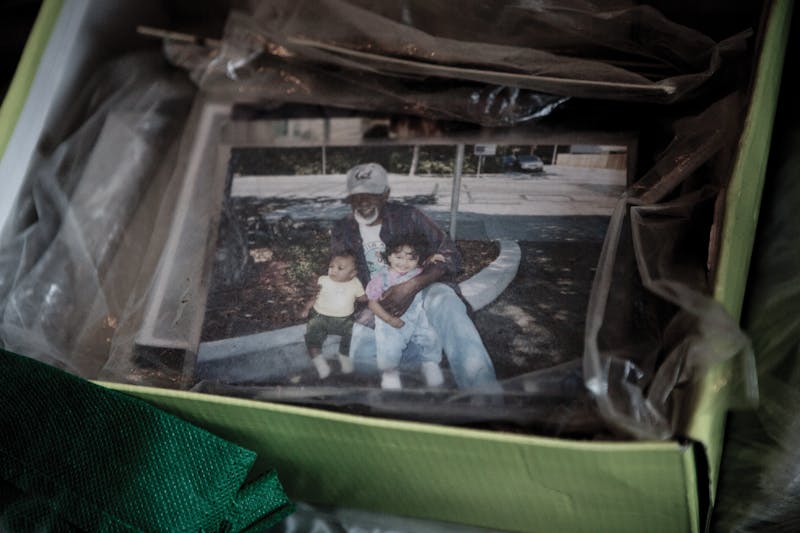
imageSuzan’s husband, James Russaw, pictured with two of their grandchildren.

Cubberley was a psychic relief because it solved so many basic needs: It had a place to bathe in the morning, a place to charge your phone. The parking lot had also formed its own etiquette and sense of community. People tended to park in the same places, a spot or two next to their neighbors, and they recognized one another and nodded at night. They weren’t exactly friends, but they were people who trusted each other, an impromptu neighborhood no one wanted to lose after losing so much. It was safe, a good place to spend the night. But it was next door to a segment of homeowners who were fighting hard to move the car dwellers out.

Normally, wealthy people who move into an area don’t see the results of their displacement because the people who lose their homes don’t stick around; they move to cheaper suburbs and work themselves into the fabric elsewhere. But the folks at Cubberley, 30 people on any given night, were the displacement made manifest. Most weren’t plagued with mental health or substance abuse problems; they simply could no longer afford rent and became homeless in the last place they lived. People will put up with a lot to stay in a place they know. “I’ve been analyzing why don’t I just get the heck on. Everybody says that, go to Wyoming, Montana, you can get a mansion,” Suzan said. “Move on, move on, always move on. And I say to myself, ‘Why should I have to move on?’”

It’s a new chapter in an old story. In his seminal 1893 lecture at the Chicago World’s Fair, Frederick Jackson Turner summarized the myth of the American frontier and the waves of settlers who created it as an early form of gentrification: First, farmers looking for land would find a remote spot of wilderness to tame; once they succeeded, more men and women would arrive to turn each new spot into a town; finally, outside investors would swoop in, pushing out the frontiersman and leaving him to pack up and start all over again. It has always been thus in America. Turner quoted from a guide published in 1837 for migrants headed for the Western frontiers of Ohio, Indiana, and Wisconsin: “Another wave rolls on. The men of capital and enterprise come. The ‘settler’ is ready to sell out and take the advantage of the rise of property, push farther into the interior, and become himself a man of capital and enterprise in turn.” This repeating cycle, Turner argued, of movement and resettlement was essential to the American character. But he foresaw a looming crisis. “The American energy will continually demand a wider field for its exercise,” he wrote. “But never again will such gifts of free land offer themselves.” In other words, we would run out of places for the displaced to go.


Suzan was born in 1945. Her father worked at what was then the Lockheed Corporation, and her mother had been raised by a wealthy family in Oak Park, Illinois. Her family called her Suzi. Though she grew up in nearby Saratoga—and spent some time in school in Switzerland—she distinctly remembers coming with her mother to visit Palo Alto, with its downtown theaters and streets named after poets. Palo Alto more than any other place formed the landscape of her childhood. “It was a little artsy-craftsy university town—you find charming towns are university towns.”

Like many women of her day, Suzan didn’t graduate from college. When she was 24, after her last stay in Switzerland, she moved to Mountain View, the town on Palo Alto’s eastern border that is now home to Google and LinkedIn. She was living off a small trust her family had set up for her when she met James at a barbecue their apartment manager threw to foster neighborliness among his tenants. James had grown up in a sharecropping family in Georgia, moved west during World War II, and was more than 17 years her senior, handsome and gentlemanly. Suzan thought: “I can learn something from him.” They were an interracial couple in the late 1960s, which was unusual, though she says her family didn’t mind. It was also an interclass marriage, and it moved Suzan down the income ladder.

For years, James and Suzan lived together, unmarried. They bought a house on University Avenue, just north of the county line and blocks from downtown Palo Alto, in 1979, and four years later had their only daughter, Nancy. It was the area’s ghetto, and the only source of affordable housing for many years. It was also the center of violence in the region, and, in 1992, was the murder capital of the country.

They never had much money. For most of their marriage, James ran a small recycling company and Suzan acted as his bookkeeper, secretary, and housewife. They refused to apply for most government assistance, even as homeless elders. “My husband and I had never been on welfare or food stamps,” she told me. “Even to this day.”

Suzan’s parents died in 2002 and 2003, and her older sister died in 2009. (“I thank God that they’re gone,” she told me. “They would die if they saw me now.”) It was a hard time for Suzan, who went to care for her dying parents and nearly left James. She felt he’d checked out of the difficulties. In retrospect, she thinks his dementia might already have been setting in; James was already in his seventies. He had taken out a second mortgage on their home, and they couldn’t pay it after he retired. They sold the house at a loss in 2005; it’s now a Century 21 office.

After they moved into the van, they settled into a routine. On the nights before James’s early-morning treatments, they slept in the dialysis center’s parking lot. Otherwise they generally stayed at Cubberley. They were still living off James’s retirement income, but most of it went to the $500 needed to rent the two storage units where their furniture remained, until they lost one for nonpayment. Finally, a few months in, Suzan was able to use a clause in a trust set up by her mother’s father to help her out in an emergency. It doubled their income—much of which was eaten up by the costs of gas, the remaining storage unit, parking tickets, and the other expenses of an unsettled life. It was a respectable income, one that technically kept them above poverty, but it still wasn’t enough for rent.

James was increasingly ill and van life was taking a toll. In addition to James’s other problems, both he and Suzan were starting to experience some of the health problems common among the homeless. The backseat of the van filled with bags of clothes, papers, fast-food detritus, pens, old parking tickets, and receipts. As the junk built up, the recline of their seats inched forever upward, until they were sitting up all the time, causing their legs to swell and nerves to become damaged, the medical consequences of not being able to raise your feet at night.


Gentrification used to be about poor neighborhoods, usually black and brown, underdeveloped and full of decrepit and neglected housing stock, run by the occasional slumlord—often described as “blighted,” though that designation has always been problematic—and how they become converted into wealthier ones, usually through the influx of richer white people and their demand for new services and new construction. It’s a negative process for the people who have to move, but there’s occasionally an element of good, because neglected neighborhoods revive. But what’s happening now in the Bay Area is that people who’ve done nothing wrong—not paid their rent late, violated their lease, or committed any other housing sin—are being forced out to make way. Displacement is reaching into unquestionably vibrant, historic, middle- and working-class neighborhoods, like The Mission in San Francisco, a former center of Chicano power. (The Mission alone has lost 8,000 Latino residents in the past ten years, according to a report from the local Council of Community Housing Organizations and the Mission Economic Development Agency.) And it’s happening to such an extent that the social workers who used to steer people to affordable apartments as far away as Santa Rosa or Sacramento, a two-hour drive, are now telling people to look even farther out. The vehicle dwellers I spoke with said they’d heard of friends living in places like Stockton, once a modest working-class city in the middle of the state, receiving notice-to-vacate letters like the one Suzan and James received.

For the most part, the traits that draw people to Palo Alto—good schools, a charming downtown, nice neighborhoods in which to raise a family, and a short commute to tech jobs—are the very same things that made the residents of Cubberley want to stay, even if it meant living in their car. The destabilizing pressure of a real estate market is also felt by the merely rich, the upper middle class, and the middle class, because the high-end demand of the global elite sets the market prices. “My block has the original owners, a retired schoolteacher and a retired postal worker,” said Hope Nakamura, a legal aid attorney who lives in Palo Alto. “They could never afford to buy anything there now.” Most people told me if they had to sell their homes today they wouldn’t be able to buy again anywhere in the area, which means many Palo Altans have all of their wealth tied up in expensive homes that they can’t access without upending their lives. It makes everyone anxious.

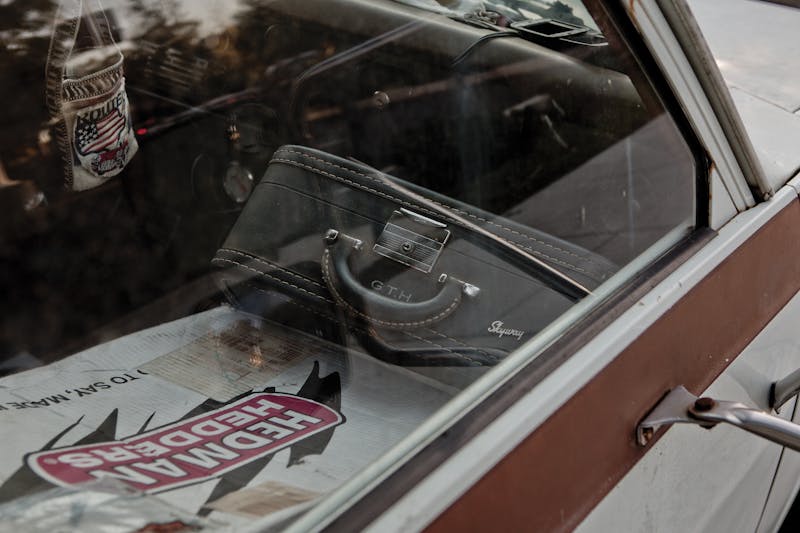
imageThe view inside a van parked outside a Palo Alto homeless organization.

The outcry from the neighbors over Cubberley was so fierce that it reshaped Palo Alto’s city government. The city council is nonpartisan, but a faction emerged that revived an old, slow-growth movement in town, known as the “residentialists.” Their concerns are varied (among them, the perennial suburban concerns of property values and traffic), but their influence has been to block any new development of affordable housing and shoo people like Suzan and James away from Palo Alto. An uproar scuttled an affordable-housing building for senior citizens near many public transit options that had been proposed by the city housing authority and unanimously approved by the city council. Opponents said they were worried about the effect the development would have on the surrounding community—they argued it wasn’t zoned for “density,” which is to say, small apartments—and that traffic congestion in the area would be made worse. Aparna Ananthasubramaniam, then a senior at Stanford, tried to start a women’s-only shelter in rotating churches, modeled after the Hotel de Zink. She said a woman came up to her after a community meeting where the same concerns had been raised by a real estate agent. “Her lips were quivering and she was physically shaking from how angry she was,” Ananthasubramaniam told me. “She was like, ‘You come back to me 20 years from now once you have sunk more than $1 million into an asset, like a house, and you tell me that you’re willing to take a risk like this.”

The trouble for Cubberley began when neighbors went to the police. There’d been at least one fight, and the neighbors complained about trash left around the center. At the time, Cubberley was home to a 64-year-old woman who’d found a $20-an-hour job after nine years of unemployment; a tall, lanky, panhandler from Louisiana who kept informal guard over her and other women at the center; a 63-year-old part-time school crossing guard who cared for his dying mother for 16 years, then lived off the proceeds from the sale of her house until the money ran out; two retired school teachers; a 23-year-old Palo Alto native who stayed with his mother in a rental car after his old car spontaneously combusted; and, for about six months, Suzan and James. “They didn’t fit this image that the powers that be are trying to create about homeless people. They did not fit that image at all,” Suzan told me. “We made sure the premises were respected, because it was an honor to be able to stay there.” She and others told me they cleaned up their areas at the center every morning.

“I said, ‘We have no place to go, and we’re staying right here.’ They were going to know about it.”

Pressured to find a way to move the residents out, the police department went to the city council claiming they needed a law banning vehicle habitation to address the neighbors’ concerns. Advocates for the homeless said that any problems could be solved if police would just enforce existing laws. Local attorneys warned the city council that such laws could soon be considered unconstitutional, because the Ninth Circuit Court of Appeals was hearing a challenge to a similar law in Los Angeles. Carrie LeRoy, an attorney who advocated on behalf of the unhoused, and other attorneys threatened to file a class-action lawsuit if the vehicle-habitation ban ever went into effect. The city council passed the ban anyway, in a 7-2 vote in August 2013, and the police department and other groups in the city started an outreach program to tell people about the law. “All of them had received these notices from the city,” LeRoy said, “And it was basically like, ‘Get out of our town.’”

A few weeks later, the city council also voted to close the showers at Cubberley and give it a 10:30 p.m. curfew, which made it illegal to sleep there. On their last night there, in October 2013, Suzan and James left around 8 p.m. so they wouldn’t get caught past the new curfew. They tried some old haunts and got kicked out. The stress of living in the van was hard on James. Around this time, James decided to end his dialysis. “Of course, we knew what that meant,” Suzan said.

One night, about a month after leaving Cubberley, the police pulled Suzan and James over. Their registration was expired. “This officer, he got a wild hair, and he said, ‘I’m going to impound your car,’ and called the tow truck.” Suzan told me. They got out of the car. Without pushing and demanding, she realized, she was never going to get out of the situation. She told me she said to the officer, “This is our home, and if you impound it we will not have a home.” He insisted. “I said ‘That’s fine. You do that. We will stay right here. I will put the beds out, I will put what we need here, right here on the sidewalk.” Other officers arrived and talked to them. They asked Suzan whether, surely, there was some other place they could go. “I said, ‘We have no place to go, and we’re staying right here.’ I was going to make a stink. They were going to know about it.” Suzan told me people were poking their heads out of their homes, and she realized the bigger fuss she made, the more likely officers might decide just to leave them alone.

Because James’s health had continued to worsen, he and Suzan finally qualified for motel vouchers during the cold weather. They got a room in a rundown hotel. “It had a microwave and a hot bath,” Suzan said. In his last few days, James was given a spot in a hospice in San Jose, and Suzan went with him. “It was so cut-and-dry. They said, ‘This is an end-of-life bed, period,’ ” Suzan said. “And I never said that to James.” He died on February 17, 2014, and a few weeks later a friend of theirs held a memorial service for James at her house. Suzan wore an old silk jacket of her mother’s, one that would later be ruined by moisture in the van, and a necklace Nancy had made. They ate James’s favorite foods—cornbread, shrimp, and pound cake. Suzan had a few motel vouchers left, and afterward stayed with friends and volunteers for a few weeks each, but she felt she was imposing.

That summer, she returned to her van. It was different without James; she realized she’d gotten to know him better during their van life than she ever had before. Maybe it was his dementia, but as they drove around or sat together, squished amidst their stuff, he’d started to tell her long stories, over and over, of his youth in Georgia. She’d never heard the tales before, but she’d started to be able to picture it all. On her own, without his imposing figure beside her, Suzan was scared, and more than a little lonely. Most nights, she stayed tucked away in a church parking lot, without permission from the pastor, hidden between bushes and vans. The law wasn’t being enforced, but sleeping in the lot made her a kind of a criminal. “The neighbors never gave me up,” she said.


Suzan told me she was in a fog of denial after James’s death, but it’s probably what protected her because homelessness is exhausting. “You start to lose it after a while,” she said. “You feel disenfranchised from your own society.” The Downtown Streets Team, a local homeless organization, had been helping her look for a long-term, stable housing solution. Indeed, Suzan told me that at various times, she and James had 27 applications in for affordable housing in Palo Alto. (When he died, she had to start over, submitting new applications for herself.) Her social worker at the local senior citizens center, Emily Farber, decided to also look for a temporary situation that would get Suzan under a roof for a few months, or even a few weeks. “We were dealing with very practical limitations: having a computer, having a stable phone number,” Farber said. Craigslist was only something Suzan had heard of. She’d finally gotten a cell phone through a federal program, but hadn’t quite mastered it.

For many months, Farber struck out. She didn’t think Suzan would want to live with three 25-year-old Google employees, or that they’d want her, either. She even tried Airbnb. Because Suzan didn’t have a profile, Farber used her own, and wrote to people who had rooms listed to say her 69-year-old friend needed a place to stay in the area for a couple of weeks. “We got three rejections in a row,” she said. Finally, in November, they found a room available for rent for $1,100—about 80 percent of her income from the trust and her widow’s benefits from Social Security. Suzan would have her own bedroom and bathroom in the two-bedroom apartment of a single mother. The mother crowded into the other bedroom with her 16-year-old son and seven-year-old daughter. The only downside for Suzan was that it was in Santa Clara, another charmingly bland suburban enclave in the South Bay, a half hour south of Palo Alto and a world away for Suzan. “It’s out of my comfort zone, but that’s OK!” she told me.

I met Suzan on the day she moved in, and the concept of being able to close a door was almost as unsettling to her as the concept of sleeping in the van had been. “I’m in this kind of survival mode,” she said, and had found a certain comfort in her van. “I’ve got this little cocoon I’m staying in, and everything is within arm’s reach.” She had a big blue mat in the back of the van, like a grown-up version of the kind kindergartners nap on, but soon she’d acquire a bed. She retrieved her old TV from her storage unit. She made a comfortable room, with chairs and a bed and a small table, and decided to eat her meals in there. She only signed a lease for three months, because it wasn’t really sustainable on her fixed income. She’d also applied for an affordable housing complex being built for seniors in Sunnyvale, one that would provide permanent housing for 60 senior citizens from among the 7,000 homeless people in the county at the time. She’d find out in April if she was selected in the lottery. All her hopes were pinned on it.

In the first few weeks after her move to Santa Clara, Suzan spent a healthy portion of her limited income on gas, driving the Explorer back and forth to Palo Alto. After all, her post office box was there, and so were her social workers. Her errands demanded a lot of face time, and in some ways, she still filled her days the way she had before she got her room, moving around trying to solve her problems. Her car was still packed, too, as if she hadn’t let go of the need to drive in it, to move forward, to keep her stuff around her within arm’s reach, as if she were still without a home base.

Two afternoons a week she went to a Palo Alto food closet. She usually made it right before it closed, in the early afternoons. When her number was called, she went up to the counter to watch the volunteer sort through what was left on the shelves, finding the most recently expired items—these were older goods grocery stores couldn’t keep past their sell-by dates. Suzan’s politeness was, as always, almost formal, from an earlier era, when being ladylike was a learned skill. The volunteer would ask her if she wanted milk, or peaches, or a serving-size Baggie of cereal, and she’d say, “Yes, very much so!” These days, she got to take raw eggs instead of the boiled ones, a treat reserved for those with kitchens. Her requests were glancing rather than direct. “Have you any lettuce?” and the answer was often no. I said it seemed like an efficient operation. Suzan said, “I really know the drill!”

Suzan needed to visit her social worker, Julia Lang, at the Downtown Streets Team office to get the form that allowed her to go to an even better food bank. She asked the receptionist whether her social worker was in. She wasn’t, and Suzan explained she was looking for the food bank vouchers. Then the receptionist asked for her address. That stopped Suzan. The receptionist explained that the pantry was for Palo Alto residents, and Suzan was considering, for the first time, whether that counted her. Suzan explained that she and her husband had gone to the pantry the year before, and said they should be in the system. We waited while the receptionist looked. Suzan waved at someone she’d seen around for years, from her car-dwelling days. Suzan told the receptionist, again, that they really should be in the system. But they weren’t. Suzan said that was OK, and she would come back. The receptionist said, “Are you sure? I just need your ID and your address.” Suzan demurred. She needed to talk to her social worker. This is what it meant to have to leave her hometown. She was leaving the city where she and James had known people, the city where James had died, the city where she’d grown up and near where she’d raised her own daughter. It was the city where she knew where to go, where she’d figured out how to be homeless. It was the city where she knew the drill.


That homelessness persists in Silicon Valley has puzzled me. It has an extremely wealthy population with liberal, altruistic values. Though it has a large homeless population relative to its size, in sheer numbers it’s not as large as New York City’s or L.A.’s. Some of the reasons could be found in the meeting on November 17, 2014, when the city finally overturned the car-camping ban. It had never been enforced because, as predicted, the Ninth Circuit had overturned L.A.’s ban. In the end, all but one person who’d voted for the ban the first time around voted to overturn it. The lone dissenter was councilman Larry Klein. “The social welfare agency in our area is the county, not the city,” he said. “To think we can solve the homeless problem just doesn’t make sense.”

This idea was repeated many times among city officials—that homelessness was too big an issue for the city to resolve. The city of Palo Alto itself has one full-time staff member devoted to homelessness, and it coordinates with county and nonprofit networks to counsel, house, and feed the homeless.

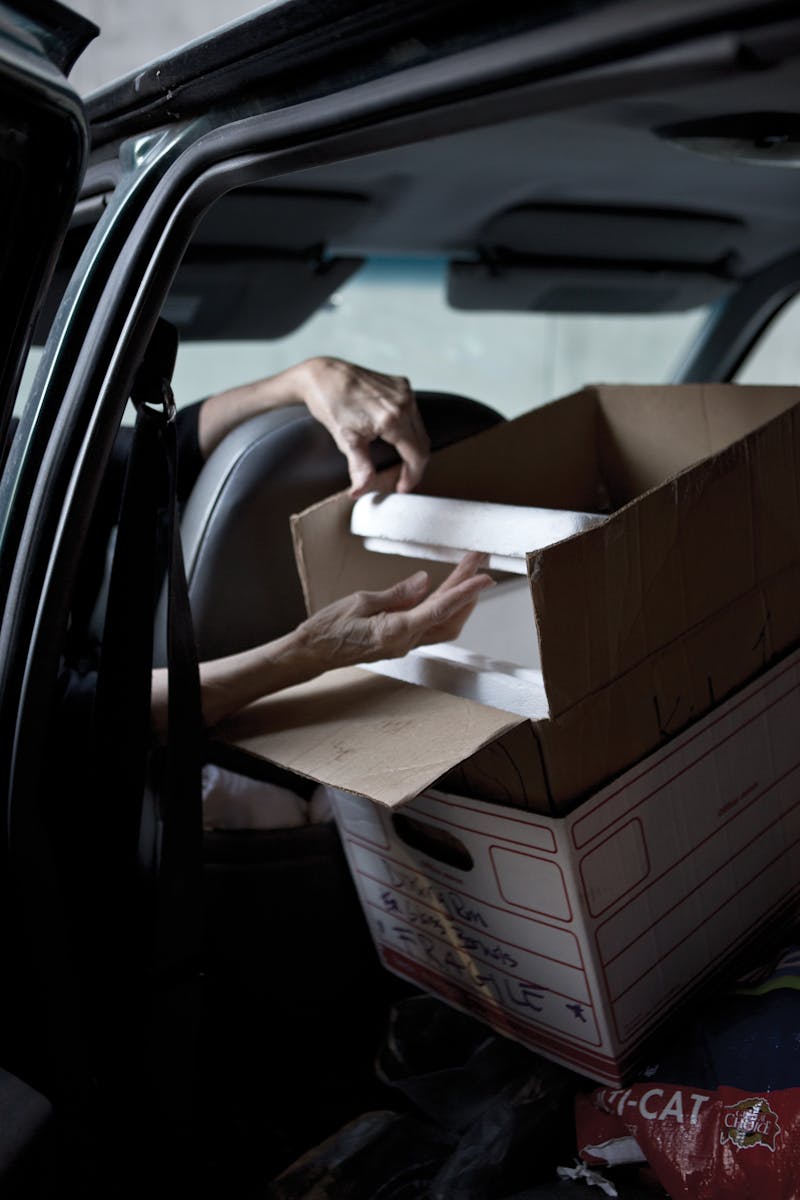
imageSuzan shows where she stored food in her car while homeless.

During the fight over the ban, the city tried to devise an alternative—a program that would allow car dwellers to park at churches—but then left the details up to the faith community to work out. Nick Selby, an attorney and member of the Palo Alto Friends Meeting House, said he and his fellow Quakers met with community resistance when they tried to accommodate three or four car dwellers on their tiny lot. Neighbors circulated a petition listing concerns like “the high prevalence of mental illness, drug abuse, and communicable diseases in the homeless population” and the risk of declining property values. But Selby said some of their concerns were fair. “People who objected were saying to the city, ‘What’s your program?’” Selby said. “And the city really had no answer to those questions.” Without a solid plan and logistical help from the city, other churches were reluctant to step forward. “The churches weren’t prepared to deal with this,” he said. After the church car-camping plan fell through, the city council said it had no choice but a ban.

Santa Clara County, too, struggles to address the problem. The county is participating in federal programs to build permanent supportive housing for the chronically homeless population, the population of long-term homeless who typically have interacting mental health and substance abuse problems. But land is expensive here, and the area is shortchanged by the federal formula that disperses funds. California, ever in budget-crisis mode, provides limited state funds. There isn’t a dedicated funding stream from the cities, which don’t necessarily pay a tax to the county for these projects, and local affordable housing developments are often rejected by residents as Palo Alto’s was. In September, the city of San Jose and the county announced a $13 million program to buy old hotels and renovate them as shelters, which will make 585 new beds available. While advocates credit the county’s efforts with cutting the estimated homeless population by 14 percent since 2013, the number of people like Suzan, who hide in their cars, is almost certainly underestimated. But most such efforts are centered in San Jose. Chris Richardson, a director of the Bay Area’s Downtown Streets Team, said what needs to happen is not a mystery: Other cities have to fund affordable housing, they have to fund more of it, and they have to do it in their own neighborhoods, without relying on San Francisco and San Jose to absorb all of the area’s poverty and problems. “You can’t just ship them down to the big, poor city,” he said.

When Palo Alto originally passed the car-camping ban, it also devoted $250,000 to the county’s homelessness program. When they voted to rescind the ban, council members asked for an update on what happened to the money. The city staff was not prepared to report on how it had been spent at that council meeting, more than a year into the funding. Members of the council again reiterated their desire to help the homeless. “Helping the homeless” was tabled, as a general idea, for another agenda at another meeting, as it always seems to be, or passed off to the county, or to someone else—and so helping the homeless is something nobody does.


Through the winter, Suzan remained ill; it was a bad flu season. She kept paying the rent on her room, on her storage units, on her P.O. box in Palo Alto, and she tried setting aside money she owed on parking tickets. Some months she’d run out of gas money to drive the 15 miles to Palo Alto and check her mail or visit her social workers. She was waiting to hear about the affordable apartment.

In May, she was denied. Suzan had bad credit, both because of the unpaid storage unit she and James had lost and because otherwise her credit history was so thin. Julia Lang, one of her social workers, told me she couldn’t even get a credit score for Suzan. Lang said people get denied on credit, or because they make too little for affordable housing that’s supposedly intended for extremely low-income people, all the time. “When you’re that destitute and have gone through so many complicated situations, what are the chances that your credit’s going to be good?” she said.

Suzan was livid and despondent, and she decided to appeal. “I wasn’t going to take that lying down,” Suzan told me. “I was proud of myself.” Catholic Charities helped her appeal. Suzan had to write a letter showing how she intended to repair her credit, and that she understood why it was bad in the first place. During the months of back and forth, Suzan bought a new Jeep, only one year newer than the Explorer, in case she needed to sleep in her car again. In July, she learned she’d won her appeal. She had two weeks to get her affairs in order, pay the first month’s rent and security deposit, and move in. Her social workers helped her with some of the move-in costs, and she signed a lease for a year.

I saw Suzan again in August, about three weeks after she’d moved in. Her hair was trimmed. She was wearing a brightly colored muumuu, blue and green with tropical flowers—“It’s a housedress but you can wear it out on the street!”—and a green sweater tied around her shoulders. She seemed relaxed and rested, and I told her so. Her bed was full of folded clothes, and her room was still in disarray. She was trying to cull her storage unit so that she could get a smaller one and cut down on rent. Most of the people in her complex had been in the same boat as Suzan, or had been worse off. She pays $810 a month, the amount determined to be affordable for her income. It had taken her more than three years, help from at least three social workers, and thousands of dollars, but she was finally stably housed. At least, for a year.