Showing posts sorted by relevance for query large American city. Sort by date Show all posts

Sunday, March 4, 2018

With Bathroom Bill Dead, Houston-Founded Pastor Council Looks To Future Fights

Read article : With Bathroom Bill Dead, Houston-Founded Pastor Council Looks To Future Fights
Dave Welch speaks during a press conference in favor of a bathroom bill at the Texas Capitol near the end of the special session on August 14, 2017.

A day before the Texas Legislature ended its special session this week, a session that included a high-profile fight over a “bathroom bill” that appeared almost certainly dead, David Welch had a message for Gov. Greg Abbott: call lawmakers back to Austin. Again.

For years, Welch, executive director of the Texas Pastor Council, has worked to pass a bill that would ban local policies that ensured transgender individuals’ right to use restrooms in public schools and government buildings that match their gender identity. The summer special session, which was quickly coming to a close, had been Welch and other social conservatives’ second chance, an overtime round after the bill — denounced by critics as discriminatory and unnecessary — failed during the regular session that ended in May.  

But with the Texas House unlikely to vote on a bathroom bill, Welch gathered with some of the most conservative Republicans in that chamber to make a final plea. The bill, they argued without any evidence, would prevent men from entering bathrooms to sexually assault or harass women.

“If this does not pass during this special session, we are asking for, urgently on behalf of all these pastors across the state of Texas, that we do hold a second special session until the job is done,” Welch said at the press event, hosted by Texas Values, a socially conservative group.

 Though the group of lawmakers, religious leaders and activists were still coming to terms with their failure to get a bill to Abbott’s desk, for Welch’s Pastor Council, the years-long fight over bathroom restrictions has nonetheless been a galvanizing campaign.

The group, which Welch founded in 2003, has grown from a local organization to a burgeoning statewide apparatus with eyes on someday becoming a nationwide force, one able to mobilize conservative Christians around the country into future political battles. If Abbott doesn’t call lawmakers back for another special session to pass a bathroom bill, the group is likely to shift its attention to the 2018 elections. 

“Our role in this process shouldn’t be restricted just because people attend church,” Welch told The Texas Tribune. “Active voting, informed voting, is a legitimate ministry of the church.”

A pastor for pastors

Welch has made a career out of mixing the religious and the political. Before founding the Pastors Council, he spent time at the Christian Coalition and Vision America, a controversial national evangelical group led by Rick Scarborough, a Texas pastor. And just before he founded the Pastor Council, Welch briefly worked as the executive director of the Republican Party in Harris County, where he would get to know many of the politicians that would animate his later campaigns. Welch said he has known Lt. Gov. Dan Patrick, one of the most outspoken proponents of a bathroom bill in state government, since he was a radio host in Houston.

But it was with the Pastor Council — at first a small group of Houston pastors — that Welch would begin to make his deepest mark in Texas politics.

“We formed the Houston area pastor council in 2003 as a group of 12 pastors, across racial and denominational lines, to engage together on a variety of social moral cultural issues,” he said.


That initial group has since expanded into two additional entities, the Texas Pastor Council and the US Pastor Council, though the distinctions between the groups can be murky. Welch — who himself no longer preaches, instead referring to himself as a “pastor for pastors” — leads all three groups, and the main phone number for the US Pastor Council is a direct line to Welch.

The group, according to Welch, has taken on a range of issues, from criminal justice reform to child foster care. But over the course of his career, Welch and the group have had a decided preoccupation with attacking LGBT rights, what Welch describes as “the continued tide of the radical political LGBTQ movement trying to work to undermine traditional marriage and traditional family.” On the US Pastor Council website, the only “current issue” listed is “Woman’s Privacy Protection,” a page that features a number of talking points in favor of a bathroom bill.

“They have made anti-LGBT activism their primary focus,” said Dan Quinn, communications director for Texas Freedom Network, a liberal watchdog group. “They’ve had their most public efforts trying to defeat anything that protects equality for LGBT Texans.”

Over the course of several years as a columnist for World Net Daily, a far-right website known for hosting conspiracy theories, Welch railed against same-sex marriage and legal protections for LGBT individuals. In a 2009 post titled “When the Wicked Rule,” Welch attacked a new federal law that protected LGBT individuals from hate crimes as condoning “every possible form of sexual deviancy.” He denounced the “radical sexual-deviancy jihad” in a post called “My Gay America” in 2010.

“Lesbian Mayor Annise Parker has gone above and beyond to now extend protection through executive orders to ‘gender identity’ and ‘gender expression,’” he wrote at the time. “Keep your wives and daughters out of Houston city restrooms.”

That rhetoric against Parker – the first openly gay mayor of a large American city — and legal protections for LGBT individuals in Houston would eventually become talking points against the Houston Equal Rights Ordinance, which would have made it illegal to discriminate against someone based on 15 different “protected characteristics,” including sex, race, religion, sexual orientation and gender identity.

During that fight — which concluded with Houston residents voting overwhelmingly to strike down the nondiscrimination ordinance — Welch played a leading role in both the electoral and legal campaigns against the city. Jared Woodfill, one of the lead organizers against the HERO ordinance in Houston, said that Welch and his organization were “extremely instrumental” in gathering the signatures that would ultimately prompt the lawsuit and referendum overturning the ordinance.

Indeed, organizing and mobilizing voters is a key part of the Pastor Council’s mission. Its website boasts pages titled “Every Christian Votes” and the “AMERICA plan.” Under the “AMERICA plan,” pastors are encouraged to communicate with congregants about political issues, distribute voter guides and register “every eligible adult” to vote.

In other words, Welch had already established an infrastructure for turning out voters before the HERO referendum — a battle that helped elevate his organization and its platform. Randy Wilson, national field director for Church Ministries for the Washington, D.C.-based Family Research Council, which has worked with the Pastor Council, said this is easier said than done.

“Dave has to have an established and billed credibility with the pastors, a very untrusting demographic, really,” he said.

That credibility and visibility would only grow when the city issued subpoenas for sermons and other statements Welch and other members of the Pastors Council had made in support of a 2014 failed petition drive aimed at repealing HERO. That incident drew national attention, energizing conservatives across Texas and the country and landing Welch on national media. (In response to that incident, the Texas Legislature passed a lawearlier this year shielding pastors’ sermons from government subpoena power.)

“It certainly escalated some elements of what we do to a much higher level because of the visibility of that Houston battle,” Welch said. “That achieved national attention.”

With that momentum, Welch, Woodfill and other conservative activists began to look to the the Legislature as the next battleground for the issue. Welch would begin to use tactics that had worked in Houston — hosting workshops to educate pastors, blasting out emails on the issues and hosting rallies — on a statewide level.

“The network of churches that has become involved in this issue has become very, very important,” Woodfill said.“The same model is being used across the state of Texas.”

But that model has had its limits. In the Legislature, efforts to pass a bathroom bill have failed against stiff opposition from the House, in particular that of House Speaker Joe Straus.

Despite those setbacks, the US Pastor Council itself has continued to grow, Welch said. According to tax documents on a database maintained by ProPublica, the US Pastor Council, which is registered as a 501(c)(3) nonprofit charitable organization and does not disclose its donors, saw its revenue more than double from $329,696 to $833,749 between 2014 and 2015, the last year for which data is available and the year of the HERO ordinance vote in Houston.

Welch said the group does not buy large ad campaigns, instead focusing resources on hosting workshops and organizing among pastors.

“There aren’t many religious groups that overtly have this partisan affiliation or policy preference as pronounced as the Pastors Council,” said Brandon Rottinghaus, a political science professor at the University of Houston. “That’s been a major change we’ve seen since 2013 or 2014.”

With primary season approaching, members of the Pastor Council are preparing to take their campaign to the ballot box and unseat Republicans who did not do enough to challenge Straus’ opposition to a “bathroom bill.”Steve Riggle, a pastor to a congregation of more than 20,000 at Grace Community Church in Houston and a member of the Pastor Council, said he and others are talking about “how in the world do we have 90-some Republicans [in the 150-member Texas House] who won’t stand behind what they say they believe.”

“They’re more afraid of Straus than they are of us,” he said. “It’s about time they’re more afraid of us.”

“This is not over”

In early August, in the midst of the special session, Welch and dozens of other pastors descended on Austin. Hundreds of pastors had signed a letter in support of the bathroom legislation, and before heading inside, the group that had made the trip gathered on the Capitol steps for a brief rally.

Throughout his campaign for a bathroom bill, Welch has enjoyed easy access to the state’s elected officials. He hosted a policy briefing in February that featured, among others, Patrick and Texas Attorney General Ken Paxton. The August rally, which the Texas Pastor Council had promoted as a response to “opponents of God’s created order,” was no exception.

State Rep. Ron Simmons, R-Carrollton, and state Sen. Lois Kolkhorst, R-Brenham, the authors of bathroom bills in their chambers, both spoke to the importance of the bill as Welch acted as the effective emcee of the event, leading the crowd in chants of “Let the House vote.”  

“We’re going to take this letter to the House as the voice of the state of Texas and our churches today,” Welch said.

But even as he represents pastors across the state, Welch and his work enjoy far from unanimous support from Christian and other religious leaders. During the regular session, about 50 faith leaders of various denominations lined the stairs outside the Texas House in protest of bills targeting LGBT Texans.

And just days before Welch arrived in Austin for the rally this month, dozens of religious leaders gathered in the very same spot to denounce the bill as discriminatory and hypocritical. In front of a crowd of more than one hundred supporters, an imam from Austin, as well as pastors and rabbis from across the state spoke about how their faith led them to oppose the legislation.

For Steve Wells, a self-described conservative pastor at the South Main Baptist Church in Houston, the campaign for the “bathroom bill” represents “bad theology.” He says he wishes that Welch and other like-minded pastors would focus more on the common dignity granted human beings.

“You will never in your lifetime meet someone who was not created in the image of God,” he said.

And in July, leaders of the national Episcopal Church sent a letter to Strausasking him to remain “steadfast” in his opposition to the legislation, also denouncing it as discriminatory.

Terri Burke, the executive director of the ACLU in Texas, described the “bathroom bill” as the latest frontier for far-right groups opposed to LGBT rights. Now that sexual orientation is largely protected under the law, she said, gender identity has become a target.

“I think those who want to discriminate have figured out LGB are hard to discriminate against, so they’ve pulled the T out,” she said.

To Welch and his fellow members on the Pastor Council, though, the group’s positions are is well in line with the teachings of the Bible. And even if the death of the “bathroom bill” in the special session represents the loss of a single battle, the broader war continues. 

“This is not over,” Riggle said.

Disclosure: The Texas Freedom Network has been a financial supporter of The Texas Tribune. A complete list of Tribune donors and sponsors is available here.

Friday, June 2, 2017

Dispossessed in the Land of Dreams

Read article : Dispossessed in the Land of Dreams


Sometime in July 2012, Suzan Russaw and her husband, James, received a letter from their landlord asking them to vacate their $800-a-month one-bedroom apartment in Palo Alto, California. He gave them 60 days to leave. The “no-fault” eviction is a common way to clear out low-paying tenants without a legal hassle and bring in people willing to pay thousands more in rent. James was 83 at the time and suffering from the constellation of illnesses that affect the old: He had high blood pressure and was undergoing dialysis for kidney failure and experiencing the early stages of dementia.

Their rent was actually a couple of hundred dollars more than James’s monthly Social Security benefits, but he made up the rest by piecing together odd jobs. They looked for a new apartment for two months and didn’t find anything close to their price range. Their landlord gave them a six-week extension, but it yielded nothing. When mid-October came, Suzan and James had no choice but to leave. With hurried help from neighbors, they packed most of their belongings into two storage units and a ramshackle 1994 Ford Explorer which they called “the van.” They didn’t know where they were going.

A majority of the homeless population in Palo Alto—93 percent—ends up sleeping outside or in their cars. In part, that’s because Palo Alto, a technology boomtown that boasts a per capita income well over twice the average for California, has almost no shelter space: For the city’s homeless population, estimated to be at least 157, there are just 15 beds that rotate among city churches through a shelter program called Hotel de Zink; a charity organizes a loose network of 130 spare rooms, regular people motivated to offer up their homes only by neighborly goodwill. The lack of shelter space in Palo Alto—and more broadly in Santa Clara and San Mateo counties, which comprise the peninsula south of San Francisco and around San Jose—is unusual for an area of its size and population. A 2013 census showed Santa Clara County having more than 7,000 homeless people, the fifth-highest homeless population per capita in the country and among the highest populations sleeping outside or in unsuitable shelters like vehicles.

San Francisco and the rest of the Bay Area are gentrifying rapidly—especially with the most recent Silicon Valley surge in social media companies, though the trend stretches back decades—leading to a cascade of displacement of the region’s poor, working class, and ethnic and racial minorities. In San Francisco itself, currently the city with the most expensive housing market in the country, rents increased 13.5 percent in 2014 from the year before, leading more people to the middle-class suburbs. As real estate prices rise in places like Palo Alto, the middle class has begun to buy homes in the exurbs of the Central Valley, displacing farmworkers there.

Suzan, who is 70, is short and slight, with her bobbed hair dyed red. The first time I met her, she wore leggings, a T-shirt, a black cardigan wrapped around her shoulders, and fuzzy black boots I later learned were slippers she’d gotten from Goodwill and sewn up to look like outside shoes. (She wore basically the same outfit, with different T-shirts, nearly every time we met, and I realized she didn’t have many clothes.) Her voice is high and singsongy and she is always polite. You can tell she tries to smooth out tensions rather than confront them. She is a font of forced sunniness and likes to punctuate a sad sentence with phrases like “I’m so blessed!” or “I’m so lucky!” She wore a small necklace and said jewelry was important to her. “I feel, to dispel the image of homelessness, it’s important to have a little bling,” she said.

In the van, Suzan was in charge of taking care of everyone and everything, organizing a life that became filled with a unique brand of busy boredom. She and James spent most of their time figuring out where to go next, how to get there, and whether they could stay once they arrived. They found a short-term unit in a local family shelter in Menlo Park that lasted for five weeks. Afterward, they stayed in a few motels, but even fleabags in the area charge upwards of $100 a night. When they couldn’t afford a room they camped out in the van, reclining the backseats and making a pallet out of blankets piled on top of their clothes and other belongings. Slowly, there were fewer nights in hotels and more in the van, until the van was where they lived.

A life of homelessness is one of logistical challenges and exhaustion. Little things, like planning a wardrobe for the week, involved coordinated trips to storage units and laundromats, and could take hours. The biggest conundrum? Where to pull over and sleep. Suzan and James learned quickly not to pull over on a residential block, because the neighbors would call the police. They tried a church or two, 24-hour businesses where they thought they could hide amidst the other cars, and even an old naval field. The places with public toilets were best because, for reasons no one can quite explain, 3 a.m. is the witching hour for needing to pee. They kept their socks and shoes on, both for staying warm on chilly Bay Area nights and also for moving quickly if someone peered into their windows, or a cop flashed his light inside, ready to rouse. Wherever they were sleeping, they couldn’t sleep there. “Sometimes, I was so tired, I would be stopped at a red light and say, ‘Don’t go to sleep. Don’t go to sleep,’” Suzan said. “And then I would fall asleep.”

A few months in, a nice man in a 7-Eleven parking lot told them about a former high school turned community center on the eastern side of town called Cubberley. He’d walked up to their van after recognizing signs of life in the car, tired faces among the junk piling up in the back. Suzan and James were familiar with the community center because they’d taken their daughter to preschool there many years before, but they hadn’t thought about sleeping there. Cubberley had a quiet back parking lot, a flat grass amphitheater with a concrete paddock for a stage, and 24-hour public bathrooms with showers in an old gym. Rumor was that the cops wouldn’t bother anyone.

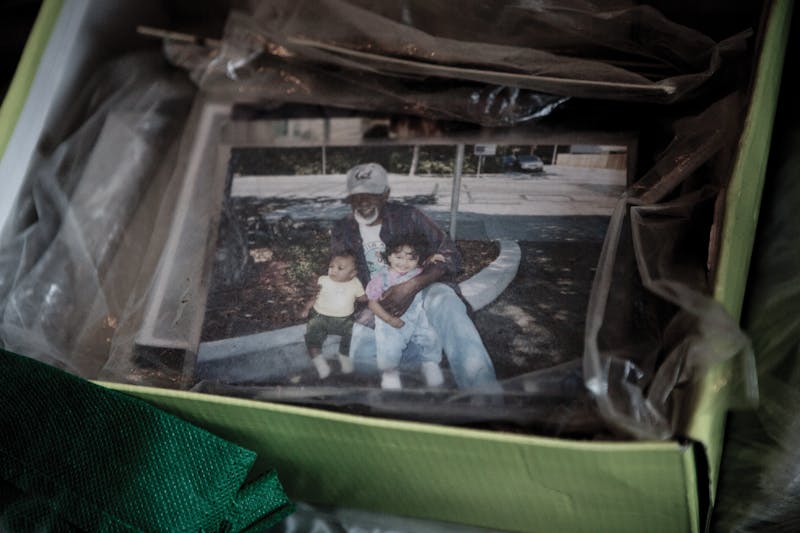
imageSuzan’s husband, James Russaw, pictured with two of their grandchildren.

Cubberley was a psychic relief because it solved so many basic needs: It had a place to bathe in the morning, a place to charge your phone. The parking lot had also formed its own etiquette and sense of community. People tended to park in the same places, a spot or two next to their neighbors, and they recognized one another and nodded at night. They weren’t exactly friends, but they were people who trusted each other, an impromptu neighborhood no one wanted to lose after losing so much. It was safe, a good place to spend the night. But it was next door to a segment of homeowners who were fighting hard to move the car dwellers out.

Normally, wealthy people who move into an area don’t see the results of their displacement because the people who lose their homes don’t stick around; they move to cheaper suburbs and work themselves into the fabric elsewhere. But the folks at Cubberley, 30 people on any given night, were the displacement made manifest. Most weren’t plagued with mental health or substance abuse problems; they simply could no longer afford rent and became homeless in the last place they lived. People will put up with a lot to stay in a place they know. “I’ve been analyzing why don’t I just get the heck on. Everybody says that, go to Wyoming, Montana, you can get a mansion,” Suzan said. “Move on, move on, always move on. And I say to myself, ‘Why should I have to move on?’”

It’s a new chapter in an old story. In his seminal 1893 lecture at the Chicago World’s Fair, Frederick Jackson Turner summarized the myth of the American frontier and the waves of settlers who created it as an early form of gentrification: First, farmers looking for land would find a remote spot of wilderness to tame; once they succeeded, more men and women would arrive to turn each new spot into a town; finally, outside investors would swoop in, pushing out the frontiersman and leaving him to pack up and start all over again. It has always been thus in America. Turner quoted from a guide published in 1837 for migrants headed for the Western frontiers of Ohio, Indiana, and Wisconsin: “Another wave rolls on. The men of capital and enterprise come. The ‘settler’ is ready to sell out and take the advantage of the rise of property, push farther into the interior, and become himself a man of capital and enterprise in turn.” This repeating cycle, Turner argued, of movement and resettlement was essential to the American character. But he foresaw a looming crisis. “The American energy will continually demand a wider field for its exercise,” he wrote. “But never again will such gifts of free land offer themselves.” In other words, we would run out of places for the displaced to go.


Suzan was born in 1945. Her father worked at what was then the Lockheed Corporation, and her mother had been raised by a wealthy family in Oak Park, Illinois. Her family called her Suzi. Though she grew up in nearby Saratoga—and spent some time in school in Switzerland—she distinctly remembers coming with her mother to visit Palo Alto, with its downtown theaters and streets named after poets. Palo Alto more than any other place formed the landscape of her childhood. “It was a little artsy-craftsy university town—you find charming towns are university towns.”

Like many women of her day, Suzan didn’t graduate from college. When she was 24, after her last stay in Switzerland, she moved to Mountain View, the town on Palo Alto’s eastern border that is now home to Google and LinkedIn. She was living off a small trust her family had set up for her when she met James at a barbecue their apartment manager threw to foster neighborliness among his tenants. James had grown up in a sharecropping family in Georgia, moved west during World War II, and was more than 17 years her senior, handsome and gentlemanly. Suzan thought: “I can learn something from him.” They were an interracial couple in the late 1960s, which was unusual, though she says her family didn’t mind. It was also an interclass marriage, and it moved Suzan down the income ladder.

For years, James and Suzan lived together, unmarried. They bought a house on University Avenue, just north of the county line and blocks from downtown Palo Alto, in 1979, and four years later had their only daughter, Nancy. It was the area’s ghetto, and the only source of affordable housing for many years. It was also the center of violence in the region, and, in 1992, was the murder capital of the country.

They never had much money. For most of their marriage, James ran a small recycling company and Suzan acted as his bookkeeper, secretary, and housewife. They refused to apply for most government assistance, even as homeless elders. “My husband and I had never been on welfare or food stamps,” she told me. “Even to this day.”

Suzan’s parents died in 2002 and 2003, and her older sister died in 2009. (“I thank God that they’re gone,” she told me. “They would die if they saw me now.”) It was a hard time for Suzan, who went to care for her dying parents and nearly left James. She felt he’d checked out of the difficulties. In retrospect, she thinks his dementia might already have been setting in; James was already in his seventies. He had taken out a second mortgage on their home, and they couldn’t pay it after he retired. They sold the house at a loss in 2005; it’s now a Century 21 office.

After they moved into the van, they settled into a routine. On the nights before James’s early-morning treatments, they slept in the dialysis center’s parking lot. Otherwise they generally stayed at Cubberley. They were still living off James’s retirement income, but most of it went to the $500 needed to rent the two storage units where their furniture remained, until they lost one for nonpayment. Finally, a few months in, Suzan was able to use a clause in a trust set up by her mother’s father to help her out in an emergency. It doubled their income—much of which was eaten up by the costs of gas, the remaining storage unit, parking tickets, and the other expenses of an unsettled life. It was a respectable income, one that technically kept them above poverty, but it still wasn’t enough for rent.

James was increasingly ill and van life was taking a toll. In addition to James’s other problems, both he and Suzan were starting to experience some of the health problems common among the homeless. The backseat of the van filled with bags of clothes, papers, fast-food detritus, pens, old parking tickets, and receipts. As the junk built up, the recline of their seats inched forever upward, until they were sitting up all the time, causing their legs to swell and nerves to become damaged, the medical consequences of not being able to raise your feet at night.


Gentrification used to be about poor neighborhoods, usually black and brown, underdeveloped and full of decrepit and neglected housing stock, run by the occasional slumlord—often described as “blighted,” though that designation has always been problematic—and how they become converted into wealthier ones, usually through the influx of richer white people and their demand for new services and new construction. It’s a negative process for the people who have to move, but there’s occasionally an element of good, because neglected neighborhoods revive. But what’s happening now in the Bay Area is that people who’ve done nothing wrong—not paid their rent late, violated their lease, or committed any other housing sin—are being forced out to make way. Displacement is reaching into unquestionably vibrant, historic, middle- and working-class neighborhoods, like The Mission in San Francisco, a former center of Chicano power. (The Mission alone has lost 8,000 Latino residents in the past ten years, according to a report from the local Council of Community Housing Organizations and the Mission Economic Development Agency.) And it’s happening to such an extent that the social workers who used to steer people to affordable apartments as far away as Santa Rosa or Sacramento, a two-hour drive, are now telling people to look even farther out. The vehicle dwellers I spoke with said they’d heard of friends living in places like Stockton, once a modest working-class city in the middle of the state, receiving notice-to-vacate letters like the one Suzan and James received.

For the most part, the traits that draw people to Palo Alto—good schools, a charming downtown, nice neighborhoods in which to raise a family, and a short commute to tech jobs—are the very same things that made the residents of Cubberley want to stay, even if it meant living in their car. The destabilizing pressure of a real estate market is also felt by the merely rich, the upper middle class, and the middle class, because the high-end demand of the global elite sets the market prices. “My block has the original owners, a retired schoolteacher and a retired postal worker,” said Hope Nakamura, a legal aid attorney who lives in Palo Alto. “They could never afford to buy anything there now.” Most people told me if they had to sell their homes today they wouldn’t be able to buy again anywhere in the area, which means many Palo Altans have all of their wealth tied up in expensive homes that they can’t access without upending their lives. It makes everyone anxious.

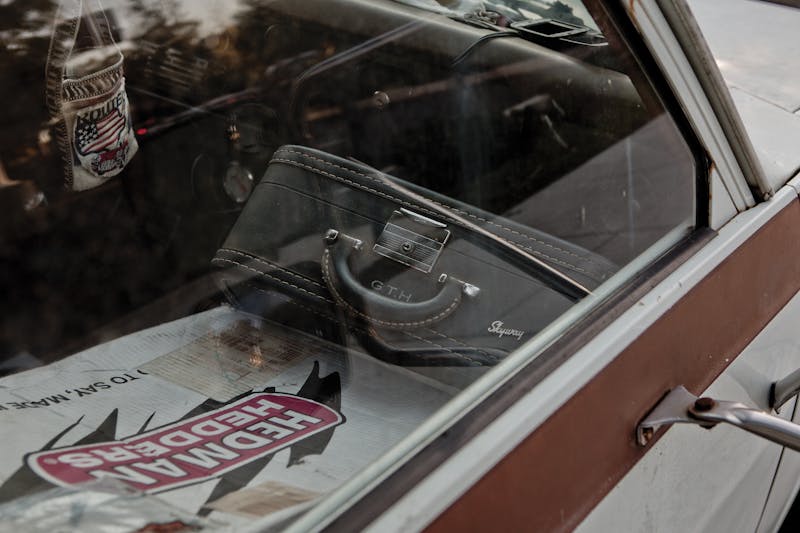
imageThe view inside a van parked outside a Palo Alto homeless organization.

The outcry from the neighbors over Cubberley was so fierce that it reshaped Palo Alto’s city government. The city council is nonpartisan, but a faction emerged that revived an old, slow-growth movement in town, known as the “residentialists.” Their concerns are varied (among them, the perennial suburban concerns of property values and traffic), but their influence has been to block any new development of affordable housing and shoo people like Suzan and James away from Palo Alto. An uproar scuttled an affordable-housing building for senior citizens near many public transit options that had been proposed by the city housing authority and unanimously approved by the city council. Opponents said they were worried about the effect the development would have on the surrounding community—they argued it wasn’t zoned for “density,” which is to say, small apartments—and that traffic congestion in the area would be made worse. Aparna Ananthasubramaniam, then a senior at Stanford, tried to start a women’s-only shelter in rotating churches, modeled after the Hotel de Zink. She said a woman came up to her after a community meeting where the same concerns had been raised by a real estate agent. “Her lips were quivering and she was physically shaking from how angry she was,” Ananthasubramaniam told me. “She was like, ‘You come back to me 20 years from now once you have sunk more than $1 million into an asset, like a house, and you tell me that you’re willing to take a risk like this.”

The trouble for Cubberley began when neighbors went to the police. There’d been at least one fight, and the neighbors complained about trash left around the center. At the time, Cubberley was home to a 64-year-old woman who’d found a $20-an-hour job after nine years of unemployment; a tall, lanky, panhandler from Louisiana who kept informal guard over her and other women at the center; a 63-year-old part-time school crossing guard who cared for his dying mother for 16 years, then lived off the proceeds from the sale of her house until the money ran out; two retired school teachers; a 23-year-old Palo Alto native who stayed with his mother in a rental car after his old car spontaneously combusted; and, for about six months, Suzan and James. “They didn’t fit this image that the powers that be are trying to create about homeless people. They did not fit that image at all,” Suzan told me. “We made sure the premises were respected, because it was an honor to be able to stay there.” She and others told me they cleaned up their areas at the center every morning.

“I said, ‘We have no place to go, and we’re staying right here.’ They were going to know about it.”

Pressured to find a way to move the residents out, the police department went to the city council claiming they needed a law banning vehicle habitation to address the neighbors’ concerns. Advocates for the homeless said that any problems could be solved if police would just enforce existing laws. Local attorneys warned the city council that such laws could soon be considered unconstitutional, because the Ninth Circuit Court of Appeals was hearing a challenge to a similar law in Los Angeles. Carrie LeRoy, an attorney who advocated on behalf of the unhoused, and other attorneys threatened to file a class-action lawsuit if the vehicle-habitation ban ever went into effect. The city council passed the ban anyway, in a 7-2 vote in August 2013, and the police department and other groups in the city started an outreach program to tell people about the law. “All of them had received these notices from the city,” LeRoy said, “And it was basically like, ‘Get out of our town.’”

A few weeks later, the city council also voted to close the showers at Cubberley and give it a 10:30 p.m. curfew, which made it illegal to sleep there. On their last night there, in October 2013, Suzan and James left around 8 p.m. so they wouldn’t get caught past the new curfew. They tried some old haunts and got kicked out. The stress of living in the van was hard on James. Around this time, James decided to end his dialysis. “Of course, we knew what that meant,” Suzan said.

One night, about a month after leaving Cubberley, the police pulled Suzan and James over. Their registration was expired. “This officer, he got a wild hair, and he said, ‘I’m going to impound your car,’ and called the tow truck.” Suzan told me. They got out of the car. Without pushing and demanding, she realized, she was never going to get out of the situation. She told me she said to the officer, “This is our home, and if you impound it we will not have a home.” He insisted. “I said ‘That’s fine. You do that. We will stay right here. I will put the beds out, I will put what we need here, right here on the sidewalk.” Other officers arrived and talked to them. They asked Suzan whether, surely, there was some other place they could go. “I said, ‘We have no place to go, and we’re staying right here.’ I was going to make a stink. They were going to know about it.” Suzan told me people were poking their heads out of their homes, and she realized the bigger fuss she made, the more likely officers might decide just to leave them alone.

Because James’s health had continued to worsen, he and Suzan finally qualified for motel vouchers during the cold weather. They got a room in a rundown hotel. “It had a microwave and a hot bath,” Suzan said. In his last few days, James was given a spot in a hospice in San Jose, and Suzan went with him. “It was so cut-and-dry. They said, ‘This is an end-of-life bed, period,’ ” Suzan said. “And I never said that to James.” He died on February 17, 2014, and a few weeks later a friend of theirs held a memorial service for James at her house. Suzan wore an old silk jacket of her mother’s, one that would later be ruined by moisture in the van, and a necklace Nancy had made. They ate James’s favorite foods—cornbread, shrimp, and pound cake. Suzan had a few motel vouchers left, and afterward stayed with friends and volunteers for a few weeks each, but she felt she was imposing.

That summer, she returned to her van. It was different without James; she realized she’d gotten to know him better during their van life than she ever had before. Maybe it was his dementia, but as they drove around or sat together, squished amidst their stuff, he’d started to tell her long stories, over and over, of his youth in Georgia. She’d never heard the tales before, but she’d started to be able to picture it all. On her own, without his imposing figure beside her, Suzan was scared, and more than a little lonely. Most nights, she stayed tucked away in a church parking lot, without permission from the pastor, hidden between bushes and vans. The law wasn’t being enforced, but sleeping in the lot made her a kind of a criminal. “The neighbors never gave me up,” she said.


Suzan told me she was in a fog of denial after James’s death, but it’s probably what protected her because homelessness is exhausting. “You start to lose it after a while,” she said. “You feel disenfranchised from your own society.” The Downtown Streets Team, a local homeless organization, had been helping her look for a long-term, stable housing solution. Indeed, Suzan told me that at various times, she and James had 27 applications in for affordable housing in Palo Alto. (When he died, she had to start over, submitting new applications for herself.) Her social worker at the local senior citizens center, Emily Farber, decided to also look for a temporary situation that would get Suzan under a roof for a few months, or even a few weeks. “We were dealing with very practical limitations: having a computer, having a stable phone number,” Farber said. Craigslist was only something Suzan had heard of. She’d finally gotten a cell phone through a federal program, but hadn’t quite mastered it.

For many months, Farber struck out. She didn’t think Suzan would want to live with three 25-year-old Google employees, or that they’d want her, either. She even tried Airbnb. Because Suzan didn’t have a profile, Farber used her own, and wrote to people who had rooms listed to say her 69-year-old friend needed a place to stay in the area for a couple of weeks. “We got three rejections in a row,” she said. Finally, in November, they found a room available for rent for $1,100—about 80 percent of her income from the trust and her widow’s benefits from Social Security. Suzan would have her own bedroom and bathroom in the two-bedroom apartment of a single mother. The mother crowded into the other bedroom with her 16-year-old son and seven-year-old daughter. The only downside for Suzan was that it was in Santa Clara, another charmingly bland suburban enclave in the South Bay, a half hour south of Palo Alto and a world away for Suzan. “It’s out of my comfort zone, but that’s OK!” she told me.

I met Suzan on the day she moved in, and the concept of being able to close a door was almost as unsettling to her as the concept of sleeping in the van had been. “I’m in this kind of survival mode,” she said, and had found a certain comfort in her van. “I’ve got this little cocoon I’m staying in, and everything is within arm’s reach.” She had a big blue mat in the back of the van, like a grown-up version of the kind kindergartners nap on, but soon she’d acquire a bed. She retrieved her old TV from her storage unit. She made a comfortable room, with chairs and a bed and a small table, and decided to eat her meals in there. She only signed a lease for three months, because it wasn’t really sustainable on her fixed income. She’d also applied for an affordable housing complex being built for seniors in Sunnyvale, one that would provide permanent housing for 60 senior citizens from among the 7,000 homeless people in the county at the time. She’d find out in April if she was selected in the lottery. All her hopes were pinned on it.

In the first few weeks after her move to Santa Clara, Suzan spent a healthy portion of her limited income on gas, driving the Explorer back and forth to Palo Alto. After all, her post office box was there, and so were her social workers. Her errands demanded a lot of face time, and in some ways, she still filled her days the way she had before she got her room, moving around trying to solve her problems. Her car was still packed, too, as if she hadn’t let go of the need to drive in it, to move forward, to keep her stuff around her within arm’s reach, as if she were still without a home base.

Two afternoons a week she went to a Palo Alto food closet. She usually made it right before it closed, in the early afternoons. When her number was called, she went up to the counter to watch the volunteer sort through what was left on the shelves, finding the most recently expired items—these were older goods grocery stores couldn’t keep past their sell-by dates. Suzan’s politeness was, as always, almost formal, from an earlier era, when being ladylike was a learned skill. The volunteer would ask her if she wanted milk, or peaches, or a serving-size Baggie of cereal, and she’d say, “Yes, very much so!” These days, she got to take raw eggs instead of the boiled ones, a treat reserved for those with kitchens. Her requests were glancing rather than direct. “Have you any lettuce?” and the answer was often no. I said it seemed like an efficient operation. Suzan said, “I really know the drill!”

Suzan needed to visit her social worker, Julia Lang, at the Downtown Streets Team office to get the form that allowed her to go to an even better food bank. She asked the receptionist whether her social worker was in. She wasn’t, and Suzan explained she was looking for the food bank vouchers. Then the receptionist asked for her address. That stopped Suzan. The receptionist explained that the pantry was for Palo Alto residents, and Suzan was considering, for the first time, whether that counted her. Suzan explained that she and her husband had gone to the pantry the year before, and said they should be in the system. We waited while the receptionist looked. Suzan waved at someone she’d seen around for years, from her car-dwelling days. Suzan told the receptionist, again, that they really should be in the system. But they weren’t. Suzan said that was OK, and she would come back. The receptionist said, “Are you sure? I just need your ID and your address.” Suzan demurred. She needed to talk to her social worker. This is what it meant to have to leave her hometown. She was leaving the city where she and James had known people, the city where James had died, the city where she’d grown up and near where she’d raised her own daughter. It was the city where she knew where to go, where she’d figured out how to be homeless. It was the city where she knew the drill.


That homelessness persists in Silicon Valley has puzzled me. It has an extremely wealthy population with liberal, altruistic values. Though it has a large homeless population relative to its size, in sheer numbers it’s not as large as New York City’s or L.A.’s. Some of the reasons could be found in the meeting on November 17, 2014, when the city finally overturned the car-camping ban. It had never been enforced because, as predicted, the Ninth Circuit had overturned L.A.’s ban. In the end, all but one person who’d voted for the ban the first time around voted to overturn it. The lone dissenter was councilman Larry Klein. “The social welfare agency in our area is the county, not the city,” he said. “To think we can solve the homeless problem just doesn’t make sense.”

This idea was repeated many times among city officials—that homelessness was too big an issue for the city to resolve. The city of Palo Alto itself has one full-time staff member devoted to homelessness, and it coordinates with county and nonprofit networks to counsel, house, and feed the homeless.

imageSuzan shows where she stored food in her car while homeless.

During the fight over the ban, the city tried to devise an alternative—a program that would allow car dwellers to park at churches—but then left the details up to the faith community to work out. Nick Selby, an attorney and member of the Palo Alto Friends Meeting House, said he and his fellow Quakers met with community resistance when they tried to accommodate three or four car dwellers on their tiny lot. Neighbors circulated a petition listing concerns like “the high prevalence of mental illness, drug abuse, and communicable diseases in the homeless population” and the risk of declining property values. But Selby said some of their concerns were fair. “People who objected were saying to the city, ‘What’s your program?’” Selby said. “And the city really had no answer to those questions.” Without a solid plan and logistical help from the city, other churches were reluctant to step forward. “The churches weren’t prepared to deal with this,” he said. After the church car-camping plan fell through, the city council said it had no choice but a ban.

Santa Clara County, too, struggles to address the problem. The county is participating in federal programs to build permanent supportive housing for the chronically homeless population, the population of long-term homeless who typically have interacting mental health and substance abuse problems. But land is expensive here, and the area is shortchanged by the federal formula that disperses funds. California, ever in budget-crisis mode, provides limited state funds. There isn’t a dedicated funding stream from the cities, which don’t necessarily pay a tax to the county for these projects, and local affordable housing developments are often rejected by residents as Palo Alto’s was. In September, the city of San Jose and the county announced a $13 million program to buy old hotels and renovate them as shelters, which will make 585 new beds available. While advocates credit the county’s efforts with cutting the estimated homeless population by 14 percent since 2013, the number of people like Suzan, who hide in their cars, is almost certainly underestimated. But most such efforts are centered in San Jose. Chris Richardson, a director of the Bay Area’s Downtown Streets Team, said what needs to happen is not a mystery: Other cities have to fund affordable housing, they have to fund more of it, and they have to do it in their own neighborhoods, without relying on San Francisco and San Jose to absorb all of the area’s poverty and problems. “You can’t just ship them down to the big, poor city,” he said.

When Palo Alto originally passed the car-camping ban, it also devoted $250,000 to the county’s homelessness program. When they voted to rescind the ban, council members asked for an update on what happened to the money. The city staff was not prepared to report on how it had been spent at that council meeting, more than a year into the funding. Members of the council again reiterated their desire to help the homeless. “Helping the homeless” was tabled, as a general idea, for another agenda at another meeting, as it always seems to be, or passed off to the county, or to someone else—and so helping the homeless is something nobody does.


Through the winter, Suzan remained ill; it was a bad flu season. She kept paying the rent on her room, on her storage units, on her P.O. box in Palo Alto, and she tried setting aside money she owed on parking tickets. Some months she’d run out of gas money to drive the 15 miles to Palo Alto and check her mail or visit her social workers. She was waiting to hear about the affordable apartment.

In May, she was denied. Suzan had bad credit, both because of the unpaid storage unit she and James had lost and because otherwise her credit history was so thin. Julia Lang, one of her social workers, told me she couldn’t even get a credit score for Suzan. Lang said people get denied on credit, or because they make too little for affordable housing that’s supposedly intended for extremely low-income people, all the time. “When you’re that destitute and have gone through so many complicated situations, what are the chances that your credit’s going to be good?” she said.

Suzan was livid and despondent, and she decided to appeal. “I wasn’t going to take that lying down,” Suzan told me. “I was proud of myself.” Catholic Charities helped her appeal. Suzan had to write a letter showing how she intended to repair her credit, and that she understood why it was bad in the first place. During the months of back and forth, Suzan bought a new Jeep, only one year newer than the Explorer, in case she needed to sleep in her car again. In July, she learned she’d won her appeal. She had two weeks to get her affairs in order, pay the first month’s rent and security deposit, and move in. Her social workers helped her with some of the move-in costs, and she signed a lease for a year.

I saw Suzan again in August, about three weeks after she’d moved in. Her hair was trimmed. She was wearing a brightly colored muumuu, blue and green with tropical flowers—“It’s a housedress but you can wear it out on the street!”—and a green sweater tied around her shoulders. She seemed relaxed and rested, and I told her so. Her bed was full of folded clothes, and her room was still in disarray. She was trying to cull her storage unit so that she could get a smaller one and cut down on rent. Most of the people in her complex had been in the same boat as Suzan, or had been worse off. She pays $810 a month, the amount determined to be affordable for her income. It had taken her more than three years, help from at least three social workers, and thousands of dollars, but she was finally stably housed. At least, for a year. 

Wednesday, March 1, 2017

The Ogden Standard from Ogden, Utah on April 1, 1918 · Page 11

Read article : The Ogden Standard from Ogden, Utah on April 1, 1918 · Page 11

J L ' THE OGDEN STANDARD: QGDEN, UTAH, MONDAY, APRIL 1, 1918. I r, , RILNT-SEXL-BUY TeSU.t gJ 1 I Classified Ads r THROUGH Standard H 1 Lead STANDARD WANT ADS, w-Ads 111 I WANTED I Female H el p fcfiSSDFirsi class stenographer. Ld Scowcroft & Son. 5038 general housework. Small tamlly 2972 Washington avenue. 4083 M r7nv"to represent Nubone Corset JSpany m Ogden. Phone 2090-J. 4078 flt rnarTtoVork by the day. Mrs. V gjdne) Stevens, Adams. 4"d5 Male Help SRtjng man" collector with bicycle. Pennant position. National, 54 Wash. JJJg W.MFP First c I a - - - lonographrr. jolin Scowcroft & Sons. 5089 5nfjNG man m help make candy A rhiiice to quickly learn a trade that Svs from 5100 to 5150 a month. Goad JjjLg Whlc learning. Greenwell's Confectionery 5013 OOUD salesman wanted Salary and commission. Address with references., Ilox 200. Standard office. 40o- 'ranchmen and sheepmen. We furnish .ill kinds "I ranch In -Ip ind sheep herders to you free. Interstate Employment Agency PbODe1246 H9 2r,th St TWO first -class machinists and two fir-t class bollermakers. Inquire Sup , Oeden Sui,'ir factory, Amalgamated Sugar Co. syyt f. Situation Mp m roofs'"' " " ' v-fyvyx LADY with babe wants work on ranch m 15ox 50 care Standaul 5ul5 3 WOMAN wants work by the day. Pbone 273-J. 4U76 GARDENS ploughed Phone 611. 3924 HEFINL) ycung woman wishes posi- J uon as office assistant in doctor's or ' dontibt's office Bo 10U, care Standard. 1U61 . ! CARPET and rug weaving, Ph. i:3S2 J. i 3553 i CHIMNEY SWEEP. FURNACLS and chimney cleaned. I Leo Bstera, phone lio2. 205U FOR REffl" gpard and Room J J HQME -COOKED meals, 518 25ih St. 3378 : ROOM and board at olS 25th. 3756 i FOR SALE Sewing Machines ANY make tewing machines sold or repaired. Easy terms. Freight paid. ; Walker Electric Co , 150 S. State, Salt I L-ike City. 3848 ! FORSAL OK f RAEj - DRY Una in southern Idaho; iaise wheat and Le independent Fur lnlor- mation address J., care of Standard. U 5002 I m GROCERY store with five modern rooms above. Box 33, care Standard, i .JU26 1 FOR SALE j Washing Machines t GUARANTEED electric washing machines fiG Easy terms. Freight paid i Walker Electric Co., 15D S. State, Salt Lake City. 3849 liALFll 1J. liCNTEIi, Lxtabliahed ; 18S&. Mortgago Loans. Real Estate, Insurance, Utah, : Jabo lauds, farms f and city property. l"ersons desiring to j loan mo. y on good first mortgage security will do well tu consult me. Uood appbcati..a? always un hand 1 24th St , ugdcq, Utah. 3330 W. N. Pierce Agency Real Estate. Insurance, Loans, Notary. 15 Comnier- cial Bank Bldg;. Phone 300. 6 MONEY to loan on roaJ estate eecur- y. J. j. LrummltL 6-21-tl EAE ESTATE, Mor'.saco and Lotas. Kelly & Herrick. G-lfc-tf j WANTED a To Buy lyiT price" p;i Id forsacks. Grout's Grain store, 334 24tb SL 3236 TU buy bouse io be removed to own Pi operti. Address A. T. care Stand - 5016 WANTED' ; senls QLTt.K selling proposition; good men pJ. Boyle Hardware Co. Ask for Jacobs 50Q7 WANTED Good live salesman. Apply 2482 Wash. Phone 1m;. 5008 I FOR SALE j Vacuum Cleaners Pi0IL elecLric. 5-ear guarantee, July $30 freight. Paid. Walker Electric lro-. 159 S. State, Salt Lake City. 81 150 6 PATENT ATTORNEY IrA TENTS, patent drawing, enruraer-tal draft ine industrial Engineering company. 435 Atlas Dlk., Salt Lake JPboae Was. 6260. 6009 TOR RENT I Furnished VW'u nice looms, flghi housekeeping gas, hot and cold water. Phone 1286 2154 Monroe. 5055 MODERN furnished apartment for rent. 429 Hemck. 5062 Fl'RN. housekeeping apts. 2203 Wash. 5059 NICE r-uiny; ,-, ;iMnable; 2650 Madi-son- 5050 THREE clean rooms, pantry, clothes closet, lawn, shade. Phone 1127-M 5027 4-ROOM modern cottage, sleeping porch,; no children; 2531 Lincoln 5085 , NICELY fnrn up -to -date 3-5-rm, apt Ideal location. No children. 2341 Adams' 4051 FOUR room modern house furnished, ! ?20 per month. 1017 Twcntv-first Inquire 9 1 8 Twenty-first. 40S8 1 I -ROOM mod with barn and chicken coops; acre of ground. 2 block? from Harrisville car line. Phone 22C9. 5000 MODERN furnished apartments. 231' -'7th. 4006 ' CoRPJY Apts Modern, reasonable, furnished house. Phono 2925-2566' Wa-li aenue. 4082, " ' -I. HOTEL, 217 Hi. Rooms 82.00 and 82.SO. 4000 1 NKJATLY furnished rooms, 2247 Adams. 3983 ROOMS and hskp. rooms, 2547 Lin- 4003 ! NICELY fur. rooms for gentlemen; hot water, shower bath. 2452 Madi-'son- 3933 j HOUSEKEEPING rooms, 2220 Lincoln. I 3917 HOUSEKEEPING rooms. 2353 Mon-roe- 3873 FURNISHED hskpg. rms. 330 23rd. 3736 NEWLY furnished Apt.. 333 21th. 3510 11 RNiSilED housekeeping rooms and bachelor apartments. 2337 Adams rear. Phone 1686-R. ;;crjl NEATLY furnished rn:s. 333 24th. oo64 PEARL. Twenty-seventh and Grant. Phone 2920. 206 SEE the new Plazn Apts. l'rlces from $23.50 to 37.50 pcu month, including light, heat and gas. Phone 2208. 155 HOUSES and flats. 3634 Grant- 9-18-tl : u ji Unhiriiish&S B A GOOD 6 room modern house, wellj located, close in, cheap to the right . party. J. J. Brummitl, under Utah National bank. 5068 j ONE large room. S4.0Q per month. 3050 I Adams. 5064 j 6-R(i)M house. ?11 . month 1112 25th St. Phone 2676-XV. 50661 3-ROOM house. 2071 Adams. 5053 SMALL house and 4-A orchard on 12th St. Call 1950-R. 5040 A GOOD 4 -room house in the- railroad I district, 12 J. J. Brumniiit. Phone ' 69. "a 1 oS 3-ROOM house, pantry, clothes closets and lights. 2032 Ballantyne. 6U29 SIX room cottage at 1018 Washington. 1 Inquire Mrs. Spencer, court house. 5021 UNFl'KMSl 1 LI four room modern apartment, 2743 Grant. 5uli ONE 7 -room modern house; gas range connected. 2035 Adams. 4074 ARGYLL 3-room modern apt. Phone 1008 -NJ. 4014 5 ROOM modern house. Call 1220 -R. 4019 3 U00M apartment in P ery Apartments. Apply D. H. Peery Estate, Ogden theater. 3LL4 APT., 3 small rooms, partly modern, 510.00. 663 27th St. 3984 MODERN 4-rm. Apt., summer kiichen. Ideal location. Phone 102. 3827 FuR Sale 1917 Ford; call at 32 1 1 Stevens avenue after 5 p. m. 5042 CAR in good running order, good tires, i.r. fl2J,00. Parly leaving. 267C-W jUi7 A 5 PASS. Bulck 6, run less than 1500 mi. 506 Plaza Apts. 3958 WANTED to trade 7-passenger 1917 (handler for ear of equal value in I or 5 passenger. C. A. W. Wrights. USED CARS. WE now have the following used cars ready lor sale: 1 1914 Overland Touring $300 1 1915 Overland Touring 650 1 1916 Overland Touring 550 1 1916 overland Roadster 450 1 1916 Overland Roadster 3oO 1 1916 Overland Six-cyl 1000 1 Grant Six Touring C50 The most of theso cars are rebuilt and repainti d and run and look like new. Terms will be given to responsible parties. BROWNING AUTO CO. 3S87 To ( lean amisle:d woods, rub with a chamois leather wrung out of cold waier, then polish .with a soft duster. i Tor1ale " j ! Real Estate j GARGAINS. Frame house, u blocks from Washington Ave., $1850; $150. $20 principal and interest, I ''j .'ere : room house, fine garden land and other improvements. $1700. irrigated. 67 dry f irms, so-... re pasture, well Improved, 86000 5058 FEDERANL LAND CO. RESIDENCE 230S Adams Ave., on lot 82.5 ft by 132 ft. Mrs James C. Leg-gett, Eastern Hotel, Dunkirk, New York 506O 40 acres all planted to alfalfa; near beet dump, canning factory, school and tc. 18000. 10 acres pood 7 -room house, barn, chicken coops, team, harness and wag on, mower and rake, plow and barrow two cows, 25 chickens This proper is near Ogden on car line. Price 60(n and will take home in town as first payment). It its tanu land ou are 1 looking for see us. J. F. WALKER FARM LAND CO 201 Eccles Bldg Phone 862. A GOOD modern 5 room house, within four blocks of the Union depot, nice lot. trees, everything i,n good shape.: renting tor $20 per month. Only J18Q0, ISQO ash baiftpefl an timi q stm Pili: house is reasonably worth about' $2800 Just the thing for a railroad j man. J. J. Brummitt, under the Utah National bank. 5069 OWNER must sacrifice 5 -room mod hflllin rlrico in l-jroo lr.l orwl xvttr-. j right. Address Z care Standard 5010 7 - room house in good location, large lot, fruit, garden, tc. Only $1900. Easy terms. 8- room house, divided into two large apartments, hoth modern. Exceilenl location; $2400; easy terms Beautiful new 4 -room modern bungalow on large lot. fruit, berries, and j garden. Price $2500. Excellent rooming house proposi lion, best location In city Bargam. 6 - room modem house on bench. Bargain at $290o. Easy terms. 20 acres plow and pasture land. $800. R BERT G AGEE. 374 25th St. Phone 69 1070 AN elegant lot on 25th street, 50x138 feet to alley, with all special taxes paid. Only $800. This is a great bargain. J. J. Brummitt Phone 69. 5069 100 FOOT on 25th Si. facing Brinker Ave. No fine building spot in Ogden A snap. Phone 855 or sue J. C. Nye Ag'cy Co. 602 Eccles bldg. 4090 BY owner 5-room. mod house with gaa, ZU ::"th St. Phone 1685-R 4092 A GOOD rooming house of sixteen rooms, well located and doing a pood business, for sale very (heap on ac-1 count of owner going to war. J. J. Brummitt, under Utah National bank 5069! 7 - room modern frame residence on paved street Snap only $3500. 17 ane form on Washington, near north city limits; full water right. $5o0u 5o foot front lot on 24lh and Harrison ave. Terms. $650 KELLY t HERRICK. 4081 A SNAP. I 17 At RES land on north Washington Ave., near city limits. A part of this is good (arm land, balance first class I pasture. Price only $1650. Will make j terms. E. W. CANNADY 2427 Hudson. 4030 I II.W I, listed, w-ith me forty acres of good oil shale land in the Uintah Basin oil district This oil shale shows, on analysis of sixty gallons of superior oil per ton. This property is owned by a man who ir. not In the oil business and desires to sell the same very cheap. Hero is a splendid opportunity for any one desiring to develop ii or organize a company going in the oil business. J. J. Brummitt. Phone 59. 5069 FARM in eastern Montana r sale or trade for Ogden property. 1017 21st. 3999 3-ROOM bou-,e, part modern, lor $1050. 2250 Jackson Ave. 3981 FIVE room bouse with light and water on a lot 43.8 feet by 165 feet, west front, paved street, close m on Wash ingtou avenue. Lot alone worth $1800. ; The best investment ha Ogden. Ail for $1600. J. A. McCulloch, under First 1 National Bank. 2274 FOR sale or trade lor small acreage, j 322 D. F. 150 plowed, 85 In grain, fenc-1 ed, buildings, horses and Implements ! inclosea canyons fine for cattle. Write to box 15 care Standard. 3645 EVERYTHING for rent. Ogden Rental agency. 374 ' 25th at. Phone 69. 3657 7-ROOM brick bouse, R. R. locality; bargain at $2500; terma. interest 6! per cent. Ph. 1230-R. 3547; LOST J GOODYEAR tire, half-soled, mounted on Baker rim, 34x4 Reward. Return 2478 Washington or phone 409. 4048 SATURDAY, between Adams and1 Washington on 23rd or between 23rd and 24th on Washington, child's white fur neck piece-. Pbune 3257 -M. Call at 878 24th st. 4046 CAMEO brooch. Roward. 1929 Wash 3622 A GENTLEMAN'S gold uulch. Phone 3147 -J 5067 Equal parts of ammonia and whiten - I in: make a Jne, mixture for (lean Ing QjClfal ornaments and furnichings. , Read '.ho LLisitled Adtk I fofTsalj 1 I Rel EsUU j 41- ACRES splendid soil, in city limits Good house, barn, chicken coops, etc Liberal terms. Phone 2263-M 5030 l1; acres splendid land Abundance of water, family orchard, new 4 room modern house, barn, garrage. All good blcjgf Location 12th St. A bargain. J31p0 4 room mod. cottage; has nice sleeping porch. (Perfect beau.) Also good barn and large lot. Price 2QQ0. AIo 5 -room mod. brick. Splendid pjace. Only 4 blks. from Eccles bldg. Price $2700. We have what you want in farms or city property Glad to show vou. nGDEN REAL ESTATE s: BLDG. 243SVi Wash. Ave. Phone (378) te'.ev FOn SALE. 21 acres ';est land m county for to-aiatoes. peas, beets or fruit; 5 acres in bearing apples, 2 acres pasture, 14 acres for general use; sood 4 -room brick house, large barn, cemented cellar, well and ample water right. Ideally located for marketing crops; close to excellent school and on one of the main highways. Will sell on good termd, onlj i 4000.00. J. A. McCULLOUCH Under First Natl. "Bank. 2779 FOR SALE Poultry and Eggi -n-nsu-yn I SETTING hens wanted. Call 1416-J. 4073 I . RHODE Island Red roosters, large whit ducks and duck eggs. Phone 1 584 -M. 4058 1 RHODE Island Red -Eggs $1 per aet-. ting. G. C. Kimes, 51 Ninth st. 1042 HOOVER says. "A hen for every home." The best is wise economy. Arkady Place Hennery booking orders lor dav-old chicks; tremendous demand. Shoot your orde.3 in. A. S. I Smurthwaite, Wellsville, Utah. 3951 , . FOR No. 1 baby chicks, none better or j cheaper, phone Astill, 1157-R. 3937 j EGGS for hatching $3 a setting. Thoroughbreds Columbian Wyandottes. Inquire phone 3233 R. $904 t DAY old chicks. Order early. Best stock only. Grout's teed store, 332 24tb. o 7j TEN young hens aud two cockrcls, White 01 phiugtons. Pbune 32ol-R. 38o3 GUARANTIOED White Leghorn eggs, $1, $1.5o setting 246 1 Harrison. Phuue 1458. 3838 WHITE Wyandottes, cock and eggs, Barred Rock eggs $1.50 a setting. 850 23rd. st. Pbone 2031 - J. 1 FOR baby chicks that are worth your time and labor raising and chicks that will make good layers next winter, see Shafer at Ogden Feed Co. Also all kinds of chickens bought and sold. 3746 BABY CHICKS, S. C W. Leghorn, Utah hatched, from Hoganized stock. Phone 1569-W. Mountain View Poultry Farm. 3733 WANTED j To Rent J (6 OR 7-ROOM strictly modern house, J must be in first class condition, close in on bench; will take 2 -year lease. Gie location and rent. Address Box PX, care Standard 5056 WANTED to rent'a four or five room j modern house by desirable tenants I Phone 766 W. ios7 I . , 1 4 OR 5-room modern cottage for sum-j mer Close in. Phone 317. 5011 FORRENT Acreage A Got.)D lit acre larm, some fruit, good water right, small house, .some orchard. This farm will be rented cheap 10 the right party. If you need a place it will pay to investigate this. J. J. Brummitt, under I tah National bank 5068 FOR RENT 25 acres of alfalfa, with water, also 40 to 50 shares of water stock in the Davis &. Weber Canal Co Davis County Nursery. Phone 14 J-l, Roy. 5065 TWO HUNDRED acres of land, within1 two miles p the Reed hotel. I'onsid-j era bio of this land has plenty of water' right, same will be cut up In tracts to suit tenant. Hero Is an opportunity to have your liberty garden. Will either rent tor cash or part ot ih crop J. J. Brummitt. Phono 59. 5068 I TWo hundred acres of laud, within two miles of the Reed hotel. Consid erable of this land has plenty ol water right; same will be cut up in tracts to .suit tenant. Her,c is an opportunity to have your liberty garden. Will cither rent for ensh or part of the crop, J. j. Brummitt, under Utah Nat"-- ' - 3S85 19 ACRES of excellent tomatoes and 5 acres of various fruits, also good house on main highway near Clearfield. Phone 190. 3iiC j FOR RENT j ONE acre of ground with water. Close in. Cheap. Phono 3050. 2446 Grant ave 3847 HK lelrat)iw off1c; cmull lo-ciwtcl Imuiro J. A. Hoiu & Co., 8408 Hudson. Phoa 332 ft-uu W.'ier in which beef has been wash ed before pogkjng is excellent for planls, especially roses and gerau- iuma. . LFOR SALE Tj MbcellaneotK aNEW pillows, rockers, i arpets and other furniture, cheap. Rear 742 86th 5026 FOR sale Second-hand stake wagon, cheap. Call Goddard'a Packing o. 5049 FOR pale Oak rocker. 6x9 rug; 9627 Monroe. Call mornings. ."a.o.O . . FOR sale or trade A-l fresh milk cow. 1915 Grant. 5033 j 10 HEAD of horses West 28th St. and1 Park avenue. 5032 ! . 1 HORSE, harness and buggy or ex- j change for cow. Phono 2305-W. 6018 j A eoncrote mixer for salo cheap. Phone ' 1560-W 5020 i ' S K TROLA with $25 worth of records; j almost new. Also Pierce bicycle In excellent condition, new nies; will at riflce foi , r(. l). 2.716 Grant Phone 3148. 4091 , ROSE bushes 25c each and up, pansy 1 plants 25c a dozen. 2861 P'lngrei nue Phone 1225, or Pineree Ft ed store, 2616 Washington avenue Phone 799. 4086 TEAM, wagon, harness for sale. Will trade for property. 1650 Wash. 4080 HOUSEHOLD furniture. Rear 300 21st street. Phone 2937-R. 4059 HORSE, wagon, buggy and shafts, for sale Annlv SnniinerlH'Q store. Rena.il store. 4054 TWO brood sows for sale 240 W. 20lh st. 4047-B TWIN motorcycle, just overhauled. New tires $60. Phone 1923 M 1056 ; head high-grade Jersey cows and heifers. $425. Phone 1573. 4u57 j ROOMING house m best part of city; lurnitur" and furnishings all extra I good. Call and see. 202 23rd SL 3927 I FOR sale Delivery wagon, Ogden I Steam laundrj . 388) STOCK soda fountain and complete up-to-date fixture slightly used for a I confectionery store. Good location uptown to rent store room. Compelled to sell. A bargain. A. H Malouf, 176 25th street, Ogden. Phone 435-J. 3822 A rectifier, good as new. Inquire H. C. Bigelow. 3666 HNE targe safe cheap. W. D. Brown, 808 Eccles blag. 3594 , . POTATOES $1.25 per hundred. Tel. 1574. 3592 1M TOUTED canaries. 2220 Lincoln Ave. 14 SIX large 6acks ot kindling wood, $1. J. a. Wheelwri&bt. Phono 823. 748 TEAPOT dome oil Is the stock to buy Ollice 106 Tw enty -fifth st. 3101 SECOND-HAND goods bought and cold at reasonable prices. 1800 Wash Phone 686-J. 3082 JIM'S GROCETERIA Is run like the postoffice. Small buyers get the sani? puce as large one3. Cuatomero save the cost ot delivering, oookkoeping and clerks, Eerytiiing in groceries la cheaper. 183 24th StreeL 6-1-ti If DR3SMAK1NG j I ht.ils 1 1 1 LiiiNU ana picoc, iuc una ' 16c a yard. Fancy buttons. Madame Laplau's Gown Shop. 3rd lloor Wrigkts. 1504 LJLDIE6'tailorlng.2&3 Uadlsuu. 1932M 3-lo-iyr. j toFsale i Farms j IDAHO RANCHES FARMS and ranches, some with cattle. Terni9. Federal Land Co. 493 LEGAL NOTICES SUMMONS. In the District court of the Second Judicial district in and for the county of Weber, state of Utah. Adelaide M. Fritz, plaintiff vs. Will lam C. Fritz, defendant. The state of I'tah to the said defendant You are hereby summoned to appear within twenty days after service of this summons upon you, if served within the county m which this action Is brought; otherwise, within thirty da s alter service, and defend the above entitled action: and in case of your failure so to do, judgment will be rendered against you according to the demand of the complaint, which, has been filed with the clerk of said court. This action is brought to obtain a judgment and decree dissolving the bonds ot matrimony, now and hitherto existing between the plaintiff and deft ndant herein. HARRIS & JENSON. Plaintiff s attorneys. P O. address 405 David Eccle.i building, Ogden, Utah. SUMMONS. In the District Court of Weber County, State of Utah. Louisa Hesse, Plaintiff, vs. Alma E. Hesse, Defendant The Siate of Utah to Said Defendant: You are hereby summoned to appear within twenty days after seryipi gt this summons upon yon, if served within the county in which this action Is brought, otherwise, within thirty daya after service, and defend the above entlUed action; and in case of your failure so to do, judgment will be rendered aKainst you according to the demand uf the complaint, which has been filed with the clerk of said court. Tbls action fa brought to recover a Judgment dissolving the marriage contract heretofore existing between you and the plaintiff, likewise a decree gvrB the plaintiff the custody of, your min cdcaijtSj ajid .general j I ijIB'a(SipjflBHHpHpjpj relief, and restoring her maiden mra, STUART P. DOBBS, riaintiff's Attorney. P 0 Address 515 David Eccles Building. O'drn. Utah. First publication March 18, 191S. last publication April 22, 1918. SUMMONS. In the District Court of Weber County, State of Utah. George F. Spratlin::, Plaintiff, vs Alice K. Spratling, Detr-ndant The Stale of Utah to the Said De fendant: ou are hereby summoned to appar within twenty days after sen ice of this summons upon you. if served Within the count in which this action is brought; otherwise, within thirty days after sen ice, and defend the above entitled action; and in case of your failure so to do, judgment will be rendered against you according to the demand of tho complaint, which has been filed with the clerk of said court This action is brought to recover a judgment dissolving the marriage contract heretofore xisting between you and the plaintiff. J. D. MURPHY, Plaintiff's Attornej. P. O Address 315-310 First Nat'!. Bank Bldg.. Ogden. Utah. Date of first publication March 18. 1918; date of last publication, April 22, 1918. When washing silk or cotton gloves, Iron them when nearly dry. This greatly Improves their appearance. VERY PROPERLY. "How would you manage the march of righteousness?" j "I'd perform it on an upright ; piano." LEGAL NOTICES NO i ICE Of Special Meeting of Stockholders of Roel Asphalt Company. Notice is hereby given that there will be a special meeting of the stock- 1 holders of the Rozel Asphalt company, a corporation, with its principal place : of business at Ogden, Utah, to be held ! at the court room of Judge A. E Pratt. in tho Weber county court bouse, at Ogden, Utah, at the hour of 8 o'clock p. m . on April 2nd, 1918 Saia meeting is called for the pur pose of considering and voting upon the propositipn pi amending the articles of incorporation of said corpora -lion namely. Article Six thereof, by increasing the capital stock p 25Q,0QQ I shares of the par value of $100 per share, to 750,000 shares of the par value of $1.00 per share. i Said meeting is called under and by dlrei tion 6l the board of directors uf I said company. Dated this 11th day of March. A. D.. 1918. LEONARD PRUETT, Pre; . FRATCRNAI i Queen City Kebkan Lode, No. 4, I. O. O. tuei-La iji.u 1U1U imui .m .3aiarUa.y cveniaga ui uuu rcliutvd' u u;. , . Uicmocrd mueu, tiicpiie-na, ., u. I Luju Ciuuuuiiui, Kciuiumj; Secretary, -Jlo j k iii Uuicu ttvciiua. i Lroiliei hciuu oi' American Xtomrn, Og-1 deu liuu.vJi.eaU iu, lovn, UieetS eve-cy HtuiK.-'Kj eveliiiiK III I. C U. V. liall, I i-raleJUU Ouiluai', UainiQtiiuu , uvfcnue. W. L. Aiuurv, furcuian: J A-1 juuh. Corresponuent, j-uj kva4mhgtou aveuue. u.tuio always uukuinc C'b'leD l-oUtc iiu. tJii, i-ual Uftlec u. ' liuusu uitelo every i-iiUay mglil at lb o eioeix. -aou-e luiil, iiilb VVaoiuu-uu 1 hainu&o, ecie-eajy, Itil Cul. Uutiuu iiu. I .'unerieau fclSSOUic Jreueruuon (Lucer- lucb eveiy jduuua) o y 1)1., at Juj Zilll OU JilUiCo Jl.ltutlli, Ik . 111., u9i a.... AVC C. A" -lUilui, Oktlvim;, .ju. W a... AVU. V U.IUIO IU l uj O Ik (.KUIUK. liie uiuaU lieotiit A.jucial.lOtt ol Uic ddaecaueiM., buVti lanun, ip. 1, luelu luu 11 auu via tf'i'iuaji (..uiu0j ui 0 u eiueu, dUu cue -na uni tui i liuaj all-clliuuuu ai ..iU ei eieico. 1U luu ti uuuiuail nan, -o'J tusii. Ave. v ui ciiio nlvuiuei'd ui'.ueu. Luil.uU'J tt i.JU'1, L. C , Je'U- uiu i iviii, tL iv., 'dib Van uuicu Ave, Mitioinc Quel. Laihei Chapter, iNu 1, U. ill. Si., iCbaial QlCVLlilga llpiil ai ji.iouli-ic hall uu V aluii0 ion Ave., uelwecli -oill UJlel .OUl U., lno 1,1'S t auu einiu I'l.aaJ 01 cavil uicuui. uuiuujg uitiuuou eeii -euaiiy luVlied lo ueieuu. i-aua al llaiuliJ, U. Al. , lUiua J- liuiu, oeeiu-lai y. 'ihe liuyai Hlglilandors, uyde-n Castle liiveli ill lat,ies liail oU CiiaUL avetiuo every tecoiiu auu iuii.cn iiivouj . CVeUlll"sl al 0 ueieiv.tL. ytMUAg 11'bUtaliu- ' ueH euiuiau.. iiuilea. fV, Vv . n uib, UI. I'lO., 1. V l laiU, buclcUi) -iicajue,!, Royal .n eib'it'ui o ui America meets ever) SCCOttO auu luuilli jieiuiiay n.uu 01 eaeli muuUi al 6 o ClOCK ul eilu U6W UdU J'llu.u tiail, tluUiUili OUlluiUS V10tUOS ntslgUUOi'iJ mvuea. .Uaiy DUiiy, I oracle, iiii u minus, Nettie X'urnef, Kceuiue-l, V uu J-ureU. Woodmen ui .lie Wori(i Weber Camp. Isu it. UieelS lO tne . u. . liall. l ia-leiull Uluviv, 2'Ali) ai-iiiuji luu aienuc, cuy TUunida) evening at 6 o eioerc imhHq Woodmen coruiaily invitAU u alleuu. Matliew Ualt, C. C; Wrr I ijipiler, Clerk. P. U. LOX 488. L lah Cainu No O'J'jv. Modem Woodmen of Aiuuiiea, uioeia cuvry U euiie-uay mgiii m Uie Uurat haii, 243y Huosoa jVvc. uui ui iuuu iiiciubcid cuiuiaiiy iuued to meet wun us. W. n. aunu sun, CuUoui. J. R. HinChCillf, CieiK. I Oden Lodge No. 5 lnueuendent Orddr Ol Udd PellOWa, uieclit lu t. U. KJ. b'. liall Syery lueoua eveouis. dialling uiuiu- tti eofUlaiO UU VI led lo li HeuUL H. f. Prank l-'uliaru, u. Henry lvlsseil, beeietaj-y. The Oiacr of Hallway Emulpyej, Odea Lniiuu iNo. il. tue-eUd every rirst nd llurd lilUa.. ui eai.ii uiuiiih at tirn LuL'les' DtUl, at 6.1j u. iu. v 11 lint UrolU eio eoruiully uiviicu. AdJ iau euippr, beerelury. Vatemal urder 01 Lagles, Otjden Aeno No. 115. meets very Wednesday cv-.-ni Usui t u eJoi-K. al Lutles' liomc, uunc Ave-. Visiting LiroLlier ISagittS are 111 io-d to attend Uie ntBtU)gS. Clue luum open at 11 a m. Adam l-'aiber. VV. Predidotilj r.aii Ueisror, Secretary; Vr. HeiplibfjJ lvunzlei. Aerie Physician. Cf.ueii i.uJfu No. 2 hLnlghts or Pytnias meets every Monciu evening at i u clcif i in Cuiilu Hall ol tliu i' Lilian neiiiuiac, MS46I urant iyenus, yisUns Kiuni v tT-' come, l-'ied Mcissner, C C.; VvTl Un-dcr-wood, K. ol K. S., James AlcCuun.ni, $16 atimi;lun Ave.. M. ol t Ueighbors or Wooucrnic .okuco Circit No. B8L meets every Wednesday sysnlng of each mouth, at i o'clock In tho now. Woodmen iiall I1iIqk nelgliliora invited. Suiuli lluuon. C N . H" WeuKi Ir-uiterijon Ave. rhuuu 1335-R. Marie Critcs, ClciK, 2731 Monroe Ave, tkDftS . INFORM ATION BUREAU Auctioneer If you want to aril your furniture and receive the most money, phone, Was. 2X21-W. or write to Carl Osterloh aue tlonecr. Salt Lal;o pity I sold the Virginia, .-ilyo tho Arlinpion Hotel. 36 years 1 In Utah. fH A:toniey-at-Law E. 'I Hulsni.oki, Lawyer, "m-314, Flmt National Bank Bldtr Phone 202. 3632 LaWyev O Connolly, over Commercial National Bank. Phone 11. - Accident Insurance Aetna Arridr-nl A- Ci-ibitity Co., Aut- nnej Liability Inaurancf;. H A. Purdy. 2817 Hudson Ave. Phone 4S3. 1 Anything Bought, Bold or exchansed. Alvord. Phoni 3272 Automobile Supplies . cry thlrrn for Automobiles. Every- thin lor Eiertriclty. Auto and Electric Supply, 2564 Washington Ave. Phono 32$ and 325. ,1 Carnrrr- Repairs Sturlehaker Agency. Mack -Rob inion Co., 2440 Grant Avenue, Phone fcJl. lH , Banking Ogden State Bank. Comniercl.il & Sav ings Depta. Rt-cd Hotel Bldg. Phone 62. tali National Bank, southeast comer 2Lh bt and Wash Ave. Phone 61. Carpet Cleaning K. Van Kampcn for upholstering; car-pcla cleaned, alicrcd and laid. Re-maklnc of mattresces. Phono SS3. Exnc: t e.irnet rloaninif mattress rrno- atine'. i 1 jIi , 1 terlhg, and springs re-stretched. Call E. J. Hampton Co . Phone 25S6-W. H Chiropractors Irish & Irish chlropratic, suite 209-llii-li Col. Hudson Bldg. 2nd floor. Phone 27C'. Uuly lady Chiropractor In Ogden. 2734 I. J. McKclI, chiropractor, fourth floor I Col. Hudson Bldg. Phone 630. 2601 Johnson, McKell, Thompson, Suite 409-10-11-12-13-14 and 26 4th Huor Hudson Bldg X-Ray Laboratory. Phono 07. L. p. Pintler. succc:-.-or to F J. Freenor Chiropractic Ofricc. 112-13-13-26, Colonel llj lion Bldg. Phone 311. City Scavengers LVlcCarty a: Co., 2731 Grant Avenue, Phone 201i.-W . ( Electrical Wiring U icing ami repuTring in all its branch-! es. Auto iV: Electric' Supply, 2564 Wash. I Ave. Phonc-a 325-326. 4084 fcaaaal LH I Engraving Ogden Engraving Service Co.. makers I of line cuts In one or more colors, 2403 M Washington Ave. Phone 463. 'M Furrier and Taxidermist Furs cleaned, remodeled In latest styles. 'aH ...del 3 taken for new furs at reasonable J prices Work guaranteed. T. Gajewsky at Lurl's citurc. Phono US. Hair Dressing Ahamuiil Hairdressing Par. or. sham-' pooin?. inanli unng Li ed Hotel Bldg.. I 421 25 Ui St. Ph'.ne 107-J. .32 The Only Fireproof Hotel in Ogd :. j I Rates 75 and up The New Brigham, i j W all Ave and 2-Uh St. Phone 2430. Junk and Hides Western Hide 4c Junk Co, 2223 Vash ington Ave. Phone SGI. Ogden junk House, 2053 Wash. Ava i Phone 210. Junk Highest priec-.s paid for Junk and oaa oi an kiuus. can -o. j Messengers Phona 776. Bonded scn lcc. Motorcycle service at your own price. Wc deliver JH ouv time, anywhere, quickly and aaicly. I cm nee 411 2Jrd. 3SS3 Money to Loan Salaried people can get R without se-curity, other.; bn furnituro, rlaa:j, etc 218 Hudaon Bldg. Phone S71-7. New and Second Hand Goods A Siner. new and second-hand furnl-ture. clothing, etc., bought and sold. Suit tisei cheap 211-243 25th St Phone 132L J. J. Bunker Piano iiTning. Repairing L Refinisl-ag, All kinds of email instruments repair d. Work guaranteed. J. J. Bunker, Shop 2215 Washington Aye. Tel. 503. A'2a Photographers The Amundsen studios. Wo please tha hard I1'' -i-1 3468 Washington Ave- I nue. Phone 2275-R. Physician and Surgeon Dr. A l'einlund. cii: e hours 11 to i j j) ui New Peery Bids. Hudson Ave ; U'.s. Phone 046; ouice Phone iy00-W. Signs I Redfield-King;. Inc.. signs o" ill kinds tin. glas.-, brass, muslin, card siens i Elei trie signs, bulletins, walls, board signs Phuue 289, 2448 Wash. Avo. 3&31 Sanitary Work Sanitary Garbage Co., all kinds of rb-bish hauled, ash pits cleaned. Prices I reasonable. Phono 620. Sewing Machines W hne Sewing Machine Co., 2255 Vash- ington Ave. mono -sa. Tents and Awnings I Ogden Tent and Awning Co , manufac- tuferB of hlgh- ri i-i- store, office and j n Ident awning) Watprproot cove-rs, I Anj thins fn i mvajfb Washing ion Ave. Phono 261. Wallpaper Cleaning j Expert paper cleaner and umJturo J paeker Call Lent., rt, 8S75 Vv', 4027 Work guaranteed. Also Ia, flls- I peneers for sale. Moulding & Garner. Phone 1626 3903 U & Evuns. expert wall paper . " cfesneri All work t-uaiantecd. l1'; onah.'C PhODi1 1775. .84 Lead the Classified Ads. Read the Classified Ads. . . j

Thursday, June 1, 2017

20 Houses Under $50,000: February/March 2017 Edition | CIRCA Old Houses

Read article : 20 Houses Under $50,000: February/March 2017 Edition | CIRCA Old Houses

by Elizabeth Finkelstein

Happy (almost) spring! I’ve combined our February & March issues into one extra-special, double-decker list of 20 gorgeous, full-of-potential historic houses under $50,000. Enjoy!
 
(If you come across any beautiful old houses for sale for under $50,000, send them along to us at letters@circaoldhouses.com)


1
 313 Main St, Unadilla, NY
 
Source: Zillow, courtesy of Hunt Real Estate ERA
$39,900 (foreclosure)
 
This is a Fannie Mae Homepath property! Gorgeous two story home located in Unadilla, NY. Covered front porch greets you upon entrance. Gorgeous hardwood flooring throughout the home and a spacious open floor plan. Living area is accompanied by a fireplace. Spiral staircase leads you upstairs. Open bedrooms and upstairs fireplace. Charming home takes you back in time and is located close to amenities!


2
 402 N Pittsburgh St, Connellsville, PA
 
Source: Realtor, courtesy of Conn Realty, Inc.
$25,000
 
Spacious 4 Bedroom, 2 Bath home is perfect for your growing family. Plenty of character and potential in this gem. Conveniently located on a corner lot with off-street parking. Original woodwork, built-ins and fireplaces are added charm while you enjoy the convenience of a first floor laundry room and a full bath.


3
 651 N Main St, Kenton, OH
 
Source: Zillow, courtesy of Royer Realty LLC
$49,900
 
Vintage character! This Victorian home built in 1870 has great potential! Large rooms, high ceilings, hardwood floors, decorative wood moldings, fireplace, big windows, covered front porch, fenced back yard, one car detached garage plus an updated kitchen! 9 rooms, 5 bedrooms with one on main level, full bath and large walk-in closet upstairs and main level laundry in kitchen. Call today to see this spacious home!


4
 1701 Grand Ave, Emmetsburg, IA
 
Source: Zillow
$27,500
 
Victorian project home located near center of Emmetsburg, IA. Home was built in 1893 by the town mayor, and is approximately 3200 square feet, with 6 + 1 bedrooms, 2 baths (with space built out for master bathroom in master suite downstairs).

Home has been updated and renovated, but still needs additional love and attention. Each floor has approximately 1600 square feet of space, plus full walk-up attic and partial basement. Home includes beautiful original burled walnut woodwork and pocket doors, built in china cabinet, and one original fireplace. Home also includes one beautiful wood staircase, and second staircase off back of kitchen.
First floor includes master suite (plus build out for master bath), family room with fireplace, large living room with fireplace, formal dining room, kitchen with walk-in pantry, laundry, mudroom, and bathroom. Also includes two storage closets. Second floor includes five bedrooms with closets, small office/den, and full bath. The first floor has been renovated and updated. Second floor has been partially renovated, but will require additional work before several of the rooms are move-in ready.
Completed renovations and updates include:

*New 400 sq. ft. master suite downstairs with new carpet, lights, electrical outlets, and molding.
*New paint and electrical outlets throughout first and second floor.
*Kitchen counter and fixtures have been replaced, cabinets were refinished, and wood flooring was installed.
*New light fixtures and ceiling fans added to every room in the house.
*Popcorn ceilings have been removed and repainted throughout the house.
*Other minor modifications and updating throughout.
* Electrical panel and wiring was updated in 2014.
* New roof installed in 2003.

The house will require additional work prior to becoming move-in ready, including a furnace tune-up/repair, water heater replacement, bathroom fixtures installed downstairs, and possible minor plaster repair. The outside of the home will require new paint and fascia repair.
Looking for someone who will be able to take on this project home. Depending on taste, many of the constructions items can be included in the cost of the sale (including fixtures, molding, tools, etc.). House is currently assessed at $61,000 by the county assessor. Willing to sell AS-IS for $50,000.


5
 2453 Berdan Ave, Toledo, OH
 
Source: RE/MAX Preferred Associates
$39,900
 
FEATURES EAT-IN KITCHEN W/ GRANITE COUNTERTOPS, NEWER WOOD CABINETS & MATCHING APPLIANCES. FORMAL DINING RM. LARGE LIVING RM WITH FIREPLACE AND ACCESS TO SUN ROOM. WOOD FLOORS IN BED RMS. UPDATES TO FULL BATH. LOCATED ABOUT 2 MILES FROM THE UNIVERSITY OF TOLEDO. Selling as-is. Cash only. First 21 days on market for Owner Occupants only. Investor offers will be reviewed on day 22.


6
 23 Pittsylvania Ave, Halifax, NC
 
Source: Zillow, courtesy of Heaton Real Estate
$28,000
 
Own your own piece of History within The Historic Town of Halifax! Over 200 years old, built in the late 1700’s, early 1800’s, this beautiful Colonial Home formally known as The Price House & locally known as The Willie Jones House is in much need of repairs and restoration. NEEDS TLC and SOLD AS IS, WHERE IS! Yet, when fully restored it can be a prize show piece. Starting with a Victorian front porch, displaying original front door transom and sidelights, beautiful mantels and some original woodworking. This featured home is not only unique, but is also a work of art. This historic home is protected by covenants held by Preservation North Carolina and will apply to new buyer. Buyer may be eligible to receive historic preservation tax credits. Consult with the Town of Halifax first, but imagine converting this home into a small Bed n Breakfast in the historical heart of the County.


7
 800 Main St, Ely, NV
 
Source: Estately, courtesy of Silver Rio LLC
$45,000
 
Built in 1900 and operated as the Historic Cherry Creek Saloon until 2013 when it was converted to a residence. Includes the original structure and 5 lots. Furnished main living and kitchen areas 616 square feet. Additional 280 feet with two rooms and bathrooms all unfinished. For Sale in AS-IS CONDITION.


8
 1258 County Road 35, Guilford, NY
 
Source: Hunt Real Estate
$49,900
 
This is a Fannie Mae Homepath property! Beautiful old world charm in this Colonial style home. Tons of extra storage options with plenty of large rooms! Great open floor plan that allows tons of natural light throughout! Located close to your needed amenities! Dont miss it!


9
 872 Wall St, Iva, SC
 
Source: Berkshire Hathaway C. Dan Joyner
$45,500
 
Diamond in the Rough!! – Home with character located on 5 acres, this is a country lover’s dream! Large home with rocking chair front porch, enclosed back porch, 2 outbuldings, and so much more. The attic could be converted to more GLA as well… 3 bedrooms ( one has no closet and one is plumbed for another bathroom), huge living room with fireplace, Den with built-ins, Large kitchen and 1 bath.


10
 1935 SW Buchanan St, Topeka, KS
 
Source: Zillow, courtesy of Miller & Midyett Real Estate
$35,000
 
HISTORIC BRICK 2 1/2 STORY VICTORIAN ON LARGE CORNER LOT. 4 BEDROOM, 2 BATH IS READY TO BE RESTORED TO FORMAL ELEGANCE. HARDWOOD FLOORS, HIGH CEILINGS, LOTS OF ORIGINAL FIXTURES. COVERED FRONT PORCH. PREVIOUSLY CONVERTED TO TWO SEPARATE LIVING AREAS ONE ON MAIN AND ONE UP. PRIVATE ENTRANCE TO UPPER STORY. ATTIC HAS HIGH CEILING & COULD MAKE FOR FUTURE EXPANSION. FULL UNFIN. BSMT & DET GARAGE WITH OFFICE/WKSHOP. PROPERTY HAS BEEN IN SAME FAMILY FOR MANY YEARS. SOLD AS IS. CLOSE TO WASHBURN UNIV.


11
 12720 Still Pond Rd, Still Pond, MD
 
Source: Trulia, courtesy of Doug Ashley Realtors LLC
$39,900
 
This Victorian, located in the quaint village of Still Pond, is ready for renovation! A new well and BAT(Best Available Technology) septic system was installed in 2014. Wood floors, a nice staircase and large rooms make the possibilities endless! The well and septic alone probably cost what this property is listed for. Great opportunity to own a piece of history & renovate it to today’s standards.


12
 6896 Us Highway 29, Reidsville, NC
 
Source: Zillow, courtesy of Atkinson Real Estate
$29,900 (offer pending)
 
Some attractive wood work in subject, extra LRG Fireplace in LR, Mostly HRWD floors. Old farm style w/ Master BR on 1st fl, 4 BR, 2 Full baths. Has many possibilities. SOLD AS-IS Property is eligible for the FMFL initiative through 1-1-17. website for more details.


13
 1311 Walnut St, Sweetwater, TX
 
Source: Realtor, courtesy of Hunter Ranch and Realty
$25,000
 
Large 2 story, 8 bedroom, 2 bathroom house on huge corner lot! House needs lots of work or the lot could serve as a good spot to build! For more info call listing agent Justin Wilburn @ 325 338 5099


14
 1609 Virginia Ave, Connersville, IN
 
Source: RE/MAX Preferred Choice
$29,900
 
GREAT INVESTMENT OPPORTUNITY!! PRICED TO SELL. GREAT PRICE IN A GREAT LOCATION. NEEDS FIXED-UP BUT WORTH THE EFFORT. NEIGHBORING PROPERTIES CURRENTLY PRICED IN THE UPPER 100’S!!


15
 713 S 6th St, Coshocton, OH
 
Source: Peddicord Rice Auction Realty
$45,000
 
CHARACTER! Check out this 3 bedroom, 2 bath home with all kinds of character. Beautiful woodwork throughout the home including pocket doors, french doors and lovely built-ins in the dining room. Home has had several updates including electrical, gas service, hot water heater and more.


16
 634 Laurels Rd, Johnson City, TN
 
Source: RE/MAX Checkmate
$49,900
 
Circa 1875, Tennessee Federal Style Home with Creek Front. Remodeled during 80’s, Home is in need of rejuvenating. Nice Large, Level Lot, popular location between JC, Unicoi, and Happy Valley Communities.


17
 620 Edward St, Branchville, SC
 
Source: Zillow, courtesy of Dorchester Real Estate Services
$45,000
 
PRICE REDUCED!! Early 1900’s Home in the Historic town of Branchville. When you walk up to the home you are welcomed by a beautiful wrap front porch that was a fixture of homes of this era. +/-2084sqft with 3 bedrooms and 2 baths. Enter the front door into the foyer with living and dining room. Nice size kitchen and eating area. This home has the original wood floors and high ceilings. If you are looking for an older home this may be just the one for you.


18
 421 Mckinley Ave, Butler, PA
 
Source: CENTURY 21 American Heritage Realty
$37,900
 
POTENTIAL TO BE REMARKABLE PERIOD HOME. ORIGINAL UNPAINTED WOODWORK. AMAZING PILLARS THRU WIDE OPENING INTO LIVING ROOM. BREATH TAKING INTO THE ENTRY! STAINED GLASS IS AMAZING! SOME NEWER FLOORING, WINDOWS, NEWER PAINT IN SOME ROOMS. 3RD FLOOR HAS 4 ROOMS–2 FOR BEDROOMS AND 2 FOR WALK IN CLOSETS. HOUSE NEEDS SOME WORK BUT HAS VERY GOOD BONES. NICE, PARTIALLY FENCED IN YARD, QUIET STREET, PLENTY OF PARKING.


19
 301 Crook St, Coin, IA
 
Source: Zillow, courtesy of Crawford & Co Real Estate
$39,900
 
An older home that has had some updates and some unique features. This home has 4 bedrooms and two full baths. It has a newer hi-ef furnace and some newer wiring. On the main floor you will find a kitchen with attached laundry room, a full bath, large living room with fireplace, a foyer, and two stairways. The upper level has four bedrooms and a full bath. The basement has four large rooms and high ceiling with potential for living space. There is a one car garage. The home sits on a large lot. The home has oak floors, set of French doors and a large fireplace. There is a wraparound porch, partially enclosed and an enclosed back porch.


20
 308 Calhoun St, Johnston, SC
 
Source: Zillow, courtesy of Edgefield Southern Realty
$49,900
 
Beautiful Antique home with lots of heart pine floors, beautiful windows, and original tin shingle roof. Wide front porch for lemonade afternoons. Privacy fenced back yard with detached carport at rear. Back screened porch waiting on your rocking chair. Kitchen has hand painted details and contemporary colors. Come view today and make this house your home!


Follow CIRCA’s latest Instagram feed at @CheapOldHouses, on which we showcase only gorgeous historical homes for sale for under $100,000.


Elizabeth1AUTHOR ELIZABETH FINKELSTEIN

Elizabeth is the founder of CIRCA and a practicing writer, architectural historian and preservation consultant living in Brooklyn, NY. Elizabeth has loved historic houses for as long as she can remember, having grown up in an 1850’s Greek Revival gem that was lovingly restored by her parents. Elizabeth, her husband Ethan and their beagle Banjo remain on a relentless hunt for their perfect “Thanksgiving house.”