Read article : Master Bathroom Remodeling Ideas | Master Bath Remodel
 Master Bathroom Remodeling Ideas
" class="pin" width="620" height="620" />
Put yourself in this picture. Finally at home after a long day at work, you head directly for your spacious master bathroom. First, a workout on the stationary cycle. Next, a quick shower before you slip into the whirlpool for a soothing soak. But not before you've dimmed the lights, switched off the evening news and dropped a favorite CD into the entertainment unit. After you've soaked, wrap yourself in a heated towel. Or skip the soak and take a few minutes to relax in a steam shower.
Get up to 4 Free Quotes!
Sound like an impossible dream? Like something from a movie set? This sybaritic fantasy can be a reality if you're willing to add or borrow enough space to create an at-home haven in a master bathroom.
In the not-so-distant past, builders put little emphasis on bathroom space. The result: Full baths in many houses more than a decade old measure a minimal 5 x 7 ft. and contain a utilitarian and uninspired collection of the three necessary fixtures—bathtub, toilet and washbasin. Lighting consists of a lone fixture in the center of the ceiling. There's a single tiny window and, in rare cases, a fan for ventilation.
But, times have changed. Today's new homes offer bigger, more luxurious bathrooms—often called power bathrooms—with all kinds of comfort and convenience features that add value to the home when the time comes to sell. As a result, the owners of older homes can feel a bit more confident about jumping on the remodeling bandwagon. If you own an older home and add or expand a bathroom with the aim of creating a master suite, not only do you get to enjoy the space, but you also help your house become just as desirable to buyers as newer homes.
A new bathroom takes second place in the list of the most popular remodeling projects. A well-designed and well-executed master suite can be expected to return a nationwide average of 87 percent of the construction costs if you sell your home within a year or so. And that figure rises in hot real estate markets to as much as 135 percent in Denver, 117 percent in New Haven, Conn., and 125 percent in San Francisco.
Where to Start
Bathrooms are not only costly, they are complex to remodel. They demand lots of function packed into a small space. And there are myriad details to consider, ranging from door-swing clearances to building code requirements. Bathroom remodels demand the skills of all the major crafts. And while you might be able to take your sweet time about remodeling the family room or even the kitchen, no family can exist comfortably without at least one fully functional bathroom for even a day or two.
A safe way to minimize some of the potential problems of a bath remodel is to hire a bathroom designer. There are several ways to go about this. Look in the Yellow Pages or ask friends and neighbors to recommend an independent bathroom designer. They'll charge you a fee, ranging anywhere from a few hundred to a few thousand dollars depending on the complexity of your job. In return, they will meet with you, discuss your needs and wishes and then draw elevations and plans that you can execute yourself or take to a contractor to have built. You can also find many bath designers at kitchen and/or bath dealerships or home centers that offer design services, products and installation. The fee for their design time is generally rolled into the purchase price of the bathroom.
A design fee is often money well spent if it helps to maximize the space you have and avoid even one glitch in the project. But keep in mind that all bath designers are not created equal. Ask about their training and experience, and check references.
What to Include
Everyone's idea of luxury is different. To some, it's opulent materials. For others, it's an extra bit of storage space or privacy or the space to work out at home. Begin your bath remodel by defining what luxury means to you. Make a list of everything your "ultimate bath" would include—you can eliminate some of the frills later if the cost becomes prohibitive.
Get up to 4 Free Quotes!
"Today's master suites are luxurious in terms of comfort rather than glitz," says kitchen and bath expert B. Leslie Hart. Instead of acres of marble and gold faucets, bath remodels today focus on space. "You won't find too many telephone booth showers in today's remodeled baths," says Hart. But you might note an effort to incorporate outdoor space into the bath via a small patio or garden shower or just a large window that takes advantage of a great view. Tumbled marble, nickel, pewter and antique brass hardware finishes are most popular.
As a rule of thumb, the components of the luxury bath suite consist of some combination of plenty of space, a soaking or whirlpool tub, a sauna or steam generator, a large shower (with multiple massage jets and a seat) and a toilet and possibly a bidet that are separated from the rest of the bath in a private compartment. In addition, the room will have good lighting from a variety of sources (perhaps a skylight or greenhouse window), sufficient, well-planned storage so that all you need for personal pampering is right at your fingertips, and good ventilation. If space allows, designers may include a dressing room, laundry facilities, perhaps a small refrigerator, microwave oven and coffee maker, and enough space for some type of exercise equipment. And don't forget the entertainment system—with telephone, television and sound.
What You Will Spend
What will it cost to have luxury like this? The exact price is hard to pin down because you can put in an $80 faucet or $2,000 faucet, a $400 or $4,000 tub. But it's not unusual to spend $20,000, $30,000 or even $50,000 depending on materials and the scope of structural work necessary. As a rule of thumb, plan to spend about 2 1/2 times the cost of the products you choose on construction. According to Remodeling magazine, upgrading an existing 5 x 9-ft. bath with new fixtures, lighting, and ceramic tile floor and walls will set you back about $8,563. A 6 x 8-ft. full bath addition that includes a standard tub and shower, lighting, linen storage and a ceramic tile floor and walls within an existing floor plan carries an average price tag of $11,721. The average cost of adding a 24 x 16-ft. master suite that includes a separate bath with whirlpool and separate ceramic tile shower, ceramic tile floor and a double-bowl vanity over an existing crawlspace is $37,388.
Finding the Space
Obviously you can't fit all the components of a luxury bath into the typical 35 to 65 sq. ft. allotted for a bathroom in many homes. So you'll need to be creative and look elsewhere for the space. Or add the space for the new bath along with a new master bedroom.
Because so much has to do with the configuration of the other rooms near it, there is no ideal size for a bathroom. But, if you aim to include anything more than the three necessities, allot at least 90 to 100 sq. ft. of space.
If an existing bath backs into a garage it's relatively easy to steal space for a larger shower or tub. If there are neighboring hall closets you can live without, consider eliminating them. Take over all or part of an adjacent bedroom. But don't do this if it means you convert your three-bedroom house to a two-bedroom house.
What to do if this sounds wonderful, but your home doesn't have any spare space? Not to worry. Even a 5 x 8-ft. bath can offer some luxury if it's well-planned. Many of the features mentioned here, such as innovative lighting, proper ventilation and a combination steam room/shower, require very little, if any, additional space.
Use a combination whirlpool/ steam tub/shower unit. If there's just enough space for a 5-ft.-long tub, get a deeper one instead. Several manufacturers offer uniquely shaped shower enclosures made of tempered clear or tinted safety glass. For high-end function as well as appealing looks, opt for a number of pulsating showerheads that provide an all-over body massage. Storage space should be well-organized. Maximize storage potential with clever vanity design, rollout trash bins and shallow drawers, instead of just leaving a cavernous space behind two doors. Plan shallow shelves recessed between the studs and an oversize vanity top that extends over the toilet to create a bit more countertop space.
In the case of a small bath, create luxury with materials, not volume of space. Think about using marble and mirrors, decorative moldings, ceramic tile and/or glass block. Consider a skylight, or roof windows, to ensure the bathroom is bright, even on dark, dreary days. And be sure to plan for more than a single electrical ceiling fixture. Consider specifying low-voltage lighting in the vanity toe kick to provide drama and to function as a nightlight. And plan adequate lighting around both sides and along the top of the mirror so you can see what you're doing when shaving or applying makeup. A tight budget doesn't mean you can't create a power bathroom. Careful choices can keep the budget in line and still produce a luxurious personal retreat.
If cost is your primary consideration, choose laminate over more expensive solid surfacing materials, wood paneling over marble. If you decide to use ceramic tile—one of the most popular, cost-effective and easy-to-maintain options for the bath—select carefully. Tile prices start at a reasonable $2.50 to $3 per square foot, uninstalled. Or you can spend 10 times that. Other suggestions: Forgo high-fashion or custom-color fixtures or hand-painted washbasins, and choose white, which is usually less expensive. And stay away from precious metals for faucets, towel bars and other fittings.
Get Ready
Spend some time in your existing bath and see what's lacking. Notice how you use the space for things like dressing, applying makeup and drying hair. What would you add if you could? Before you order components or begin construction, check local code requirements.
For example, a whirlpool for two will require a 3/4-in. waterline instead of the typical 1/2-in. supply line so that the tub can be filled in a timely fashion. And you must plan ahead for how you'll access a whirlpool tub motor, or the steam shower generator. If you choose multiple showerheads, the contractor needs to know that before planning the configuration of the rough plumbing that will service the shower. Where is the water supply coming in? Is the line large enough? What is the water pressure like in the area?
Careful planning will help you create a bath that adds convenience and luxury to your life as well as value to your home.
Tub Tip
A whirlpool or soaking tub is a substantial investment, costing anywhere from $200 for a basic model up to more than $20,000. Most fall in the $1,000-to-$5,000 range. Shop for one just as you would any other consumer good. Examine size, material, price, style, safety, color and optional features.
If you decide to include a whirlpool in your new bath suite (not a must, according to bath designers and real estate agents, as long as at least one other bath in the home has a tub), your first consideration is size. Do you want a unit that is large enough for two? Would your needs be better served by a smaller tub and a separate shower? Is your choice limited by available space? And remember, the larger the tub, the larger the water heater, the water bill and the cost.
A word of caution to those who enjoy an occasional soak: You wouldn't dream of buying a suit or pair of shoes without first trying them on for size. Likewise, you shouldn't buy a tub without sitting in it first. If they won't let you climb into the tub where you're shopping, shop someplace else.
Keep in mind that the slant of the backrest as well as length and depth of tubs vary. Make sure the tub fits you. Some whirlpools let you choose the number of jets, usually ranging from four to eight. If your prime interest is in therapeutic massage action, opt for a tub with at least four jets located so they reach the major muscle groups and joints of your body. Some tubs offer jets that are directionally adjustable while others allow you to adjust the air-and-water mix.
The size of the motor determines how powerful the flow of the water is. Motor size also affects how much noise the whirlpool generates. If you find the prospect of motor noise unpleasant, be sure to discuss tub and motor placement, as well as extra insulation, with your contractor or bath designer.
Because a whirlpool is both a plumbing fixture and an electrical product, both service requirements must be taken into account. Most tubs require a 15-amp, 115-volt electrical service that should be placed on a separate electrical circuit. And if you opt for a heater to maintain the water temperature (don't expect it to heat up cold water) you'll need an additional heating circuit.
Consider the faucet to fill your new tub, too. Manufacturers recommend a faucet that flows at 20 gal. to 30 gal. per minute for a standard size whirlpool. If you opt for a larger tub, consider a faucet that flows at a rate of 55 gal. to 120 gal. per minute.
If you do purchase a tub, be sure that it will fit through existing doorways and that there's sufficient maneuvering space to get it into the bathroom. Measure any tricky or tight turns in hallways and stairwells that could sabotage your plans. If you must remove walls to get the tub in, installation costs will soar.
Copyright © Popular Mechanics 2001. Reprinted by permission.

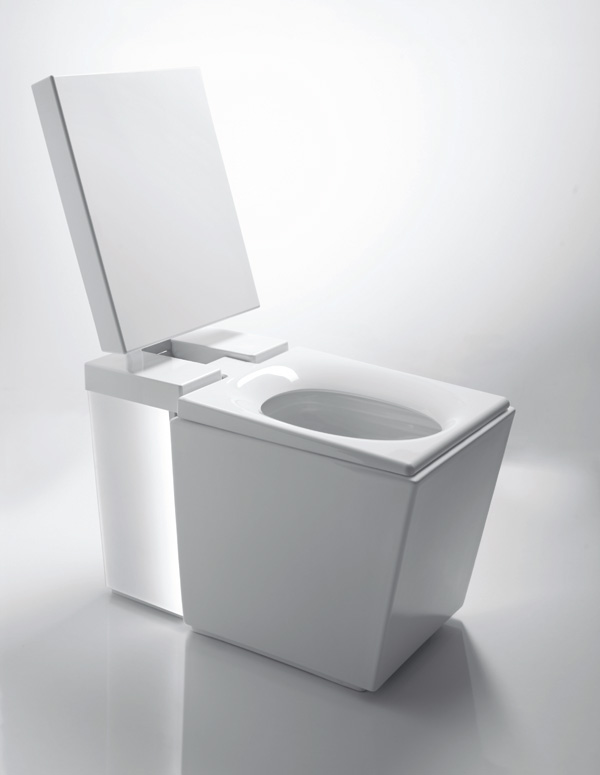 Other unique products Smith and Snodgrass have been selling in their respective showrooms include the Numi toilet, which comes complete with feet warming capabilities, a deodorizer, a heated seat, an integrated air dryer and more. “People love it,” Snodgrass adds. This product is perfect for those who want to spend more time in their bathrooms.
