Showing posts sorted by relevance for query smelly toilet. Sort by date Show all posts

Friday, May 5, 2017

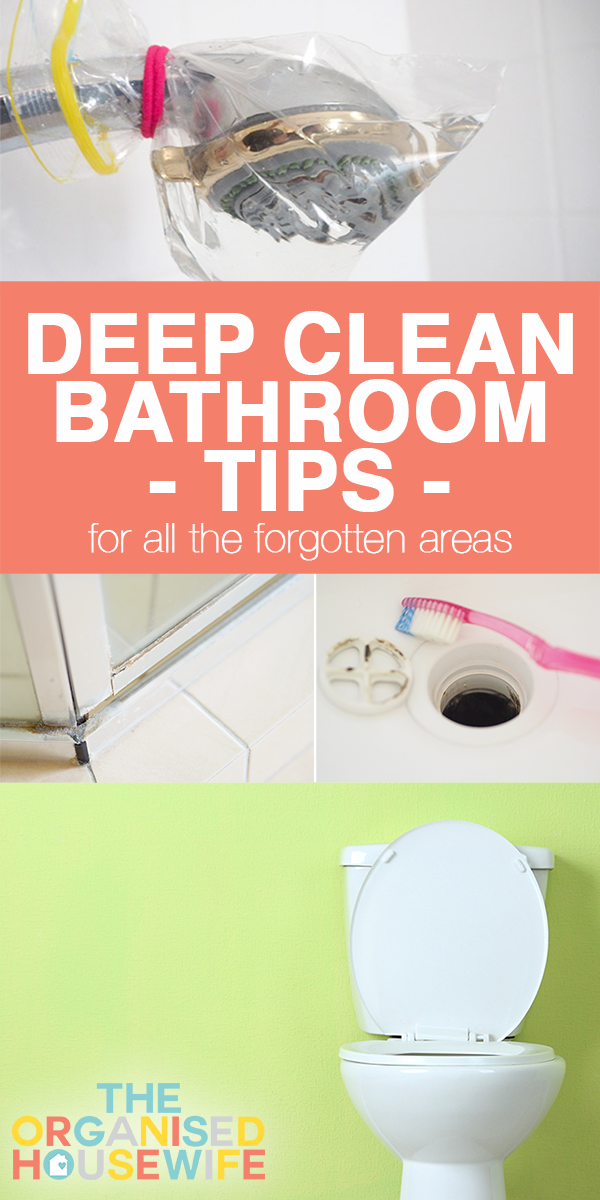
Deep Clean Bathroom Tips for all the forgotten areas

Read article : Deep Clean Bathroom Tips for all the forgotten areas

This post is sponsored by Dettol

I’ve shared recently how to create a shower cleaning kit, speed clean the bathroom and organise the bathroom cupboards, but there are so many other little areas in the bathroom that get neglected during the weekly bathroom cleaning routine.
<a href=Deep Clean Bathroom Tips" width="780" height="1560" />

Deep Clean Bathroom Tips

Below are a few deep cleaning bathroom tips for all the forgotten areas.

Plastic Shower curtain

It’s the worst when you jump into the shower and see dirt spots on the shower curtain, it can happen if the curtain doesn’t dry properly.

HOW TO CLEAN: Wipe over the curtain bottom of your curtain with a bathroom cleaner to remove any soap scum or dirt build up.  To freshen up the shower curtain pop the curtain in the wash with 2-3 bath towels (this will help prevent the curtain from crinkling too much in the machine) along with your regular detergent.  Then hang up to dry or check the label for washing instructions as you maybe able to put it in the dryer.

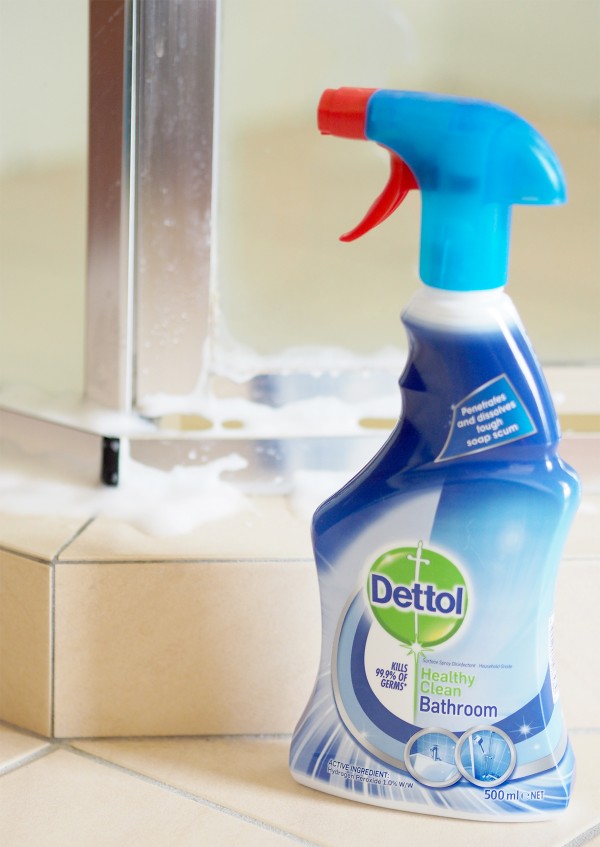
Dettol Healthy Clean Bathroom

Dettol Healthy Clean range all help the home stay clean and hygienic.  The Healthy Clean Bathroom Spray is an easy effective everyday bathroom cleaner that can be used on bathroom surfaces such as sink & tiles, bath and counter tops, toilet seats, sealed wooden surfaces, glass surfaces, bins and floors, leaving the bathroom sparkling clean and kills 99.9% germs (E.coli and Staphylococcus aureus). Always read the label. Use only as directed.

Use Dettol Healthy Clean Bathroom on all these tips to cut through dirt and soap scum to help keep your bathroom clean and hygienic with a fresh fragrance.
deep-bathroom-clean-tips-2

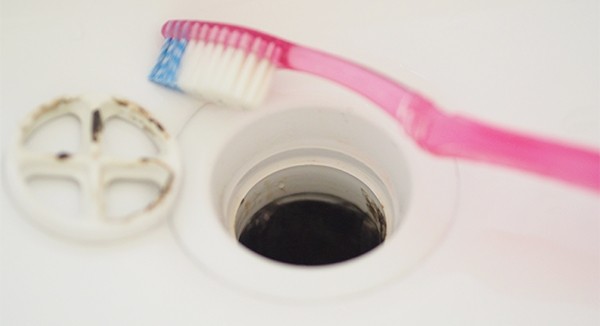
The sink drain

When brushing your teeth you’ll often see beyond the drain cover in the sink and see that it’s grotty.  In a regular clean, you would usually wipe over the top of the cover but just under the drain cover is usually a big build up of dirt, yuck!

HOW TO CLEAN: Get an old toothbrush and poke it into your sink drain cover, use this to help lift up the cover. Spray inside the drain and the drain cover with your bathroom cleaner, use the old toothbrush to help remove all the dirt. Once clean place cover back on.
deep-bathroom-clean-tips-6

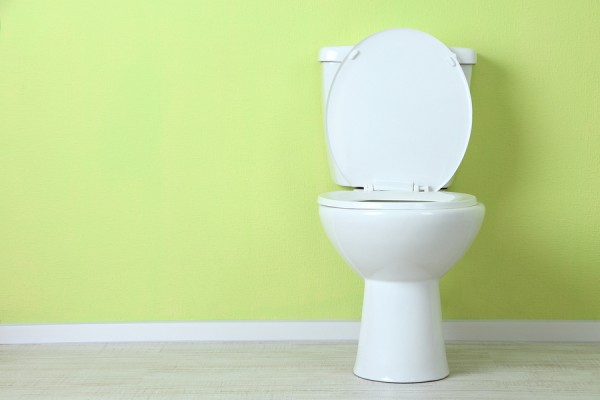
Smelly Toilet

Whilst we clean the toilet seat and inside the bowl in a regular weekly bathroom clean, under the seat can often be forgotten, it an be a scary place, especially if you have boys as we know their aim can be terrible.

HOW TO CLEAN: Read how to clean a smelly toilet here. I’ve suggested natural products, but for those that don’t have the desire to make your own products, Dettol Healthy Clean Bathroom Spray can work wonders.
image

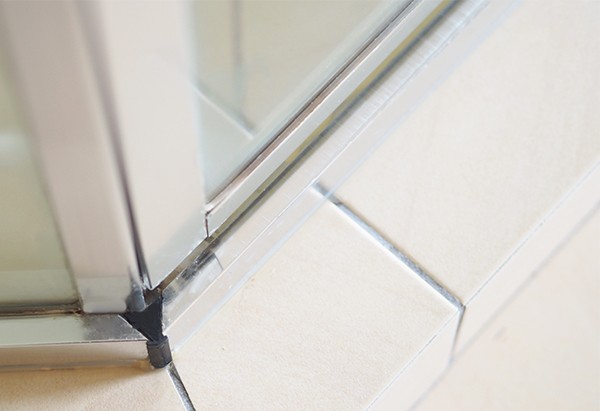
Shower Door Tracks

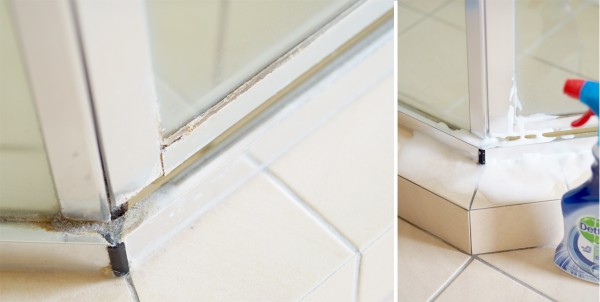
When cleaning the shower this area can often be neglected, which leads to a heavy build up.

HOW TO CLEAN: As the buildup is quite hard in this area your cleaning solution needs to sit on top to soften the area so you can easily remove the grime.  Spray area as required and allow to sit for 10 minutes.  Use a toothbrush to get into the hard to reach areas, then wipe over with a cloth.
deep-bathroom-clean-tips-3

deep-bathroom-clean-tips-5

Shower Head

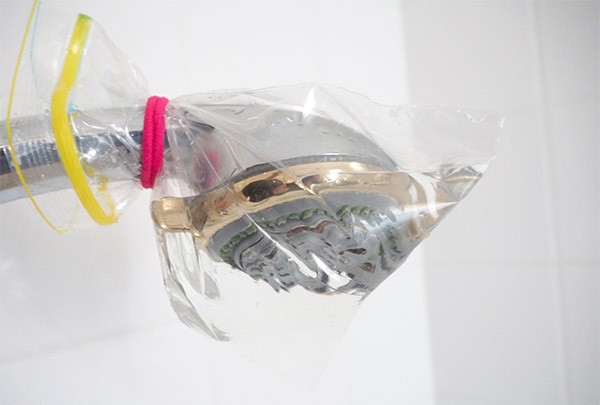
Shower heads are prone to build up of mineral deposits, dust, dirt etc which affects the water pressure and spurts water out in all different directions.  Cleaning the shower head in your regular bathroom cleaning routine will help prevent the build up.

HOW TO CLEAN: Read how to clean a shower head here.
How to clean a shower head

This post was coordinated by The Remarkables Group and run in accordance with my disclosure policy

7 THINGS I DO EACH DAY TO KEEP THE HOME CLEAN AND ORGANISED

Newsletter_-_the_organised_housewife_-_7_things_i_do_each_day_to_keep_the_home_clean_cover_and_organised_-_page_1

Subscribe to my weekly newsletter to receive blog updates in our inbox + this FREE eBook sharing some of my top tips that you can adapt in your own home.
Opt In Image

FREE EBOOK - 7 THINGS I DO EACH DAY TO KEEP THE HOME CLEAN AND ORGANISED

Sign up to receive one simple task each weekday to help you organise, clean & declutter your home receive either 'daily task', 'weekly blog wrap' or our 'monthly new printable updates'

Thursday, April 6, 2017

a continuing saga of inadequacy

Read article : a continuing saga of inadequacy

J R Soc Med. 2004 May; 97(5): 235–237.

PMCID:PMC1079464

Abstract

Previous surveys of UK hospitals have highlighted many deficiencies in the standards of hospital inpatient washing and bathing facilities—especially inadequate access for wheelchair users, insufficient bathing equipment, and unsatisfactory cleanliness and privacy. We conducted a qualitative survey in three hospitals in the North of England to see whether these facilities have improved.

There have been some improvements, particularly in the provision of bath hoists, adapted taps, alarm call systems, shower seats and wheelchair access to bathrooms. But many basic problems remain—absent locks and signs, inadequate heating, poor standards of privacy, insufficient bath aids, wet floors, and the inappropriate use of bathrooms as store rooms.

The overall condition of hospital bathrooms and showers remains unsatisfactory. Too many hospital bathrooms are austere, cold, smelly and poorly maintained.

INTRODUCTION

Bathing is an important activity of daily living and should be a pleasurable experience. Helping a patient to maintain personal hygiene is a fundamental aspect of nursing care but bathing of disabled and elderly people can be difficult and time consuming.1-3 If inadequate aids, equipment and facilities compound the difficulty, the process can become arduous for busy ward staff. Adequate and suitable washing and bathing facilities can help to ensure that patients are bathed in private and with dignity.

The last detailed survey of bathing facilities in a UK hospital was over 20 years ago.4 Conducted in the same region as the present study but at a different hospital, it revealed a generally poor standard of inpatient washing, bathing and toilet facilities, with insufficient equipment, especially bathing aids. It also highlighted poor access and inadequate adaptations for wheelchair users. The authors made recommendations for improvements.

Two large UK multicentre hospital surveys5,6 yielded comparable findings. The King's Fund questionnaire of patients in ten hospitals indicated that no patient was happy with the number of bathrooms or washbasins and that most were critical of standards of cleanliness. The Health Advisory Service survey of eight English hospitals commented on the poverty of the physical environment and shortcomings in bathroom cleanliness, access, equipment, upkeep, comfort, and privacy. We have looked at hospital bathing, washing and showering facilities to see if matters have improved.

METHOD

Two of us (AM and ST [see acknowledgment]) visited 46 hospital wards in three different hospitals in the North of England—a large teaching hospital, a smaller satellite hospital attached to the teaching hospital (mainly comprising specialist elderly rehabilitation wards), and a small district general hospital in a neighbouring city. All adult medical, surgical, and orthopaedic wards were assessed. Intensive care units, high dependency units, and psychiatric, and paediatric wards were not. We inspected all bathrooms and showers and recorded their physical characteristics on a checklist. We documented and compared details of door widths, height of light switches, accessibility for wheelchair occupants, alarm call systems, bathtub characteristics, bath aids, heating, floor surfaces, mirror height, sink accessibility, easy use of taps, privacy, and cleanliness.

RESULTS

The number of patients on each ward varied from 10 to 32, average 25. The total number of patients on all 46 wards was 1167. The proportion of physically disabled patients on wards varied from 12% to 100%, average 72%. For the purposes of this study, we defined physically disabled patients as those who needed any degree of assistance with washing or bathing while in hospital (this was determined by the ward nursing staff).

General features

All bathrooms and showers had a functioning alarm call system.

On 9 of the wards, there was no sign on the bathroom or shower door indicating the room's use. On 5 wards there was no lock on the bathroom or shower door. On 9 wards, the bathroom or shower room lacked privacy: for example, having only a small curtain or ‘concertina’ door separating the shower from the open ward; bathroom doors with large ‘peep holes’ or with large ‘see-through’ glass panels covered only by a small curtain. In one case, a paper towel was taped across the glass panel in place of a curtain. In another ward the bathroom was being used simultaneously as a toilet, with two patients using the room at one time (one in the bath, one on the toilet), separated only by a curtain.

The width of all bathroom doorways was above the minimum recommended (80 cm) to allow access for a wheelchair. However, on 13 (28%) wards, doorway width was less than 93 cm, the preferred width for wheelchair access. 8 wards had no heating in the bathroom. On 3 wards the light switch was too high to be accessible for someone seated or in a wheelchair.

In most bathrooms and shower rooms the decor was plain, uninspiring blue or green gloss paint (‘like a bad campsite washroom’ was one nurse's comment). At the time of inspection, bathrooms or shower rooms on 12 wards were considered unclean on subjective inspection. A recurrent finding was that the room smelled of urine. In some, the floor was wet and potentially hazardous. The standard arrangement was for one of the domestic staff to clean the bathroom and shower once daily. At all other times—and between baths and showers—this responsibility fell to the ward nurses.

Bathtubs and bath aids

The number of bathtubs per patient varied from 1 in 6 to 1 in 28. All wards had at least one bath, most had two. 12 wards had baths that were not free-standing, so carers were unable to get around both sides (though most of these wards also had another bath which was free-standing). Two free-standing baths had a shower obscuring one side, which blocked access for carers.

45 of 46 wards had a bath hoist (ambulift), 19 (41%) had bath rails, 10 (22%) had a bath seat, 20 (4%) had non-slip mats (now less favoured because of the theoretical risk of infection spread), 2 (4%) had a bath board. 19 (41%) had ‘easy to use’ or adapted taps (i.e. easier to turn on and off for patients with dexterity problems). 6 bathrooms also contained a bidet; few of these worked and all were unused. Most bathrooms were cluttered—sometimes almost full—with non-bathroom-essential ward objects such as mattresses, commodes, and weighing machines. In some cases, these impeded access to the bath.

Showers

Most wards had two separate showers, 16 had only one. 10% (7/73) of showers were either broken or not working. A recurring problem was water seeping under the door into the main ward, in one case dripping down through the ceiling to the floor below. Some of these had been awaiting repair for several months with no obvious indication that this would occur in the near future. This was a source of frustration to the nursing staff.

Only 33 (72%) wards had showers that were accessible to wheelchair users. Some had a large step up to the shower, others were too cramped, making manoeuvrability impossible. 82% (60/73) of showers had a shower seat, generally a simple plastic chair borrowed from the main ward.

Washbasins

Most washbasins were of a suitable height for those needing to sit and wash, and legroom was adequate. Taps were adapted or easy to use on 34 (72%) wards. 11% (10/90) of bathrooms had no mirror and 39% (31/80) of mirrors were > 130 cm off the ground (not easily accessible for someone seated or in a wheelchair).

DISCUSSION

72% of hospital inpatients in this study needed some assistance with washing and bathing. Since the previous study in 1982,4 improvement has occurred in wheelchair accessibility to bathrooms but not showers, and in access to washbasins (direct comparison is not possible, since the studies were done in different hospitals). The provision of alarms is now standard, and the use of bath hoists and showers is almost universal. Many taps are now easy to use. But little else has changed. We found identical themes to the previous surveys.5,6 The main deficiencies, as before, are limited accessibility of showers for wheelchair users, a paucity of bath aids and adaptations, concerns about cleanliness and lack of privacy. Other inadequacies include: poor signage, missing locks, lack of heating, unimaginative decor, unpleasant smells, wet floors, obstructive clutter, raised shower thresholds, mirrors and switches that are too high, and delayed repairs. This study was of 46 wards in three hospitals in one English region. Surveys of hospitals elsewhere are needed to show whether our findings are generalizeable: we suspect that the inadequate state of hospital bathing facilities is a widespread phenomenon.

It is of concern that many of our findings are similar to those of the King's Fund patient survey performed in 1966.5 The Department of Health survey in 19986 raised similar criticisms, and made many recommendations for action to be taken. However, in the hospitals that we studied we found little evidence of improvement. Overall, there were few changes from the situation encountered more than 35 years ago.

These findings should be placed in context. On most wards, facilities for washing and bathing were adequate and there were several other positive findings. For example, all rooms had functioning alarm call systems and light switches that worked. With one exception, all wards had a bath hoist, the most important bathroom aid for disabled patients. But many shortcomings persist. Few wards had a full set of simple bath aids. Mirrors should be lowered or enlarged to make washing, shaving and grooming easier for those who need to sit for this activity. All taps should be adapted for easier use. Wheelchair access to showers should be improved. Repairs to broken bath and showering equipment could be done much more quickly. More consideration might also be given to improving the decor, privacy, cleanliness, and general environment of these rooms, helping to make washing and bathing a more dignified, pleasurable and relaxing experience for all involved.

There is limited space on hospital wards, and bathrooms are commonly used inappropriately as store rooms. There should be alternative areas to store ward equipment, freeing the bathrooms for their proper use. Having to share the same bathroom with another person (fortunately, only one instance seen) is particularly unsatisfactory.

The recommended standards for disabled people using hospital say little about bathrooms and showers.7 Measures to improve overall quality of care, privacy, and facilities in hospital are in the National Service Framework for Older People8 but at present there are no comprehensive guidelines or national standards. Most of the improvements required would be inexpensive. Hospital managers, doctors, and modern matrons should focus on these important deficiencies in the bathing facilities of most hospital wards. Perhaps a designated member of staff (such as an occupational therapist) could ensure that washing and bathing facilities are adequate and act as patient advocate. It might be a good idea to make bathroom standards a key factor in government star ratings of hospitals. The aim should be to provide bathing facilities that we would be happy to use ourselves.

Acknowledgments

We thank Dr Sarah Twigg, Senior House Officer in Elderly Medicine, St James's University Hospital, Leeds, for her help with the data collection.

References

1. Whiting LS. Maintaining patients' personal hygiene. Prof Nurse 1999;14: 338-40 [PubMed]
2. Berwick L, Nisan C, Higgins M. Care of the body: maintaining dignity and respect. Perspectives 2002;26: 10-14 [PubMed]
3. Sloane PD, Rader J, Barrick AL, et al. Bathing persons with dementia. Gerontologist 1995;35: 672-8 [PubMed]

5. King Edward's Hospital Fund for London. Patients and their Hospitals. Maidstone: Alabaster, Passmore, 1969

6. Health Advisory Service. Not Because they are Old: an Independent Inquiry into the Care of Older People on Acute Wards in General Hospitals. London: HAS, 1998

7. Royal College of Physicians and Prince of Wales' Advisory Group on Disability. Charter for Disabled People Using Hospital. London: Royal College of Physicians, 1992 [PubMed]

8. Department of Health. National Service Framework for Older People. Standard 4: General Hospital Care. London: Department of Health, 2001

Articles from Journal of the Royal Society of Medicine are provided here courtesy of Royal Society of Medicine Press