Showing posts sorted by relevance for query York City. Sort by date Show all posts

Sunday, August 20, 2017

Duck and cover: New York's first citywide drill for the A-bomb

Read article : Duck and cover: New York's first citywide drill for the A-bomb

So far as could be officially determined, only about 100 people died when the atomic bomb fell on New York City on the morning of Thursday the 29th of November 1951. These luckless souls perished on the steps of the New York Public Library when, after they had dutifully bolted from their cabs and buses in midstreet, they found the library doors already locked up tight. "Let me in; let me in," screamed one man who appeared to be taking this exercise very seriously. But the guard inside shook his head. "This is a hell of a situation," grunted Patrolman Matthew Cerick, shepherding the flock across Fifth Ave. to the sanctuary of the Public National Bank. There they were taken in, but of course by that time they had already been vaporized.

Otherwise, New York's first air-raid drill since World War II efficiently hummed along like the finest of sewing machines. After 17 months of planning, there was now near-total order amid near-zero confusion; three minutes after 1,079 sirens began wailing at 10:33 a.m., the city was silent from Chinatown to Harlem and to the Nassau and Westchester borders. A million citizens disappeared into the subways, 35,000 into Rockefeller Center, 90,000 into the Empire State Building, 340,000 into 804 miscellaneous designated shelters, 1,500 into St. Patrick's Cathedral. Fifth Ave. was empty. Penn Station was empty. Times Square was empty. Pushcarts sat abandoned in the Garment District. You could hear the traffic lights click. You could hear the pigeons fly.

All over town, school children climbed under their desks and covered themselves with their coats. On Cortelyou Road in Brooklyn, Mrs. Harold MacKenzie stopped pouring tea for her two guests and the three of them earnestly sat down behind the living room sofa. On Central Ave. in Brooklyn, Mrs. Ernest Garitano locked her dog in the bathroom before taking cover herself.

Former Police Commissioner Arthur Wallander had gone to work on the city's Civil Defense machinery the minute U.S. ground troops landed in Korea in July 1950. Joe Stalin was going to bomb America any minute, this was simply a fact, and New York was plainly first on the list of target cities; CD Chief Wallander's enormous job included building a control center to which all commands would report, drafting and training 200,000 volunteers, organizing food depots and blood banks, drawing up evacuation routes into Ulster and Sullivan counties. In early August he asked the Board of Estimate for $20 million for medical supplies, $533,000 for air-raid sirens and $50,000 for Geiger counters. Nonessential construction stopped as the board freed up funds for Wallander, and the city did without a new police station and modern traffic lights. At the same time, Wallander banned sirens except for air-raid purposes, and police cars and ambulances all made do with their horns.

*RESTRICTIONS BELOW*

Web only. One-time editorial use. 
Must link back: http://www.mcny.org/exhibitions 
Credit: Todd Webb

Press Image credit lines for A City Seen: Todd Webb's Post War New York, 1945-1960

Caption: Todd Webb, LaSalle Street and Amsterdam Avenue, Harlem, New York, 1946. Courtesy Museum of the City of New York and the Todd Webb Estate. New York comes alive in Todd Webb's post-war photos

New York was going to be bombed. Nuclear hellfires were going to boil the rivers and melt the streets. Fourteen huge underground shelters were proposed, three in Manhattan, seven in Brooklyn, three in Queens, one in the Bronx, each to hold a quarter-million people. After the atomic holocaust, suggested Planning Commissioner Jerry Finkelstein, they could be used as peacetime parking garages. Unfortunately, they would take several years to build. Fortunately, there were already many miles of subway tunnels into which the people could flee, as well as many skyscrapers with thick concrete walls. Ninety havens were designated  the Equitable Building, Met Life, various courthouses  and PUBLIC SHELTER signs were affixed to them.

Eight thousand Welfare Department employees were meanwhile directed to staff 47 smaller shelters in the five boroughs; Welfare Commissioner Raymond Hilliard proudly announced in early September that his people were nearly ready to deal with things in the event, say, two A-bombs fell on Queens. "We are practically out of the planning stage now," he said. The Red Cross organized hundreds of first-aid classes. Thirty-five thousand cabbies were tapped to be ambulance drivers. The Ballantine brewery in Newark offered 1,000 trucks.

Late in September, the state Civil Defense Commission, headed by Gen. Lucius Clay, the man who had directed the Berlin Airlift, began distributing millions of free copies of a 36-page booklet called "You and the Atomic Bomb." Nuclear war was quite survivable, citizens learned, if only they took simple precautions. If indoors: "Draw curtains and blinds. . . . Get under a table and throw a cloth over your head." If outdoors: "Crouch behind a tree." After the blast: "Scrub walls to erase radioactivity." Survivors were advised to drink lots of salt water. The dangers from so-called fallout, Wallander assured the public, were "greatly exaggerated."

And so New York City waited for World War III.

According to the master plan, a three-minute cry from Wallander's commandeered sirens would mean that an atomic bomb was expected to fall in about eight minutes. A subsequent series of shorter chirps would signal the all-clear, assuming that the nuclear firestorms had not destroyed the sirens.

By June 1951, when Russia had not yet invaded the United States, Congress slashed President Harry Truman's $403 million Civil Defense budget to $31 million. Still, surveys found that one out of two Americans expected war within two years, and in New York, Arthur Wallander remained vigilant. Civilian observers were manning plane-spotting stations across the city, breathlessly calling in sightings of commercial airliners, and Wallander's volunteer units drilled regularly. In October, Russia exploded two test A-bombs. It was time, Wallander decided, for a public demonstration of preparedness.

Exported.; EXP;From Daily News Jan. 1951.

On Wednesday the 14th of November  as armistice talks collapsed in Panmunjom and reports came in that 6,270 U.S. prisoners of war had been slaughtered by their barbaric Red captors  tens of thousands of emergency workers made a trial run. Sirens screamed and flares burned bright as enemy bombers struck at Third Ave. and 149th St. in the Bronx and at Myrtle and Bushwick in Brooklyn. Ambulances careened about in heavy rains. Twenty-nine ferries, barges, tugs and police boats convoyed down the East River, rescuing patients from five hospitals. Myrtle and Bushwick looked like a war zone anyway, as it happened, since the whole area was being leveled to make way for the new Brooklyn-Queens Expressway.

The big show, 15 days later, made a hero out of Wallander, a man who had planned well. It seemed there was only one thing he hadn't thought of, this being horses; deliverymen fleeing their wagons had no idea what to do with their nags except just leave them standing, puzzled, in the street. The city could be proud of itself, editorialized the Daily News: "You got the impression that if New York ever should be bombed, the survivors would claw the cinders out of their hair, bury the fallen with due respect, make some wisecracks in the New York manner and set forth with cold determination to get their revenge." Old Joe Stalin, the paper mused, should only just watch out.

Another citywide nuclear drill, in December 1952, was somewhat less successful; authorities figured that about a quarter-million New Yorkers died.

As late as 1958, local and federal officials were talking about building an enormous $2.5 billion public bomb shelter 800 feet beneath Manhattan, large enough to hold 4.5 million people.

First published on September 9, 1998 as part of the "Big Town" series on old New York. Find more stories about the city's epic history here.

Tags:
archives
big town
history
Send a Letter to the Editor
Join the Conversation:
facebook
Tweet

Thursday, June 22, 2017

Meet Me In The Bathroom: Rebirth and Rock and Roll in New York City 2001-2011

Read article : Meet Me In The Bathroom: Rebirth and Rock and Roll in New York City 2001-2011

Author: Lizzy Goodman
Publisher: Faber & Faber
RRP: €22.99

When LCD Soundsystem wind-up three furiously over-subscribed comeback shows in Dublin’s Olympia theatre at the end of September, a nearby venue will stage an “I Didn’t Get a Ticket Party”. Six and half years on from James Murphy’s spectacular mic drop in Madison Square Garden, even those who came away empty handed from the frenzied ticket-sale scrum plan on celebrating.

At the turn of the century, when frat-boy nu metal ruled the rock landscape and bubblegum pop vied with super-star DJs and Eminem, the idea of a stubbly, awkwardly pitched studio boffin like Murphy being the hottest ticket of the year would have seemed chucklesome. But not only did the wind change direction, the sea itself did too. Enter stage right, five doe-eyed, finger-clicking New Yorkers with surnames like Casablancas, Hammond Jr and Valensi.

Scoff all you like today at the Strokes but in terms of rescuing a situation by being the very thing the world needed, the story is remarkable. And if you don’t believe a line can be drawn between that band and the fans refreshing Ticketmaster’s LCD Soundsystem page at 8.59am, then you need to read Lizzy Goodman’s exceptional rock chronicle.

New York City was the nursery the huge cultural mutation germinated there in the very late ‘90s. DJs smashed together post-punk, vintage rock and dance music in club nights such as Shout! in Bar 13. Rough-and-ready guitar bands like Jonathan Fire*Eater and the Mooney Suzuki sweated in rock dens such as Don Hills, CBGBs, Brownies and the hallowed Mercury Lounge. Vintage clothing and Lower East Side boho romance played a part. And despite Mayor Giuliani’s drive to clean up the streets, the dot-com achievers came to Lower Manhattan to blow off steam alongside the rock kids. Assisting them were highways of cocaine. 

Canny and savvy, the Strokes made flyers and used frontman Julian Casablancas’ connections (his father founded Elite Model Management) to rope beautiful people along to their club shows. The tunes had a decadence about them, their choppy, raw lo-fi underpinned by an uncommon mixture of refinement and danger. Mercury Lounge booker Matt Hickey recalls calling Geoff Travis of UK label Rough Trade at 7am and playing their EP down the phone. Ten seconds in, Travis knew “that was it”.

Goodman speaks to 160-odd players around at the time, laying out parallel but intermingling lines charting fellow luminaries Yeah Yeah Yeahs, Interpol and The Rapture (whose single “House of Jealous Lovers” ushered Murphy’s DFA label into the music-press conversation).

What seems like yesterday is of course now rock ‘n’ roll lore, and rightly so. We’re reminded that it was just months after the UK release of debut LP Is This It, as Strokes-mania was coming to a boil both sides of the Atlantic, that 9/11 struck. The eyes of the world chained themselves extra fastly to Manhattan Island. New Yorkers themselves rushed out to hug their city amid blizzards of escapist hedonism in wild bars and endless loft parties. Is This It hit US shelves two weeks after the carnage, with the track “New York City Cops” removed out of solidarity. “It made it hard for all the people that wanted to be cynical about the Strokes or take shots at them,” one commentator recalls, “…they became representative of something larger.” New York became a concept worth cherishing and the Strokes and the rest of the acts in their skinny-jeaned slipstream, were ambassadors.

There was more to come. Concurrent threads weave in and out from the glut of acts that followed the Downtown gold rush. The White Stripes and Kings of Leon turned up to exchange notes and, in the case of the latter, share in the Strokes’ bottomless appetite for debauchery. Casablancas helped launch the career of Regina Spektor and the Anti-folk movement spearheaded by the Mouldy Peaches et al. As their peers get the recipe right and continue to ascend, the Strokes fall into the law of diminishing returns and addiction.

Embracing Rashomon-like subjectivity, Goodman stands back and lets everyone have their say. The variety of voices and standpoints not only creates a very full-bodied perspective on that era but also rip-roaring entertainment due to the order and thematic lines Goodman assembles them in. Thus, a constant flow of wickedly juicy gossip (who did how much of what with whom), bitchy put-downs (former DFA co-owner Tim Goldsworthy doesn’t hold back on this feelings towards Murphy) and awkward contradictions (Ryan Adams refusing to accept he provided Hammond Jr with heroin).

By the time Murphy and the Strokes did back-to-back Madison Square Garden shows in 2011, the scene and the world around it were very different. File-sharing and playlist culture shrank budgets and expectations, making the Strokes the last “rock stars” in the traditional, TV-out-the-window sense. But it also meant bands like Grizzly Bear and the brilliant Vampire Weekend were less burdened by NYC rock heritage in both influence and druggy posturing. A more careerist, musically eclectic model emerged in the increasingly priced-out neighbourhoods of Brooklyn. Fitter, happier, more productive, but tamer and less rakish, too. And if, alas, rock ‘n’ roll has lost its edge and those days are gone forever, this is a fitting send-off.    

First published in the Irish Independent. Follow Hilary A White on Twitter.

Wednesday, March 14, 2018

The 25 most expensive ZIP codes in America

Read article : The 25 most expensive ZIP codes in America
caption
New York City’s TriBeCa neighborhood is home to three of the most expensive ZIP codes in the US.
source
Property Shark

The 25 most expensive ZIP codes in the US are unsurprisingly concentrated on the coasts.

Real estate listings site Property Shark recently used data from all residential transactions closed in 2016 to determine which ZIP codes across the US were most expensive for buyers.

California dominated the list with 17 cities represented, including well-known places like Beverly Hills and its famous 90210 ZIP code.

New York also claimed six spots, with pricey Hamptons favorite Sagaponack coming in at No. 1.

Only ZIP codes containing more than five sold properties were considered for the list. Property Shark helped us find listings that were close to each of the ZIP codes’ median sales price. Check out the full list below:


25. 95030: Los Gatos, California

source
Sotheby’s

Median sale price: $2,180,000

This two-bedroom, two-bathroom Los Gatos home will run you around $2.3 million, but it comes complete with hardwood floors, a detached guest house, and four private acres of wooded land.


24. 94123: San Francisco

source
Sotheby’s

Median sale price:$2,210,000

In San Francisco, $2.27 million will get you a home like this one, which packs three bedrooms, two and a half bathrooms, a wood burning fireplace, stainless steel appliances, and a formal dining room into 1,900 square feet.


23. 94306: Palo Alto, California

source
Property Shark

Median sale price:$2,227,500

This three-level home in Palo Alto, on the market for $2.25 million, features quartz countertops, abundant natural light, and a fenced-in patio.


22. 94010: Burlingame, California

source
Sotheby’s

Median sale price:$2,234,000

For around $2 million, you can snag a home like this one in Burlingame, which sits close to local schools and parks, and is only a hop, skip, and jump away from Silicon Valley. The 2,180-square-foot house features three bedrooms and two and a half baths.


21. 92657: Newport Coast, California

source
Property Shark

Median sale price:$2,260,000

This four bedroom Newport Coast home can be found inside the The Pointe gated community. On the market for $2.24 million, it features high-end appliances, quartz countertops, and an outdoor kitchen.


20. 90265: Malibu, California

source
Property Shark

Median sale price:$2,375,500

Call this four-bedroom, two-bathroom abode home for a little over $2.37 million. In addition to a private pool, it’s also decked out with vaulted ceilings and a spacious kitchen and dining area.


19. 93108: Santa Barbara, California

source
Coldwell Banker

Median sale price:$2,450,000

For $2.5 million, score this 1,540-square-foot Santa Barbara home right by Montecito Beach. In addition to the killer views, the place features a remodeled kitchen and cathedral ceilings.


18. 92661: Newport Beach

source
Property Shark

Median sale price:$2,465,000

This three-bedroom home in Newport Beach is just a short walk from the beach. It’s on the market for around $2.3 million and offers tremendous ocean views.


17. 11975: Wainscott, New York

source
Halstead Property

Median sale price:$2,510,000

Minutes away from East Hampton and Sag Harbor, this five-bedroom Wainscott home is going for around $2.5 million. It features covered outdoor dining, a heated backyard pool, and an expansive wraparound porch.


16. 11976: Water Mill, New York

source
Zillow

Median sale price:$2,600,000

Full of natural light, this airy and secluded home in Water Mill is on the market for $2.67 million. Located on two acres of private land, it comes complete with multiple outdoor decks, a pool, and a wood burning fireplace.


15. 94024: Los Altos, California

source
Property Shark

Median sale price:$2,637,000

This $2.5 million home in Los Altos sits at the end of a quiet cul-de-sac and offers hardwod floors, a wraparound deck, and a spacious kitchen.


14. 92662: Newport Beach, California

source
Property Shark

Median sale price:$2,687,500

Just a short walk from the water, this beach style home in Newport Beach is breezy and welcoming, with clean white walls, dark wood floors, and abundant natural light. Make it yours for $2.75 million.


13. 94957: Ross, California

source
Coldwell Banker

Median sale price:$2,771,250

On the market for around $2 million, this 3,020-square-foot home boasts breaktaking views of Ross Valley and an outdoor sun deck that will let you enjoy California’s fantastic weather all year round.


12. 10282: New York City

source
Sotheby’s

Median sale price:$2,784,500

Located in NYC’s TriBeCa neighborhood, this 1,439-square-foot home features 40 feet of windows, an open kitchen, and stunning views of the Hudson River. Building amenities also include a saltwater pool and landscaped courtyard. Make it yours for $2.8 million.


11. 02199: Boston

source
CL Properties

Median sale price:$2,800,000

Located in one of the only non-California or New York zip codes on the list, this $2.7 million Boston home boasts floor-t0-ceiling windows, granite countertops, and 1,589 square feet of space.


10. 94028: Portola Valley, California

source
Coldwell Banker

Median sale price:$2,815,000

This Portola Valley home is on the market for around $2.6 million. It comes complete with three bedrooms, a spacious kitchen, and high, wood-beamed ceilings. The surrounding forest views add a cozy touch.


9. 94022: Los Altos, California

source
MLS Listings

Median sale price:$2,831,250

Snag this five-bedroom Los Altos home for around $2.7 million. The freshly painted interior is airy and bright, while the newly landscaped backyard provides a quiet, private place to relax.


8. 94301: Palo Alto, California

source
Coldwell Banker

Median sale price:$2,935,000

For around $3 million, this two-home lot in Palo Alto allows owners a rare opportunity to build the house of their dreams up to 2,600 square feet in size. The newly renovated guesthouse out back boasts 950 square feet of space and can be utilized as a separate rental unit.


7. 90210: Beverly Hills, California

source
Property Shark

Median sale price:$3,128,250

For just over $3 million, enjoy this luxury penthouse in the heart of Beverly Hills. The unit comes equipped with high ceilings, two master suites, and a private rooftop deck.


6. 10007: New York City

source
Property Shark

Median sale price:$3,349,657

This two-bedroom, three-bathroom TriBeCa residence offers 10-foot ceilings, gold marble countertops, and a full-size in-unit washer and dryer. It’s on the market for around $3.35 million.


5. 90402: Santa Monica, California

source
Coldwell Banker

Median sale price:$3,395,000

This cheery Santa Monica home is available for $3.25 million. It boasts a renovated chef’s kitchen, private swimming pool, and loads of outdoor space.


4. 33109: Miami Beach, Florida

source
Property Shark

Median sale price:$3,400,000

Boasting both pool and beach views, this 2,744-square-foot Miami Beach home is available for around $3.4 million. It also has also high-end appliances and a glass walk-in closet to swoon over.


3. 10013: New York City

source
Property Shark

Median sale price:$3,808,765

Cool white walls and streams of natural light give this TriBeCa apartment a cozy vibe. The spacious home is on the market for $3.75 million.


2. 94027: Atherton, California

source
Coldwell Banker

Median sale price:$5,425,000

Available for $5.5 million, this Atherton home features white marble countertops, four spacious bedrooms, and an outdoor kitchen.


1. 11962: Sagaponack, New York

source
Sotheby’s

Median sale price:$5,500,000

This classic Hamptons beach house comes complete with a heated pool, outdoor gardens, and a spacious deck, perfect for entertaining all summer. The home is on the market for $5.75 million.

Sunday, February 25, 2018

Salt Lake City Bets You’ll Trade Dollars for Balance

Read article : Salt Lake City Bets You’ll Trade Dollars for Balance

Ask someone to name up-and-coming technology hubs and you’ll likely hear about places such as Austin, Portland, or Vancouver. If they’re really on top of things, you’ll also hear about a metro area you may not have expected: Salt Lake City.

Yes, Salt Lake City. It’s a region pegged as conservative and blandly business-like. But in truth, Salt Lake City’s tech sector dates back to the 1970s, when WordPerfect and Novell set up shop in the area. During the 1990s, Ancestry.com and Omniture were founded there; when Adobe bought Omniture in 2009, it liked the locale so much it began building campuses for other business units.

Locally, the area’s tech scene is known as “Silicon Slopes.” It encompasses the area from Ogden south to Provo, with Salt Lake City in-between. JD Conway, senior talent acquisition partner for HR solutions provider BambooHR, believes the local tech community is unique because of its combination of established tech companies that continue to grow, its attractiveness as a location for Silicon Valley companies that want to cost-effectively scale up, and its “perfect soil” for startup growth.

An Unusual Business and Lifestyle Mix

Local tech leaders agree that the region combines an unusual mix of lifestyle, business and economic factors that make it attractive to tech pros. “It’s a really good ecosystem of companies that balances work, technology and lifestyle,” according to Matt Bingham, vice president of product at Instructure, a learning-software company headquartered in Salt Lake City. “What I’ve found in 10 years here is that there’s an allure with the lifestyle, along with a great tech experience.”

“There aren’t many places in the world where it’s faster to get to a ski lift than to make a short commute to the office. You’ve got that here,” added Nathan Rawlins, CMO of Lucid Software, which makes cloud-based design applications in the Salt Lake City suburb of South Jordan. “Just the other day I met with someone at 10 in the morning who apologized for wearing board shorts to the meeting. He’d been out wakeboarding before heading into the office. I think most people would gladly give up those quality hours on [Silicon Valley’s Highway] 101 every day in exchange for a wakeboard run, hitting a mountain bike trail, or getting to the slopes for some night skiing.”

Opportunities Now, and Growth Predicted

While it’s certainly true that lifestyle and flexible work hours are attractive to tech pros, so are compensation and growth opportunities. And here’s when a decision on whether or not to work in Utah comes down to personal preferences.

Like most regions of the country, Salt Lake City faces a shortage of technology talent. Bingham describes this scarcity as being driven by growth: Companies are expanding faster than the talent pool. As a result, businesses are already competing hard to lure the best tech pros they can find, both locally and from other markets. “With so many growing companies, there’s demand for just about any role,” Rawlins said.

For his part, Bingham emphasizes engineering. “Anyone with an engineering background, you’re needed here,” he said.

In terms of dollars, however, you probably won’t make as much in Salt Lake City as you would in California or New York. According to Salary.com, for example, an intermediate-level software engineer in Silicon Valley earns a median salary of about $103,000; in Salt Lake City, they’d make around $83,000. Dice pegs the average tech salary in Utah at $89,798, lagging many of the nation’s tech hubs.

Interestingly, Salt Lake employers don’t tap dance around the salary differences. “Salaries aren’t as high, but disposable income is,” said Bingham. And as companies grow, he expects to see compensation increase.

“A higher quality of living is attainable at almost half the cost of Silicon Slopes’ cousins in the Valley,” added Conway. “Because of its lower cost versus higher quality of living, more tech pros see it as an attractive place to relocate, and fewer native Utahans see the need to leave.”

A look at Zillow.com backs that up: The real estate web site reports that a 1,500-square-foot, three-bedroom, two-bath house in San Francisco recently sold for $1 million. A similar, 1,700-square-foot house in Salt Lake City sold for $228,000.

Near-Term Limits

Still, Bingham noted, the fact that Salt Lake City’s tech sector is still relatively small limits the possibility of movement, at least in the near term. Though the breadth of opportunities is growing, “you don’t have 20 different startups to jump to every 12 to 18 months,” he said. “This is a good place for a three-year gig, as opposed to a 12-month gig.”

The bottom line is the Salt Lake City area is changing rapidly in terms of business, technology and culture. Though known as a conservative area, the city has grown “quite cosmopolitan” as more people relocate into the region, Bingham observed. Established companies continue to expand their footprints, while local colleges and coding programs build up the entry-level workforce and feed the startup population’s labor needs.

“I’m confident the tech scene here is going to continue to thrive,” said Rawlins. “So many tech companies in Utah have followed what has been an untraditional path, with a focus on profitable growth and strong fundamentals. That’s a recipe for long-term sustainability.”

Thursday, December 28, 2017

A Dutch Effort to Form a Prostitute Cooperative Is Met With Hope and Skepticism

Read article : A Dutch Effort to Form a Prostitute Cooperative Is Met With Hope and Skepticism

“One of the things we have changed in recent years is that instead of talking about what is good for prostitutes, we have started to talk to them,” said Jasper Karman, spokesman for Amsterdam’s mayor, Eberhard van der Laan.

Not everyone likes the idea, among them some fellow prostitutes who are suspicious of the city’s involvement. But My Red Light has drawn support from unlikely quarters, including award-winning Dutch furniture and interior designers, who have helped outfit the rooms.

Sitting on a blue vinyl mattress on a stage, a glowing red bathtub in one corner and a Richard Hutten red leather stool by the window, Lyle Muns, a male prostitute who is on the board of My Red Light, explained recently that the project, which opened in May, was still a work in progress.

“I am really passionate about this project and I believe it could work, but it is also an experiment, right?” he said. “We haven’t succeeded until My Red Light is run mostly by sex workers and we are making a profit.”

Photo
A male and a female prostitute, who chose not to be identified, in one of the rooms at My Red Light.Credit Ilvy Njiokiktjien for The New York Times

The concept of My Red Light was first discussed in Amsterdam as far back as 2007, when the city tried to combat crime in the neighborhood through the 1012 Project, a reference to the central red light district’s postal code.

Authorities eventually shut down about 125 windows where prostitutes displayed themselves, leaving many feeling they were being pushed out so that the city could gentrify the historic area, which claims some of Amsterdam’s most valuable real estate.

Protests led to regular meetings between the city and activists, and then to a feasibility study that eventually gave birth to My Red Light. The city helped a social investment fund buy four buildings that it now rents to My Red Light.

As soon as the fund bought the buildings late last year, all ties to the city were cut. Currently, My Red Light officially operates as a foundation. “We hope in a year or two we’ll be run entirely by sex workers or ex-sex workers,” said Justine Le Clercq, a spokeswoman for My Red Light.

When My Red Light starts to turn a profit, she said, it plans to invest the money in workshops and other programs for the prostitutes, like business training and language classes.

Photo
“We haven’t succeeded until My Red Light is run mostly by sex workers and we are making a profit,” said Lyle Muns, a male prostitute on the board of My Red Light, who is shown in one of the group’s rooms.Credit Ilvy Njiokiktjien for The New York Times

The group has also been discussing investing in something like workers’ compensation insurance so that prostitutes who get sick or injured can get financial support.

When it came to the design of the interiors, My Red Light argued that prostitutes deserve the same quality of working environment as chief executives and celebrities. So they engaged the award-winning Dutch furniture company Lensvelt, which helped furnish the V.I.P. lounge at the Schiphol airport.

Lensvelt chose the interior design architect Janpaul Scholtmeijer, of Vens Architecten. His only strict directive was to make all the design decisions along with a group of about five prostitutes.

Left to his own devices, Mr. Scholtmeijer joked, he would have covered the rooms in velvet, but the prostitutes rolled their eyes at his impracticality.

“In the end, what was most important for the sex workers was that the spaces were easy to clean and hygienic,” Mr. Scholtmeijer said.

Continue reading the main story

Friday, June 2, 2017

Dispossessed in the Land of Dreams

Read article : Dispossessed in the Land of Dreams


Sometime in July 2012, Suzan Russaw and her husband, James, received a letter from their landlord asking them to vacate their $800-a-month one-bedroom apartment in Palo Alto, California. He gave them 60 days to leave. The “no-fault” eviction is a common way to clear out low-paying tenants without a legal hassle and bring in people willing to pay thousands more in rent. James was 83 at the time and suffering from the constellation of illnesses that affect the old: He had high blood pressure and was undergoing dialysis for kidney failure and experiencing the early stages of dementia.

Their rent was actually a couple of hundred dollars more than James’s monthly Social Security benefits, but he made up the rest by piecing together odd jobs. They looked for a new apartment for two months and didn’t find anything close to their price range. Their landlord gave them a six-week extension, but it yielded nothing. When mid-October came, Suzan and James had no choice but to leave. With hurried help from neighbors, they packed most of their belongings into two storage units and a ramshackle 1994 Ford Explorer which they called “the van.” They didn’t know where they were going.

A majority of the homeless population in Palo Alto—93 percent—ends up sleeping outside or in their cars. In part, that’s because Palo Alto, a technology boomtown that boasts a per capita income well over twice the average for California, has almost no shelter space: For the city’s homeless population, estimated to be at least 157, there are just 15 beds that rotate among city churches through a shelter program called Hotel de Zink; a charity organizes a loose network of 130 spare rooms, regular people motivated to offer up their homes only by neighborly goodwill. The lack of shelter space in Palo Alto—and more broadly in Santa Clara and San Mateo counties, which comprise the peninsula south of San Francisco and around San Jose—is unusual for an area of its size and population. A 2013 census showed Santa Clara County having more than 7,000 homeless people, the fifth-highest homeless population per capita in the country and among the highest populations sleeping outside or in unsuitable shelters like vehicles.

San Francisco and the rest of the Bay Area are gentrifying rapidly—especially with the most recent Silicon Valley surge in social media companies, though the trend stretches back decades—leading to a cascade of displacement of the region’s poor, working class, and ethnic and racial minorities. In San Francisco itself, currently the city with the most expensive housing market in the country, rents increased 13.5 percent in 2014 from the year before, leading more people to the middle-class suburbs. As real estate prices rise in places like Palo Alto, the middle class has begun to buy homes in the exurbs of the Central Valley, displacing farmworkers there.

Suzan, who is 70, is short and slight, with her bobbed hair dyed red. The first time I met her, she wore leggings, a T-shirt, a black cardigan wrapped around her shoulders, and fuzzy black boots I later learned were slippers she’d gotten from Goodwill and sewn up to look like outside shoes. (She wore basically the same outfit, with different T-shirts, nearly every time we met, and I realized she didn’t have many clothes.) Her voice is high and singsongy and she is always polite. You can tell she tries to smooth out tensions rather than confront them. She is a font of forced sunniness and likes to punctuate a sad sentence with phrases like “I’m so blessed!” or “I’m so lucky!” She wore a small necklace and said jewelry was important to her. “I feel, to dispel the image of homelessness, it’s important to have a little bling,” she said.

In the van, Suzan was in charge of taking care of everyone and everything, organizing a life that became filled with a unique brand of busy boredom. She and James spent most of their time figuring out where to go next, how to get there, and whether they could stay once they arrived. They found a short-term unit in a local family shelter in Menlo Park that lasted for five weeks. Afterward, they stayed in a few motels, but even fleabags in the area charge upwards of $100 a night. When they couldn’t afford a room they camped out in the van, reclining the backseats and making a pallet out of blankets piled on top of their clothes and other belongings. Slowly, there were fewer nights in hotels and more in the van, until the van was where they lived.

A life of homelessness is one of logistical challenges and exhaustion. Little things, like planning a wardrobe for the week, involved coordinated trips to storage units and laundromats, and could take hours. The biggest conundrum? Where to pull over and sleep. Suzan and James learned quickly not to pull over on a residential block, because the neighbors would call the police. They tried a church or two, 24-hour businesses where they thought they could hide amidst the other cars, and even an old naval field. The places with public toilets were best because, for reasons no one can quite explain, 3 a.m. is the witching hour for needing to pee. They kept their socks and shoes on, both for staying warm on chilly Bay Area nights and also for moving quickly if someone peered into their windows, or a cop flashed his light inside, ready to rouse. Wherever they were sleeping, they couldn’t sleep there. “Sometimes, I was so tired, I would be stopped at a red light and say, ‘Don’t go to sleep. Don’t go to sleep,’” Suzan said. “And then I would fall asleep.”

A few months in, a nice man in a 7-Eleven parking lot told them about a former high school turned community center on the eastern side of town called Cubberley. He’d walked up to their van after recognizing signs of life in the car, tired faces among the junk piling up in the back. Suzan and James were familiar with the community center because they’d taken their daughter to preschool there many years before, but they hadn’t thought about sleeping there. Cubberley had a quiet back parking lot, a flat grass amphitheater with a concrete paddock for a stage, and 24-hour public bathrooms with showers in an old gym. Rumor was that the cops wouldn’t bother anyone.

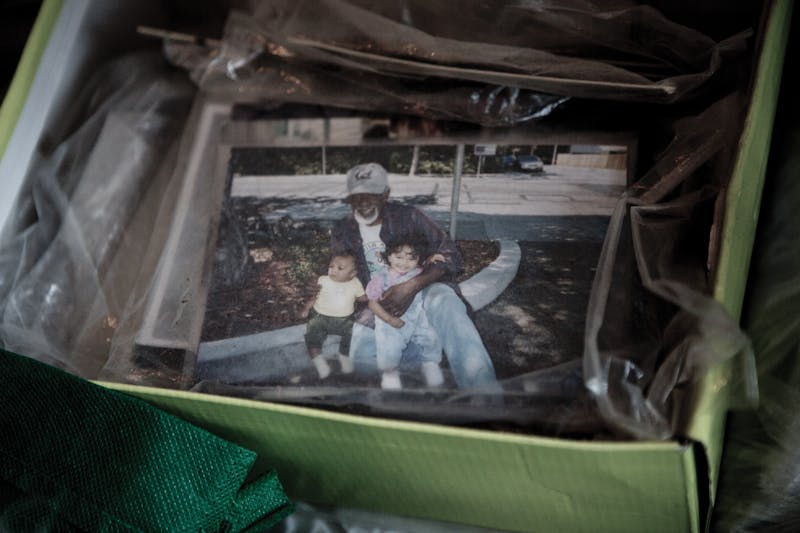
imageSuzan’s husband, James Russaw, pictured with two of their grandchildren.

Cubberley was a psychic relief because it solved so many basic needs: It had a place to bathe in the morning, a place to charge your phone. The parking lot had also formed its own etiquette and sense of community. People tended to park in the same places, a spot or two next to their neighbors, and they recognized one another and nodded at night. They weren’t exactly friends, but they were people who trusted each other, an impromptu neighborhood no one wanted to lose after losing so much. It was safe, a good place to spend the night. But it was next door to a segment of homeowners who were fighting hard to move the car dwellers out.

Normally, wealthy people who move into an area don’t see the results of their displacement because the people who lose their homes don’t stick around; they move to cheaper suburbs and work themselves into the fabric elsewhere. But the folks at Cubberley, 30 people on any given night, were the displacement made manifest. Most weren’t plagued with mental health or substance abuse problems; they simply could no longer afford rent and became homeless in the last place they lived. People will put up with a lot to stay in a place they know. “I’ve been analyzing why don’t I just get the heck on. Everybody says that, go to Wyoming, Montana, you can get a mansion,” Suzan said. “Move on, move on, always move on. And I say to myself, ‘Why should I have to move on?’”

It’s a new chapter in an old story. In his seminal 1893 lecture at the Chicago World’s Fair, Frederick Jackson Turner summarized the myth of the American frontier and the waves of settlers who created it as an early form of gentrification: First, farmers looking for land would find a remote spot of wilderness to tame; once they succeeded, more men and women would arrive to turn each new spot into a town; finally, outside investors would swoop in, pushing out the frontiersman and leaving him to pack up and start all over again. It has always been thus in America. Turner quoted from a guide published in 1837 for migrants headed for the Western frontiers of Ohio, Indiana, and Wisconsin: “Another wave rolls on. The men of capital and enterprise come. The ‘settler’ is ready to sell out and take the advantage of the rise of property, push farther into the interior, and become himself a man of capital and enterprise in turn.” This repeating cycle, Turner argued, of movement and resettlement was essential to the American character. But he foresaw a looming crisis. “The American energy will continually demand a wider field for its exercise,” he wrote. “But never again will such gifts of free land offer themselves.” In other words, we would run out of places for the displaced to go.


Suzan was born in 1945. Her father worked at what was then the Lockheed Corporation, and her mother had been raised by a wealthy family in Oak Park, Illinois. Her family called her Suzi. Though she grew up in nearby Saratogaand spent some time in school in Switzerlandshe distinctly remembers coming with her mother to visit Palo Alto, with its downtown theaters and streets named after poets. Palo Alto more than any other place formed the landscape of her childhood. “It was a little artsy-craftsy university townyou find charming towns are university towns.”

Like many women of her day, Suzan didn’t graduate from college. When she was 24, after her last stay in Switzerland, she moved to Mountain View, the town on Palo Alto’s eastern border that is now home to Google and LinkedIn. She was living off a small trust her family had set up for her when she met James at a barbecue their apartment manager threw to foster neighborliness among his tenants. James had grown up in a sharecropping family in Georgia, moved west during World War II, and was more than 17 years her senior, handsome and gentlemanly. Suzan thought: “I can learn something from him.” They were an interracial couple in the late 1960s, which was unusual, though she says her family didn’t mind. It was also an interclass marriage, and it moved Suzan down the income ladder.

For years, James and Suzan lived together, unmarried. They bought a house on University Avenue, just north of the county line and blocks from downtown Palo Alto, in 1979, and four years later had their only daughter, Nancy. It was the area’s ghetto, and the only source of affordable housing for many years. It was also the center of violence in the region, and, in 1992, was the murder capital of the country.

They never had much money. For most of their marriage, James ran a small recycling company and Suzan acted as his bookkeeper, secretary, and housewife. They refused to apply for most government assistance, even as homeless elders. “My husband and I had never been on welfare or food stamps,” she told me. “Even to this day.”

Suzan’s parents died in 2002 and 2003, and her older sister died in 2009. (“I thank God that they’re gone,” she told me. “They would die if they saw me now.”) It was a hard time for Suzan, who went to care for her dying parents and nearly left James. She felt he’d checked out of the difficulties. In retrospect, she thinks his dementia might already have been setting in; James was already in his seventies. He had taken out a second mortgage on their home, and they couldn’t pay it after he retired. They sold the house at a loss in 2005; it’s now a Century 21 office.

After they moved into the van, they settled into a routine. On the nights before James’s early-morning treatments, they slept in the dialysis center’s parking lot. Otherwise they generally stayed at Cubberley. They were still living off James’s retirement income, but most of it went to the $500 needed to rent the two storage units where their furniture remained, until they lost one for nonpayment. Finally, a few months in, Suzan was able to use a clause in a trust set up by her mother’s father to help her out in an emergency. It doubled their incomemuch of which was eaten up by the costs of gas, the remaining storage unit, parking tickets, and the other expenses of an unsettled life. It was a respectable income, one that technically kept them above poverty, but it still wasn’t enough for rent.

James was increasingly ill and van life was taking a toll. In addition to James’s other problems, both he and Suzan were starting to experience some of the health problems common among the homeless. The backseat of the van filled with bags of clothes, papers, fast-food detritus, pens, old parking tickets, and receipts. As the junk built up, the recline of their seats inched forever upward, until they were sitting up all the time, causing their legs to swell and nerves to become damaged, the medical consequences of not being able to raise your feet at night.


Gentrification used to be about poor neighborhoods, usually black and brown, underdeveloped and full of decrepit and neglected housing stock, run by the occasional slumlord—often described as “blighted,” though that designation has always been problematic—and how they become converted into wealthier ones, usually through the influx of richer white people and their demand for new services and new construction. It’s a negative process for the people who have to move, but there’s occasionally an element of good, because neglected neighborhoods revive. But what’s happening now in the Bay Area is that people who’ve done nothing wrong—not paid their rent late, violated their lease, or committed any other housing sin—are being forced out to make way. Displacement is reaching into unquestionably vibrant, historic, middle- and working-class neighborhoods, like The Mission in San Francisco, a former center of Chicano power. (The Mission alone has lost 8,000 Latino residents in the past ten years, according to a report from the local Council of Community Housing Organizations and the Mission Economic Development Agency.) And it’s happening to such an extent that the social workers who used to steer people to affordable apartments as far away as Santa Rosa or Sacramento, a two-hour drive, are now telling people to look even farther out. The vehicle dwellers I spoke with said they’d heard of friends living in places like Stockton, once a modest working-class city in the middle of the state, receiving notice-to-vacate letters like the one Suzan and James received.

For the most part, the traits that draw people to Palo Altogood schools, a charming downtown, nice neighborhoods in which to raise a family, and a short commute to tech jobsare the very same things that made the residents of Cubberley want to stay, even if it meant living in their car. The destabilizing pressure of a real estate market is also felt by the merely rich, the upper middle class, and the middle class, because the high-end demand of the global elite sets the market prices. “My block has the original owners, a retired schoolteacher and a retired postal worker,” said Hope Nakamura, a legal aid attorney who lives in Palo Alto. “They could never afford to buy anything there now.” Most people told me if they had to sell their homes today they wouldn’t be able to buy again anywhere in the area, which means many Palo Altans have all of their wealth tied up in expensive homes that they can’t access without upending their lives. It makes everyone anxious.

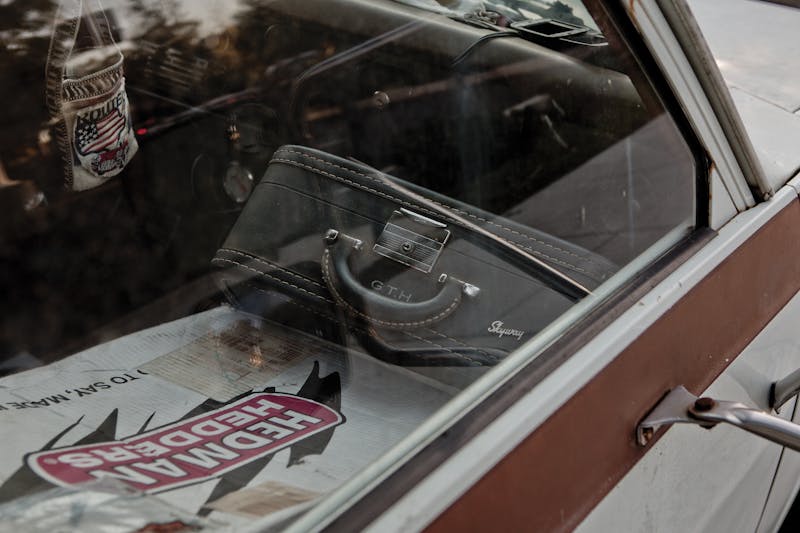
imageThe view inside a van parked outside a Palo Alto homeless organization.

The outcry from the neighbors over Cubberley was so fierce that it reshaped Palo Alto’s city government. The city council is nonpartisan, but a faction emerged that revived an old, slow-growth movement in town, known as the “residentialists.” Their concerns are varied (among them, the perennial suburban concerns of property values and traffic), but their influence has been to block any new development of affordable housing and shoo people like Suzan and James away from Palo Alto. An uproar scuttled an affordable-housing building for senior citizens near many public transit options that had been proposed by the city housing authority and unanimously approved by the city council. Opponents said they were worried about the effect the development would have on the surrounding community—they argued it wasn’t zoned for “density,” which is to say, small apartments—and that traffic congestion in the area would be made worse. Aparna Ananthasubramaniam, then a senior at Stanford, tried to start a women’s-only shelter in rotating churches, modeled after the Hotel de Zink. She said a woman came up to her after a community meeting where the same concerns had been raised by a real estate agent. “Her lips were quivering and she was physically shaking from how angry she was,” Ananthasubramaniam told me. “She was like, ‘You come back to me 20 years from now once you have sunk more than $1 million into an asset, like a house, and you tell me that you’re willing to take a risk like this.”

The trouble for Cubberley began when neighbors went to the police. There’d been at least one fight, and the neighbors complained about trash left around the center. At the time, Cubberley was home to a 64-year-old woman who’d found a $20-an-hour job after nine years of unemployment; a tall, lanky, panhandler from Louisiana who kept informal guard over her and other women at the center; a 63-year-old part-time school crossing guard who cared for his dying mother for 16 years, then lived off the proceeds from the sale of her house until the money ran out; two retired school teachers; a 23-year-old Palo Alto native who stayed with his mother in a rental car after his old car spontaneously combusted; and, for about six months, Suzan and James. “They didn’t fit this image that the powers that be are trying to create about homeless people. They did not fit that image at all,” Suzan told me. “We made sure the premises were respected, because it was an honor to be able to stay there.” She and others told me they cleaned up their areas at the center every morning.

“I said, ‘We have no place to go, and we’re staying right here.’ They were going to know about it.”

Pressured to find a way to move the residents out, the police department went to the city council claiming they needed a law banning vehicle habitation to address the neighbors’ concerns. Advocates for the homeless said that any problems could be solved if police would just enforce existing laws. Local attorneys warned the city council that such laws could soon be considered unconstitutional, because the Ninth Circuit Court of Appeals was hearing a challenge to a similar law in Los Angeles. Carrie LeRoy, an attorney who advocated on behalf of the unhoused, and other attorneys threatened to file a class-action lawsuit if the vehicle-habitation ban ever went into effect. The city council passed the ban anyway, in a 7-2 vote in August 2013, and the police department and other groups in the city started an outreach program to tell people about the law. “All of them had received these notices from the city,” LeRoy said, “And it was basically like, ‘Get out of our town.’”

A few weeks later, the city council also voted to close the showers at Cubberley and give it a 10:30 p.m. curfew, which made it illegal to sleep there. On their last night there, in October 2013, Suzan and James left around 8 p.m. so they wouldn’t get caught past the new curfew. They tried some old haunts and got kicked out. The stress of living in the van was hard on James. Around this time, James decided to end his dialysis. “Of course, we knew what that meant,” Suzan said.

One night, about a month after leaving Cubberley, the police pulled Suzan and James over. Their registration was expired. “This officer, he got a wild hair, and he said, ‘I’m going to impound your car,’ and called the tow truck.” Suzan told me. They got out of the car. Without pushing and demanding, she realized, she was never going to get out of the situation. She told me she said to the officer, “This is our home, and if you impound it we will not have a home.” He insisted. “I said ‘That’s fine. You do that. We will stay right here. I will put the beds out, I will put what we need here, right here on the sidewalk.” Other officers arrived and talked to them. They asked Suzan whether, surely, there was some other place they could go. “I said, ‘We have no place to go, and we’re staying right here.’ I was going to make a stink. They were going to know about it.” Suzan told me people were poking their heads out of their homes, and she realized the bigger fuss she made, the more likely officers might decide just to leave them alone.

Because James’s health had continued to worsen, he and Suzan finally qualified for motel vouchers during the cold weather. They got a room in a rundown hotel. “It had a microwave and a hot bath,” Suzan said. In his last few days, James was given a spot in a hospice in San Jose, and Suzan went with him. “It was so cut-and-dry. They said, ‘This is an end-of-life bed, period,’ ” Suzan said. “And I never said that to James.” He died on February 17, 2014, and a few weeks later a friend of theirs held a memorial service for James at her house. Suzan wore an old silk jacket of her mother’s, one that would later be ruined by moisture in the van, and a necklace Nancy had made. They ate James’s favorite foodscornbread, shrimp, and pound cake. Suzan had a few motel vouchers left, and afterward stayed with friends and volunteers for a few weeks each, but she felt she was imposing.

That summer, she returned to her van. It was different without James; she realized she’d gotten to know him better during their van life than she ever had before. Maybe it was his dementia, but as they drove around or sat together, squished amidst their stuff, he’d started to tell her long stories, over and over, of his youth in Georgia. She’d never heard the tales before, but she’d started to be able to picture it all. On her own, without his imposing figure beside her, Suzan was scared, and more than a little lonely. Most nights, she stayed tucked away in a church parking lot, without permission from the pastor, hidden between bushes and vans. The law wasn’t being enforced, but sleeping in the lot made her a kind of a criminal. “The neighbors never gave me up,” she said.


Suzan told me she was in a fog of denial after James’s death, but it’s probably what protected her because homelessness is exhausting. “You start to lose it after a while,” she said. “You feel disenfranchised from your own society.” The Downtown Streets Team, a local homeless organization, had been helping her look for a long-term, stable housing solution. Indeed, Suzan told me that at various times, she and James had 27 applications in for affordable housing in Palo Alto. (When he died, she had to start over, submitting new applications for herself.) Her social worker at the local senior citizens center, Emily Farber, decided to also look for a temporary situation that would get Suzan under a roof for a few months, or even a few weeks. “We were dealing with very practical limitations: having a computer, having a stable phone number,” Farber said. Craigslist was only something Suzan had heard of. She’d finally gotten a cell phone through a federal program, but hadn’t quite mastered it.

For many months, Farber struck out. She didn’t think Suzan would want to live with three 25-year-old Google employees, or that they’d want her, either. She even tried Airbnb. Because Suzan didn’t have a profile, Farber used her own, and wrote to people who had rooms listed to say her 69-year-old friend needed a place to stay in the area for a couple of weeks. “We got three rejections in a row,” she said. Finally, in November, they found a room available for rent for $1,100about 80 percent of her income from the trust and her widow’s benefits from Social Security. Suzan would have her own bedroom and bathroom in the two-bedroom apartment of a single mother. The mother crowded into the other bedroom with her 16-year-old son and seven-year-old daughter. The only downside for Suzan was that it was in Santa Clara, another charmingly bland suburban enclave in the South Bay, a half hour south of Palo Alto and a world away for Suzan. “It’s out of my comfort zone, but that’s OK!” she told me.

I met Suzan on the day she moved in, and the concept of being able to close a door was almost as unsettling to her as the concept of sleeping in the van had been. “I’m in this kind of survival mode,” she said, and had found a certain comfort in her van. “I’ve got this little cocoon I’m staying in, and everything is within arm’s reach.” She had a big blue mat in the back of the van, like a grown-up version of the kind kindergartners nap on, but soon she’d acquire a bed. She retrieved her old TV from her storage unit. She made a comfortable room, with chairs and a bed and a small table, and decided to eat her meals in there. She only signed a lease for three months, because it wasn’t really sustainable on her fixed income. She’d also applied for an affordable housing complex being built for seniors in Sunnyvale, one that would provide permanent housing for 60 senior citizens from among the 7,000 homeless people in the county at the time. She’d find out in April if she was selected in the lottery. All her hopes were pinned on it.

In the first few weeks after her move to Santa Clara, Suzan spent a healthy portion of her limited income on gas, driving the Explorer back and forth to Palo Alto. After all, her post office box was there, and so were her social workers. Her errands demanded a lot of face time, and in some ways, she still filled her days the way she had before she got her room, moving around trying to solve her problems. Her car was still packed, too, as if she hadn’t let go of the need to drive in it, to move forward, to keep her stuff around her within arm’s reach, as if she were still without a home base.

Two afternoons a week she went to a Palo Alto food closet. She usually made it right before it closed, in the early afternoons. When her number was called, she went up to the counter to watch the volunteer sort through what was left on the shelves, finding the most recently expired itemsthese were older goods grocery stores couldn’t keep past their sell-by dates. Suzan’s politeness was, as always, almost formal, from an earlier era, when being ladylike was a learned skill. The volunteer would ask her if she wanted milk, or peaches, or a serving-size Baggie of cereal, and she’d say, “Yes, very much so!” These days, she got to take raw eggs instead of the boiled ones, a treat reserved for those with kitchens. Her requests were glancing rather than direct. “Have you any lettuce?” and the answer was often no. I said it seemed like an efficient operation. Suzan said, “I really know the drill!”

Suzan needed to visit her social worker, Julia Lang, at the Downtown Streets Team office to get the form that allowed her to go to an even better food bank. She asked the receptionist whether her social worker was in. She wasn’t, and Suzan explained she was looking for the food bank vouchers. Then the receptionist asked for her address. That stopped Suzan. The receptionist explained that the pantry was for Palo Alto residents, and Suzan was considering, for the first time, whether that counted her. Suzan explained that she and her husband had gone to the pantry the year before, and said they should be in the system. We waited while the receptionist looked. Suzan waved at someone she’d seen around for years, from her car-dwelling days. Suzan told the receptionist, again, that they really should be in the system. But they weren’t. Suzan said that was OK, and she would come back. The receptionist said, “Are you sure? I just need your ID and your address.” Suzan demurred. She needed to talk to her social worker. This is what it meant to have to leave her hometown. She was leaving the city where she and James had known people, the city where James had died, the city where she’d grown up and near where she’d raised her own daughter. It was the city where she knew where to go, where she’d figured out how to be homeless. It was the city where she knew the drill.


That homelessness persists in Silicon Valley has puzzled me. It has an extremely wealthy population with liberal, altruistic values. Though it has a large homeless population relative to its size, in sheer numbers it’s not as large as New York City’s or L.A.’s. Some of the reasons could be found in the meeting on November 17, 2014, when the city finally overturned the car-camping ban. It had never been enforced because, as predicted, the Ninth Circuit had overturned L.A.’s ban. In the end, all but one person who’d voted for the ban the first time around voted to overturn it. The lone dissenter was councilman Larry Klein. “The social welfare agency in our area is the county, not the city,” he said. “To think we can solve the homeless problem just doesn’t make sense.”

This idea was repeated many times among city officials—that homelessness was too big an issue for the city to resolve. The city of Palo Alto itself has one full-time staff member devoted to homelessness, and it coordinates with county and nonprofit networks to counsel, house, and feed the homeless.
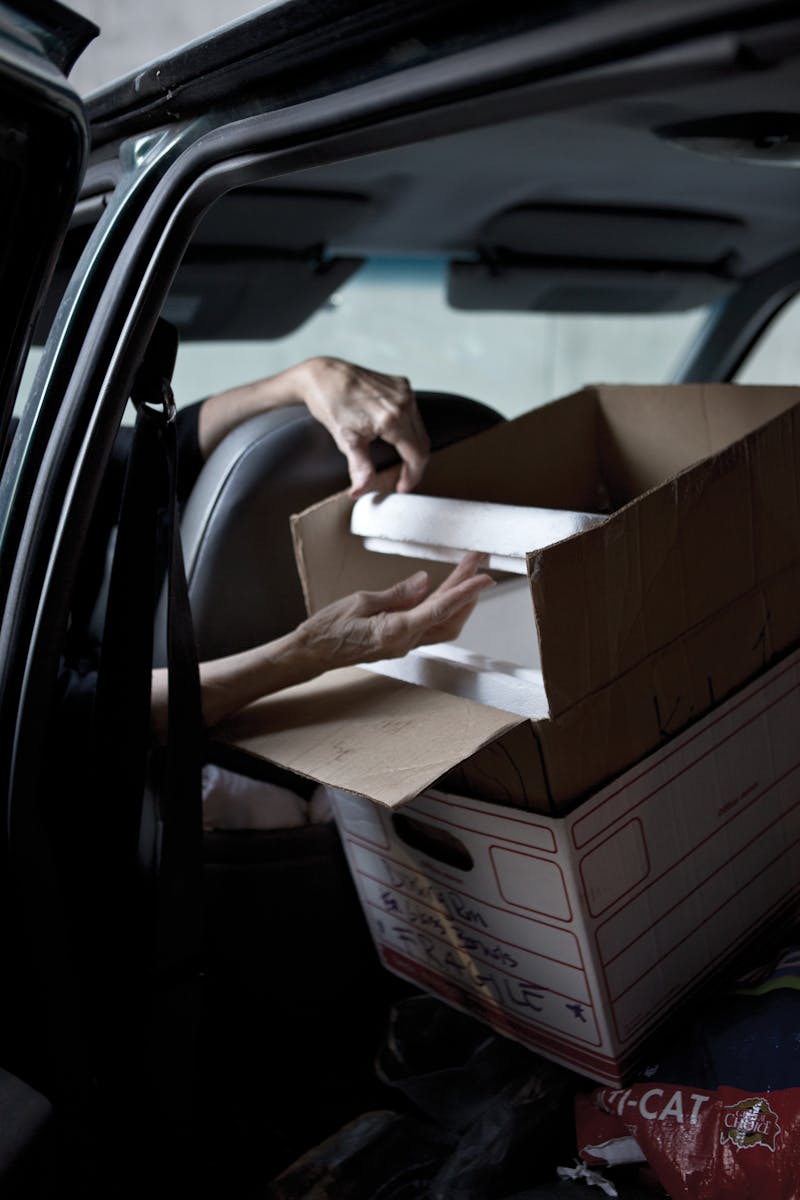
imageSuzan shows where she stored food in her car while homeless.

During the fight over the ban, the city tried to devise an alternative—a program that would allow car dwellers to park at churches—but then left the details up to the faith community to work out. Nick Selby, an attorney and member of the Palo Alto Friends Meeting House, said he and his fellow Quakers met with community resistance when they tried to accommodate three or four car dwellers on their tiny lot. Neighbors circulated a petition listing concerns like “the high prevalence of mental illness, drug abuse, and communicable diseases in the homeless population” and the risk of declining property values. But Selby said some of their concerns were fair. “People who objected were saying to the city, ‘What’s your program?’” Selby said. “And the city really had no answer to those questions.” Without a solid plan and logistical help from the city, other churches were reluctant to step forward. “The churches weren’t prepared to deal with this,” he said. After the church car-camping plan fell through, the city council said it had no choice but a ban.

Santa Clara County, too, struggles to address the problem. The county is participating in federal programs to build permanent supportive housing for the chronically homeless population, the population of long-term homeless who typically have interacting mental health and substance abuse problems. But land is expensive here, and the area is shortchanged by the federal formula that disperses funds. California, ever in budget-crisis mode, provides limited state funds. There isn’t a dedicated funding stream from the cities, which don’t necessarily pay a tax to the county for these projects, and local affordable housing developments are often rejected by residents as Palo Alto’s was. In September, the city of San Jose and the county announced a $13 million program to buy old hotels and renovate them as shelters, which will make 585 new beds available. While advocates credit the county’s efforts with cutting the estimated homeless population by 14 percent since 2013, the number of people like Suzan, who hide in their cars, is almost certainly underestimated. But most such efforts are centered in San Jose. Chris Richardson, a director of the Bay Area’s Downtown Streets Team, said what needs to happen is not a mystery: Other cities have to fund affordable housing, they have to fund more of it, and they have to do it in their own neighborhoods, without relying on San Francisco and San Jose to absorb all of the area’s poverty and problems. “You can’t just ship them down to the big, poor city,” he said.

When Palo Alto originally passed the car-camping ban, it also devoted $250,000 to the county’s homelessness program. When they voted to rescind the ban, council members asked for an update on what happened to the money. The city staff was not prepared to report on how it had been spent at that council meeting, more than a year into the funding. Members of the council again reiterated their desire to help the homeless. “Helping the homeless” was tabled, as a general idea, for another agenda at another meeting, as it always seems to be, or passed off to the county, or to someone elseand so helping the homeless is something nobody does.


Through the winter, Suzan remained ill; it was a bad flu season. She kept paying the rent on her room, on her storage units, on her P.O. box in Palo Alto, and she tried setting aside money she owed on parking tickets. Some months she’d run out of gas money to drive the 15 miles to Palo Alto and check her mail or visit her social workers. She was waiting to hear about the affordable apartment.

In May, she was denied. Suzan had bad credit, both because of the unpaid storage unit she and James had lost and because otherwise her credit history was so thin. Julia Lang, one of her social workers, told me she couldn’t even get a credit score for Suzan. Lang said people get denied on credit, or because they make too little for affordable housing that’s supposedly intended for extremely low-income people, all the time. “When you’re that destitute and have gone through so many complicated situations, what are the chances that your credit’s going to be good?” she said.

Suzan was livid and despondent, and she decided to appeal. “I wasn’t going to take that lying down,” Suzan told me. “I was proud of myself.” Catholic Charities helped her appeal. Suzan had to write a letter showing how she intended to repair her credit, and that she understood why it was bad in the first place. During the months of back and forth, Suzan bought a new Jeep, only one year newer than the Explorer, in case she needed to sleep in her car again. In July, she learned she’d won her appeal. She had two weeks to get her affairs in order, pay the first month’s rent and security deposit, and move in. Her social workers helped her with some of the move-in costs, and she signed a lease for a year.

I saw Suzan again in August, about three weeks after she’d moved in. Her hair was trimmed. She was wearing a brightly colored muumuu, blue and green with tropical flowers“It’s a housedress but you can wear it out on the street!”and a green sweater tied around her shoulders. She seemed relaxed and rested, and I told her so. Her bed was full of folded clothes, and her room was still in disarray. She was trying to cull her storage unit so that she could get a smaller one and cut down on rent. Most of the people in her complex had been in the same boat as Suzan, or had been worse off. She pays $810 a month, the amount determined to be affordable for her income. It had taken her more than three years, help from at least three social workers, and thousands of dollars, but she was finally stably housed. At least, for a year.