Showing posts sorted by relevance for query appealing features including. Sort by date Show all posts

Sunday, March 11, 2018

'1 x Double Bedroom in First Floor Flat ' Room to Rent from SpareRoom

Read article : '1 x Double Bedroom in First Floor Flat ' Room to Rent from SpareRoom

1 x Double Bedroom in First Floor Flat in City Centre

The other room is being rented by a 22 year old female student who would also like to live with another female.

Forming part of a granite building in a popular and convenient location close to city centre, this TWO BEDROOM FIRST FLOOR FLAT has been well looked after and offers a comfortable home compatible with the modern lifestyle. The property itself is of fresh decorative appearance and will be sold inclusive of all quality floor coverings, blinds and light fitments. The property boasts many appealing features including a spacious Lounge with front facing aspect, modern fitted Kitchen with various appliances, Double Bedroom with built-in wardrobe, Single Bedroom and upgraded Bathroom. Worthy of mention there is an enclosed Garden to rear which is shared between all residents. The property would make an ideal first time purchase or buy to let investment.

Claremont Street is situated in the West End of Aberdeen close to many main arterial routes to the City, with the area also been well served by local shops and by public transport facilities. Most parts of Aberdeen City are regularly accessible and Union Street with its shops, pubs, clubs, restaurants and leisure facilities is also within easy walking distance.

Lounge: 13’8” x 11’7” approx. Nicely proportioned Lounge to the front presented in neutral décor with complimenting fitted carpet. A particular feature of the Lounge is the gas fire with alcoves on either side with storage cupboards below. Light fitment, access to bedroom two.

Kitchen: 8’3” x 6’5” approx. Well equipped kitchen with an extensive range of base and wall units with Beech doors and trim with stainless steel handles and co-ordinating granite effect work surfaces with matching splashbacks, inset stainless steel sink unit with mixer tap, Integrated Four Ring Ceramic Hob with Fan Assisted Oven below and Extractor above set into stainless steel canopy, fittings for plumbing in automatic washing machine, concealed Integrated Fridge/Freezer, slate effect vinyl flooring, triple spotlight, extractor fan, fitted blind.

Double Bedroom 1: 9’6” x 7’9” at longest and widest approx. Double Bedroom to rear with stainless steel curtain pole, light fitment, fitted carpet, fitted blind and fitted wardrobe.

Double Bedroom 2: 8’5” x 6’10” approx. Second Bedroom to front with stainless steel curtain pole, light fitment, fitted carpet.

Bathroom: Upgraded Bathroom which is partially tiled with white suite, fitted thermostatic Mira shower, folding glazed shower screen, three downlighters, extractor fan, wall mirror, heated towel rail, and vinyl flooring.

Council tax band A

Saturday, March 24, 2018

Panasonic SC-ALL05 Review | Trusted Reviews

Read article : Panasonic SC-ALL05 Review | Trusted Reviews

What is the Panasonic SC-ALL05?

Imagine lounging in a bubble bath surrounded by candles, glass of wine in hand, while Kenny G’s seductive smooth jazz drifts across the bathroom. Or standing in the shower, soaping yourself to the strains of Iron Maiden’s “Bring Your Daughter to the Slaughter”.

That’s the dream Panasonic is selling you (probably) with the SC-ALL05, a portable waterproof speaker that brings your favourite tunes to any room in the house – including those in which the combination of water and electricity would normally pose a threat to your own personal safety.

Equipped with Wi-Fi, Bluetooth and Qualcomm AllPlay multiroom functionality, the SC-ALL05 forms part of Panasonic’s ALL Connected Audio range, following in the footsteps of the SC-ALL6 and SC-ALL7CD.

Related: Best Bluetooth Speakers 2016
Panasonic SC-ALL05

Panasonic SC-ALL05 – Design and Connections

Eye-catching, elegant and compact, the SC-ALL05 is a design triumph. Its small footprint (170mm wide by 77mm deep) is perfect for perching on a bathroom or kitchen shelf, while the simple black and white styling looks great.

My eye is immediately drawn to the slanted top panel, with shiny chrome trim. It’s a real fingerprint magnet but looks nice. It contains a row of backlit touch-sensitive playback and volume controls, plus six numbered presets that provide quick access to AllPlay Radio stations. The Voice button gives speech frequencies a boost in noisy rooms.

The rest of the speaker is covered in a fine grille with two LEDs at the top that indicate operation and network status. On the back is a lockable cover that keeps the sockets dry when used in wet areas – open it up and you’ll find an Ethernet port, reset button and the DC power terminal.

Panasonic SC-ALL05

Panasonic SC-ALL05 – Features

The SC-ALL05’s headline feature is its waterproof design. It’s IPX5 and IPX7 certified, which means it will withstand jets of water or being accidentally knocked into the tub. It can be immersed in 1m of water for up to 30 minutes, but I wouldn’t recommend it. A couple of drain holes let you empty any water that accumulates.

As part of Panasonic’s ALL Connected Audio range, it can stream music from PCs and NAS drives via the Music Streaming smartphone app. You can also play music from Spotify and Napster, although neither is native – it diverts you to the respective apps, and you’ll need a premium account for Spotify.

Internet radio comes courtesy of Aupeo and AllPlay Radio. The latter also requires a separate app, which lets you assign stations to the preset buttons. Moving from app to app for different services is a chore – it would be nice if they were integrated into a single interface.

The SC-ALL05 uses Qualcomm’s AllPlay multiroom platform, which is remarkably flexible and easy to use. You can carry out all the usual multiroom tricks – grouping speakers together in different zones, or playing different sources on each speaker – but the pièce de résistance is the ability to “re-stream” Bluetooth from the SC-ALL05 to other ALL speakers.Panasonic SC-ALL05

In terms of spec, the stereo SC-ALL05 packs a pair of 6.5cm full-range cone drivers, backed by a pair of 6.5cm passive radiators to flesh out bass notes. Total power output is quoted at 20W on mains power, which drops to 8W when running off the battery. You can hear the drop in loudness when you pull out the AC adapter.

Battery life is given as 9 hours of Bluetooth playback, or 8.5 hours in network mode. When using the AllPlay system, you can play MP3, AAC, FLAC, ALAC and WAV, the latter three up to 192kHz/24-bit.
Panasonic SC-ALL05

Panasonic SC-ALL05 – Setup and Operation

Wi-Fi setup is quick and easy – just open the Music Streaming app and follow the onscreen instructions. After it finds the ALL05, just key in your Wi-Fi password and you’re good to go.

The lack of a dedicated remote means operation is restricted to your smartphone or tablet. That’s a little annoying if your phone dies – but thankfully, there’s a decent range of controls on the unit itself.

As established in our previous ALL speaker reviews, the Music Streaming app is one of the best around. The friendly colour scheme and clear layout make navigation intuitive, and it scrolls through large NAS drive libraries without buffering. A search tool is on hand to help find a particular track or album.

To start playing music, your first port of call is the Browse menu, which lists servers, streaming services and radio apps. During playback you can switch between the Browse and Queue menus, the latter allowing you to change the playback order by dragging and dropping tracks. Tap the album art at the top and it expands to a full-screen Now Playing menu, with playback controls, volume and track sliders.

Multiroom control is carried out in a sidebar menu, where each speaker is denoted by a differently coloured icon. You can rename and group them together by dragging and dropping the icons onto each other – the icons link up and the current playback source is displayed between them. Panasonic SC-ALL05

Panasonic SC-ALL05 – Performance

The SC-ALL05 musters a solid, cohesive sound with punchy bass and decent clarity. Despite its modest power rating and compact size, it goes nice and loud, which is a godsend when you’re clanking around in the kitchen.

It also produces a surprising amount of bass for such a small unit. It’s warm and full-bodied, lending depth to anything you play. The funky bass groove in “Just Say Nothing” by Incognito is handled with impressive agility; notes stop and start accurately. It can become a little boomy as you nudge the volume higher, but in general everything hangs together nicely.

Meanwhile, the track’s snare drums have a lively snap and the cymbals are suitably crisp. This terrific sense of clarity extends to instruments and vocals too, which stay clear and focused. Panasonic has clearly designed this speaker to make itself heard in lively environments with its forceful, biting tone.

Voice mode takes this idea even further, stripping away most of the bass and enhancing the mids in order to make speech more audible when you’re in the shower. Normally I’d run a mile from features such as this, but it works wonders, making the news headlines audible over the hiss.

Panasonic SC-ALL05

This is ideal when going about your day-to-day business, but cracks appear when you sit down and listen critically. The mids and high frequencies are rather thin and forced, lacking the refinement and smoothness you get from other wireless speakers at this price.

A touch of hardness also creeps in as you approach the top end of the volume range (although it keeps its composure for longer than I expected) and the soundstage is fairly narrow given the unit’s obvious physical restrictions.

So it’s no substitute for your living room hi-fi system then, but it isn’t designed to be. As a portable speaker that you can play anywhere in the house – including the bathroom or garden – it does a terrific job. And when you throw in flexible multiroom functionality, compact design and long battery life, the SC-ALL05 looks like it could really make a splash (sorry).

Panasonic SC-ALL05

Should I buy the Panasonic SC-ALL05?

If you’ve already bought into Panasonic’s ALL multiroom system, adding the SC-ALL05 is a no-brainer. Its IPX5/7 waterproofing lets you expand your ecosystem into the bathroom or garden, without the threat of water curtailing your musical enjoyment.

Its clear, punchy and vigorous sound is ideal for day-to-day listening, while the handy Voice mode makes speech audible over the hiss of the shower. Granted, its thin, hurried high frequencies and slightly boomy bass won’t make audiophiles go weak at the knees, but on the whole it does a fine job.

If you’re buying the SC-ALL05 as a standalone speaker, you won’t be disappointed either. Qualcomm’s slick, reliable AllPlay platform makes music streaming a cinch, while decent battery life, appealing features and a compact design further bolster the Panasonic’s buyability.

Verdict

The SC-ALL05’s sound quality won’t set the world alight, but with its long battery life, compact design, slick operation and nifty features, this portable waterproof speaker is sure to make a splash.

Friday, August 11, 2017

Simple Tips for a Successful Bathroom Renovation

Read article : Simple Tips for a Successful Bathroom Renovation

From design inspiration to choosing the right materials and fixtures, we’ve got all the information you need to complete the perfect bathroom renovation project.

bathroom renovationRegardless of whether you live in an apartment or a house, the bathroom is one of the most important rooms in the home.

A practical and modern bathroom dramatically enhances the appeal of any home, so if you’re planning a bathroom renovation it’s important that you get the details right. So if you’re looking for a host of handy tips and tricks to help you turn your tired and impractical bathroom into a relaxing and luxurious retreat, you’ve come to the right place.

Getting started

Before you start thinking about design ideas, colours, and choosing shower heads and tiles, you need to sit down and work out exactly what you want to achieve with your bathroom renovation.

If you’re renovating an ensuite to create a peaceful space where you can unwind, warm tones and a modern free-standing bathtub might be high on your wish list. If you need a bathroom for your growing family, then durable materials and plenty of storage will be essential inclusions.

So take the time to develop a clear idea of what the bathroom will be used for and any features on your must-have list. Once that’s done you can start planning the finer details.

Design ideas for different projects

There are several features and factors you’ll need to consider when planning your bathroom renovation, including:

Layout

The right layout is essential to create a functional and comfortable space, so consider ambience, flow and practicality when deciding on your bathroom layout. Speak to an architect or a builder about the functionality and layout of the space. There’s a seemingly endless array of floorplan options available, though you may be constrained by the location of existing plumbing connections. Consider the features you want in your bathroom, for example maximising natural light or ensuring an easy flow from the bedroom through to your ensuite shower, when deciding on the right layout.bathroom

Shower

The shower is one of the features of your bathroom that will get the most use. From choosing a screen for privacy to deciding on a shower head to sourcing the right water flow, there’s plenty to think about when selecting your shower. You can choose a fixed or hand-held shower head, massage showers, waterfall showers and high- and low-pressure jets. In terms of shower screens, do you want a framed, frameless or semi-frameless screen, or perhaps no screen at all? Chat to an interior designer and shop around at bathroom specialist stores to learn more about the different options available on the market and how they fit into your plans.

Bath

A contemporary bathtub is a must — and there’s a seemingly limitless range of beautiful designs to choose from. There are freestanding tubs that are statement pieces in their own right, recessed baths that use minimal space, easy-access baths for the elderly or those with a disability, as well as full jacuzzi setups for a touch of luxury. However, if you live in a second-storey house, be mindful of having a bath on the second floor as the weight of a full bathtub may put pressure on the upper floor. The amount of space available is also going to have a big influence on the bath you select.

Vanity and basin

Every bathroom needs a sink, but if you and your partner are usually getting ready at the same time, could the space benefit from his and hers sinks? Ample storage space is a must for any vanity unit, while looks should never be neglected in order to ensure that the vanity you select matches the rest of the bathroom. The right vanity will combine good looks and handy storage options with plenty of usable bench space. From wall-mounted vanities to cabinet vanities and even minimalist vanities with a simple shelf system, there’s a huge range of choices available.

Fixtures and fittings

From taps and towel rails to frameless shower screens, the right fixtures and fittings are practical inclusions that complement the design of the rest of the bathroom. Taps come in an extensive selection of materials, including chrome, brass, gold and stainless steel, and there’s no limit to the styles available depending on the space available and the look you want to achieve. The sink, shower, bathtub and toilet should all serve a practical purpose but should also seamlessly integrate with their surrounds and complement one another perfectly.

Tiles

Tiles play a hugely important role in determining the look and ambience of your bathroom. From floor tiles to wall tiles and even special feature borders, choosing the right tiles is crucial to the success of your bathroom renovation. It can also be a daunting process, You’ll need to consider the ambience you want to create in your bathroom, your colour scheme, the size of tiles you want and how they will be laid out. layout bathroomFor example, do you want to use contrasting tiles to add a feeling of space to a small bathroom, or do you want tiles with a textured surface to create a unique and interesting feature? Tiles come in ceramic, glass, natural stone, porcelain and clay, so research the looks and benefits of each option before making your choice.

Storage space

A bathroom with insufficient storage space is impractical and cluttered, so make sure you’ve got ample room for all the toiletries, towels and other odds and ends you need to store in your bathroom. Vanity cabinets, shelves and drawers are the obvious places to keep your items so they don’t clutter up the rest of your bathroom, but there’s plenty more you can do to maximise storage space. There’s a huge range of clever internal hardware options available to cleverly use the available space, while a recessed niche built into the shower cavity is great for storing shampoos, soaps and the like. Even installing a simple ledge-style shelf can help keep the vanity top free of mess.

Lighting

Last but certainly not least, don’t overlook the importance of lighting in creating a welcoming and refreshing space. The bathroom is one area of the house where it’s important to be able to see clearly, but where you can also relax in comfort if that’s what you feel like doing. Whether you’re looking for soft LED down lighting, a feature pendant that stands out or simply the warmth of natural illumination, include lighting considerations in your initial renovation plan. Light fixtures will obviously need to be moisture-proof and capable of standing up to life in your bathroom, while you may also want to consider heat lamps if you live in a cold area. One other thing to remember when choosing lighting is energy usage - the right choices can make a noticeable difference to your power bill.

Bathroom design ideas

Back to top

Renovating a small bathroom

When you’re renovating a bathroom, space is the final frontier. In a larger space, having more room to work with often means that you have more flexibility to add privacy and create different zones for each bathroom task.

When you’re renovating a bathroom, space is the final frontier. In a larger space, having more room to work with often means that you have more flexibility to add privacy and create different zones for each bathroom task.

Unfortunately, most bathroom renovators only have a limited area to work with, so they need to take advantage of clever ideas and design solutions that help them make the most of the available space. For example, a normal hinged door can eat up much more space than you have to spare, so a sliding door can offer a better solution. Other great space-saving and space-creating ideas include wall-mounted toilets, neutral colour palettes with occasional bursts of colour, and including handy built-in storage nooks and crannies wherever possible.Small bathroom

Renovating a small bathroom means you’ll also have to be more ruthless when deciding what belongs on your bathroom wish list. For example, while soaking in a hot bath might sound appealing, are you really willing to sacrifice such a large amount of floor space to include a tub?

Do it yourself or get in the experts?

If you’re keen to save as much money as possible on your bathroom renovation, you may want to consider a DIY project. While this lets you take control of your bathroom renovation, it’s always wise to think about your options before going the DIY route as bathroom renovations can become complicated very quickly.

Some jobs are fairly simple for the DIY renovator, such as stripping out your old bathroom and prepping the space for your new bathroom. Other jobs, for example waterproofing and tiling, you might also be able to do yourself if you have the right experience under your belt.

Plumbing and electrical work will need to be done by the professionals, however. A good plumber can help you through your renovation from start to finish, so find a plumber you trust before you start knocking down walls or stripping out tiles.

What can you DIY and what's best left to experts?

Where to buy bathroom renovation supplies

From tiles to toilets, there are several options when you need to stock up on the right supplies for your bathroom renovation. A good place to start your search is a large hardware store like Bunnings, Masters Home Improvement or Home Timber and Hardware. This will give you a good idea of some of the fixtures and fittings available to include in your bathroom.

It’s also a good idea to browse specialist renovation and bathroom supply stores — research online to find one near you, and where you find one bathroom store you’ll often find a few more. There’s a huge range of products to choose from for every aspect of your renovation, from the smallest of tiles to the largest of freestanding baths, so take the time to consider all the options available before making your decisions.

Back to top

Top tips to help you save money on your bathroom renovation

  • Do your research. Jump online and visit local bathroom renovation specialists to see what kind of materials and fixtures are on offer. Speak to architects, building experts and bathroom renovation specialists to ensure that your renovation plan and budget is feasible. Source several quotes from different suppliers before deciding which company to go with.Shopping for a shower head
  • Plan ahead. Don’t start your renovation unless you know exactly what you want to achieve. Getting halfway through your project and then deciding that you don’t like the layout, you want different tiles or you’d like to make room for a bigger bath can be an expensive and stressful mistake. Work out exactly what you want before you reach for a hammer.
  • Make a budget and stick to it. Bathroom renovations have something of a reputation for unforeseen costs and budget blow-outs. Around $15,000 to $20,000 is a realistic estimate for many bathroom projects, see our guide on the costs of bathroom renovations, but sit down and work out the material and labour costs for your project. Once you’re fully aware of how much your project should cost and how much you can afford, it’s time to start work.
  • Know what you can do — and what you can’t. While DIY renovations are great for saving money, it’s important that you don’t get ahead of yourself when choosing what jobs to take on and what to leave to the professionals. If you’re at all unsure about your ability to complete a particular task, you’re much better off getting the experts in to avoid problems occurring later down the track.
  • Take your time. While it can be frustrating having your bathroom out of action for a couple of weeks or more, when you’re doing it yourself it’s important not to rush things. Measure everything twice and be certain you’re doing the right thing before you cut, lay or install anything.
  • Plumbing costs. You might want to completely rearrange the features and layout of your bathroom, but take note that plumbing costs can sometimes make this prohibitively expensive. Moving plumbing pipes and outlets for sinks, toilets, showers and baths can cost thousands of dollars, so you may be better off leaving some fixtures where they are to lower your costs.
Back to top

Thursday, June 22, 2017

Makita Sub-Compact Drill and Impact Driver - 18v Goes Ninja

Read article : Makita Sub-Compact Drill and Impact Driver - 18v Goes Ninja

What's This?This post is sponsored by The Home Depot. Tool brands take their colors seriously, and when one of them deviates from the color everyone recognizes them by, it means one of two things: 1) They are making a statement to differentiate a particular tool, or, 2) their brand manager is getting fired. Makita has recently made a chroma-curious move and released a new line of 18v Cordless tools in, wait for it, black! They sent us their 18V LXT Sub-Compact Combo Kit (CX200RB) several months ago, which includes both the Makita Sub-Compact Drill (XFD11ZB) and Makita Sub-Compact Impact Driver (XDT15ZB). We’re pretty sure their brand manager isn’t getting fired over the new color scheme, so let’s talk about these new tools, and why you might want to own them.

[embedded content]

As we all know, it’s a cordless world out there when it comes to power tools. Even outdoor power equipment is making the rapid progression toward cordless technology. Just about every power tool, including those many thought would “never” go cordless, are available in cordless platforms. All that cordless goodness does come at a cost. For one thing, things can get messy when it comes to battery platforms and chargers. I often dream of a day when all the tool companies come together to pursue a universal standard for chargers and batteries. From a consumer standpoint, being able to use one charger and any brand’s battery would make life a lot easier.
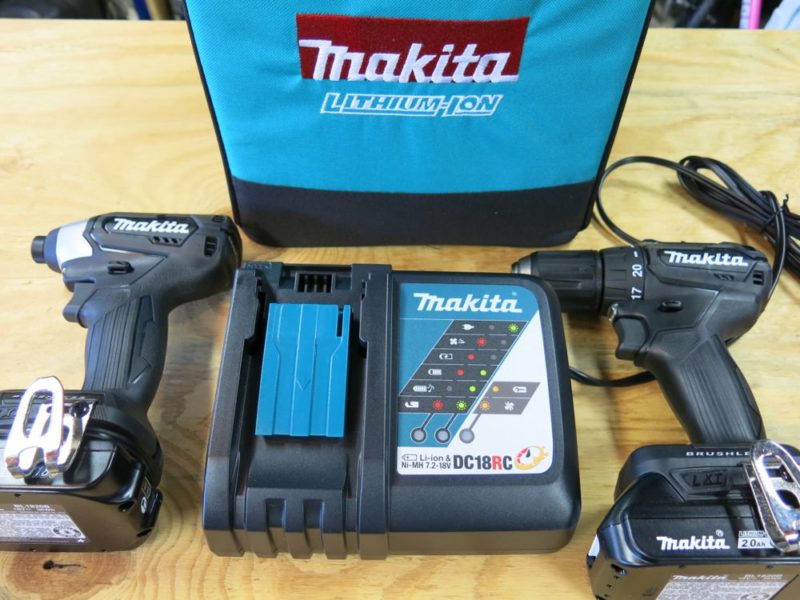
The Makita Sub-Compact CX200RB KitThe Makita Sub-Compact CX200RB Kit

Unfortunately, that’s not likely to happen for a variety of reasons. For one, many tool brands invest a great deal in innovation focused on batteries, chargers and the tech that enables batteries to communicate with both chargers and the tools themselves. Those same companies aren’t going to be excited to join in a sharing circle of competitors, singing Kumbaya as they exchange their hard-fought intellectual property. Brands also benefit from practical brand loyalty here too. The tool companies that offer a large variety of the most appealing tools can encourage some buyers to stick to a single brand’s cordless platform exclusively. If you don’t believe that, check out some of the photos posted to social media showing loyal tool users showcasing mountains of red, blue, green or yellow cordless tools.

Even if you stick to one brand, you’re likely going to have tools in both 12v and 18v lines. Which brings us to this current review. Makita is looking to bridge the gap between 12v and 18v lines by providing the compact form factor users love in the 12v platform, with much of the power and performance users love about the 18v platform. For some of you, this might mean you leave some or all of your 12v gear behind and just carry your 18v tools, batteries and charger.

Makita Sub-Compact Drill / Driver & Impact Driver – Get a Grip on the Ergonomics

makita 18v sub-compactComfortable ergo with a compact form-factor make the Makita Sub-Compact tools feel like a natural extension of your hand

One of the great things about 12v tools is their ergonomics. Many 12v drills and drivers just feel better than some of their bulkier 18v counterparts. The Makita sub-compact drill and it’s sibling impact driver feel more like a 12v tool in your hand, and that’s thanks to Makita’s choice to use a brushless motor that’s smaller in size than what you would find on a comparable 18v tool. While some bulkier 18v tools can feel awkward and cumbersome to wield, the Makita sub-compact tools instead feel like a natural extension of your arm (albeit with a lot more torque). And, because there isn’t a 12v battery crammed into it, the trim and slender grip on the sub-compact actually feels even better than many chunkier 12v grips.

Sub-Compact Weight – Float Like a Butterfly, Sting Like a Bee

The sub-compact benefits don’t stop with how the tool feels in your grip, they’re also relatively light, especially if you’re using the lightweight Makita 2.0 Ah battery. At just 2.8 and 2.6 lbs for the drill/driver and impact driver respectively (with the 2.0 battery), arm fatigue is kept to a minimum.

Makita 18V Sub-Compact Drill & Impact Driver Features and Performance
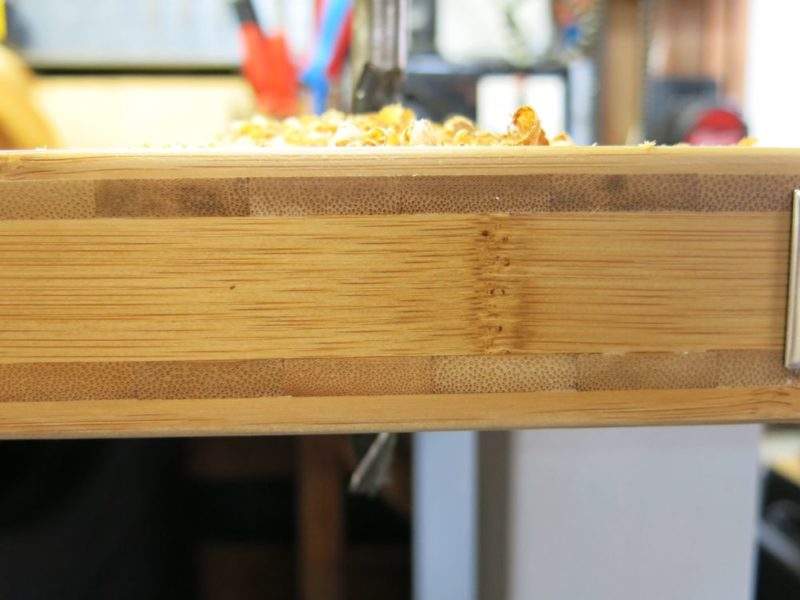
One of several tasks for the Makita Sub-Compact tools – drilling through solid bambooThe bamboo benchtop was no match for the Makita sub-compact drill

I used the 18V Sub-Compact Drill and Driver on a variety of tasks including installing recessed alarm sensors, drilling glass, assembling office furniture, installing a flat screen, installing a bench vise on a bamboo bench-top, removing a glass shower door assembly, installing closet railings, drilling into plaster, and general tasks for around the home. Some of that work was done off-site and these Sub-Compact tools were compelling to bring along since I suspected I might need more juice than a 12v might provide, but I also didn’t want to lug bulkier tools along. I dropped the Makita Sub-Compact Drill and driver into a tool bag filled with other tools and I didn’t feel like I was lugging my shop with me.

The bit got hot, but the drill stayed cool

The Makita Sub-Compact 1/2″ Driver Drill (XFD11)
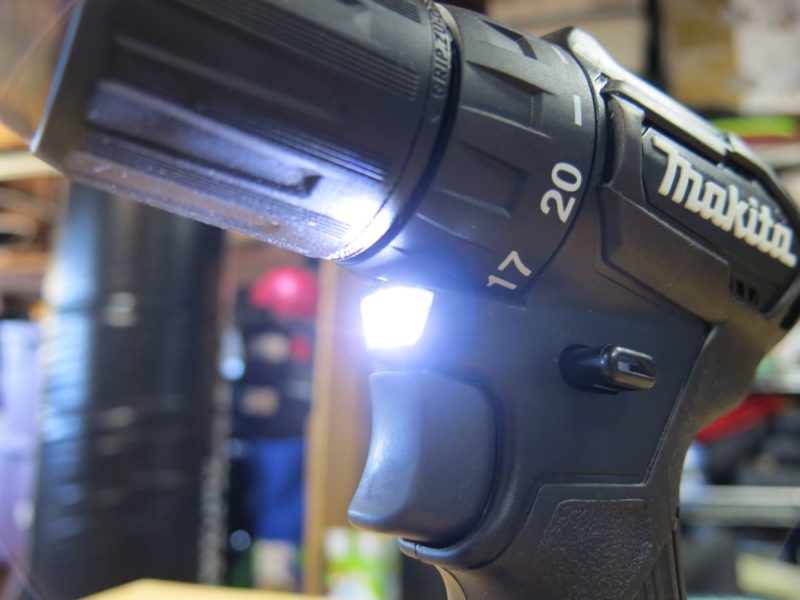
Lots of clutch settings and a bright LED. We didn’t use the clutch given that we had the sub-compact impact driver on call.

This nimble powerhouse delivers 0-1700 RPM with a tiny 6-3/8″ overall length. You can adjust fastening torque from 20 different settings via the ring next to the chuck, or set it in drill mode to disable the clutch. The tool features two speeds, with the higher speed intended for lower-load activities. I found the optional belt clip handy given that the tool isn’t likely one you’ll slip into your toolbelt pouches. That’s one downside to the Sub-Compact line – 12v tools (assuming you’re using a lower capacity slim battery) are sleek enough that many users store them in their tool pouches. Despite the Sub-Compact’s very trim size, you won’t be likely to do that given the bulkier 18V form-factor. One little known fact is that you can use this tool like a manual screwdriver by switching the forward/reverse switch to neutral. However Makita recommends you don’t get carried away and try to loosen rusted lugnuts this way. Frankly, assuming you have both these tools on hand, you’ll probably want to use the driver drill more or less exclusively for drilling and the Sub-Compact Impact Driver for fasteners.

The Makita sub-compact drill / driver drilling out a dense door frame for a home automation sensor.

The Makita Sub-Compact Impact Driver (XDT15)

Once the holes were drilled, the Makita sub-compact impact driver stepped in to snug up the beefy hardware.

While not exactly ninja-quiet, the impact driver delivers a punishing 0-3900 impacts per minute to coerce fasteners into submission. It sports an even smaller 5-5/16″ overall length, making it ideal for tight-quarters fastener combat. At the base of the tool, you’ll find a somewhat confusing array of options for controlling the impact force. I’ll walk through each here, since they are not intuitively obvious (or, they weren’t to me anyway).

The indicator lights/settings weren’t quite as intuitive as we’d like.

There are three separate areas with indicator lights “S” for “Soft”, “H” for Hard and “A” for Assist Mode. Soft mode is engaged when just the light under the S is lit. It’s best for working with smaller fasteners and more delicate materials. Maximum impacts in S mode is 1600 IPM. If you’re in “H” or hard mode both the S and H lights are lit. I found this a little confusing as typically indicator lights are on one setting or another, not both. Presumably Makita lit both to indicate you can still operate the tool in the lower IPM range, but I think a single indicator light would make things more clear to users. In hard mode the tool delivers up to 3900 IPM’s. Plenty of impacts for most screws and reasonably-sizes bolts out there. Lastly, “A” or assist mode will automagically start screws slow and then gear up to higher speeds and impacts once you’re on track. This is great for longer fasteners and if you’re tool lazy to adjust speed yourself. “A” mode has the same maximums as the Hard setting by the way. In a world of Low-Medium-High or 1-2-3 settings, I think S-H-A isn’t as clear as it could be.

A single push button makes swapping batteries a snap.

Both tools have an onboard LED light just under the chuck / bit holder that lights during operation and stays lit about 10 second after. The light position casts a pretty significant shadow and isn’t super-bright, but it’s still useful if you’re working in a dark space. I found it very helpful working in a couple dark closets. As with many other Makita tools, you’ll find a fuel gauge on the battery itself rather than on the body of the tool, which is handy to for checking charge level on batteries that aren’t slid into a tool.

The 18v batteries have onboard charge status, handy for checking charge even if the battery isn’t hooked up to a tool.

Another nice bonus to the 18V battery is that it makes a much more stable stand than trying to balance the barrel-style 12V battery tools (many of which will simply fall over). You can set these Makita Sub-Compact tools on the ground, a nearby shelf or table and they’re ready to grab and go.

Both drill and driver stand up easily and are very stable when compared to trying to stand up a 12v barrel-style battery

The 18V LXT Sub-Compact Combo Kit (Cx200RB) we tested comes in a cube style carrying case that, sadly, is not black (which means it does NOT match my ninja outfit). While it handily fits the tools and charger, with room to spare for batteries and accessories, I can’t see carrying that cube anywhere, even with the included shoulder strap. The cube is bulky and better-suited to storing your lunch. With ninja-style tools like these, I’ll instead tuck them away in more agile storage when transporting them.

While functional and spacious, we weren’t in love with the cube-style carrying case.

The new 18V LXT Sub-Compact line from Makita has a lot going for it: great ergonomics, compact size, light weight and plenty of power for most applications you would want to use them for. Whether you’re a pro looking to minimize how much gear you’re toting, or you’re a homeowner looking for the convenience of a 12v tool, with many of the power advantages of an 18V tool, the Makita Sub-Compact Drill/Driver and Impact Driver is a great value and a winning combination. Plus, they’re black, which is awesome!

makita sub compact kitBuy the Makita CX200RB kit from our sponsor The Home Depot

You can find the 18V LXT Sub-Compact Combo Kit (Cx200RB) for a very reasonable $239 price tag at The Home Depot. The kit includes both Sub-Compact tools, 18V charger, two 2.0AH batteries and the lunch box, errr, I mean storage case.

Buy Now - via Home Depot

I acknowledge that The Home Depot is partnering with Home Fixated in sponsored content. As a part of the sponsorship, Home Fixated is receiving compensation for the purpose of promoting The Home Depot. All expressed opinions and experiences are our own words. This post complies with the Word Of Mouth Marketing Association (WOMMA) Ethics Code and applicable Federal Trade Commission guidelines.

Wednesday, December 20, 2017

Winter Custom Yachts 60 Wolverine Boat Review

Read article : Winter Custom Yachts 60 Wolverine Boat Review

I met Tim Winter and Capt. Rocky Hardison in Morehead City, North Carolina, as Winter was finishing up the last details prior to delivering Wolverine, his newest 60-footer, to the Fletcher family, and before it made its public debut at the Palm Beach Boat Show in March.

Wolverine’s curved transom, flowing broken shear line accentuated by her intermediate bumper, and beautiful Carolina flare met my expectations the moment I stepped on the dock. The sight of Hull No. 22 from Winter Custom Yachts triggered the special place in my heart for custom Carolina boats. I had watched the progress of the build for the past few months and eagerly awaited stepping aboard the ­beautiful rig to see what Winter had done with his ­latest creation.

Specs:

LOA: 60'6" | Beam: 18'3" | Draft: 5' | Disp.: 79,500 lb. | Fuel: 1,925 gal.
Water: 250 gal. | Power: Twin Caterpillar C32 ACERT 1,700 hp diesels


“We built Wolverine to be a traveling boat as well as a family boat. They will fish tournaments as a family, and it’s not important to them whether they win or lose, as long as they’re all spending time together,” says Winter. “Wolverine will spend time in the Bahamas, and then fish the tournaments in North Carolina and Bermuda. She will head for the Pacific next year. The Fletchers wanted a boat capable of extensive travel with extra fuel, the ability to fish for multiple species, and all the amenities of home so they can live aboard.”

Cockpit

Wolverine’s cockpit is built to allow the family to have plenty of room to fish and have a good time together. A Release Marine chair with a massive eight-hole rocket launcher and tray is the ­centerpiece of the cockpit. Winter is a man of details: He placed tuna tubes on both the port and starboard gunwales with lids that are a positive fit into the tuna tubes. This simple design element will eliminate rattling and movement while underway. There are also tuna tubes on the transom within the combination livewell/fish box. The mezzanine is complete with gaff, mop and chamois storage below the seat, and also features cockpit freezers on both sides. There is additional storage, including a teak tackle locker to starboard under the overhang. The ice maker dumps into an upper compartment beneath the seat and flows down into a lower box within the step.

Accommodations

Upon entering the spacious salon through the teak sliding door, you immediately notice the beautiful teak veneer work, which was cut from the same log to produce a consistent grain throughout the living areas. A flat-screen TV is tucked inside a teak cabinet to starboard. The aft end of the cabinet contains a storage area for cameras, and is heated by the engine room to minimize lens fogging when traversing from the cool salon to the cockpit on a hot day. Built into the forward end of the cabinet is a comfortable bucket jump seat facing the L-shaped sofa to port. A raised settee sits forward on the starboard side. Below the settee are two drawers that can house an assortment of lures and teasers.

The galley is forward to port and features a pair of Sub-Zero refrigerator/freezer combos. A Keurig coffee maker rises up from under the countertop to utilize space that is typically wasted. A cooktop sits forward, along with a microwave in the forward cabinets; the upper cabinets contain custom CNC-cut dividers for cookware and pantry items.

The three staterooms below are accessed by a stairway: To port is the master with a queen bed and an accompanying bath with full-size shower. Moving forward is an over/under berth that is full of storage for rods, clothing and linens, and the day head is just aft. A tackle/rod storage closet sits between the laundry closet and the starboard bunkroom with three bunks. Typically, bunks fold up to allow access to storage, but Winter designed drawers onto the face of the bunks to make accessing this usable space easier. Winter incorporated another unique feature that affords an extra bunk: One of the lower bunks extends below the stairwell to create an additional sleeping area.

Engine Room

The Seakeeper 16 is located directly below the access to the engine room from the mezzanine. Wolverine’s engine room is spacious, allowing ample room to access the outside of the engines. All wiring is concealed behind accessible panels, creating a clean, visually appealing snow-white engine room. The dual 21.5 kW Caterpillar generators are aft of the engines and are easily accessed, just like the rest of the systems on board.

Bridge

The helm console sits port to center with a faux-teak electronics console, pod and dash. Winter typically mounts the electronics under a door, but Wolverine has three Simrad MO19-T monitors mounted to a black acrylic background with two rows of Bocatech switches for pumps and lights, producing a sleek array of electronics. A lid to port of the helm pod houses the Simrad autopilot, trim tabs, FLIR camera and the VHF command mics. Two Release Marine helm chairs sit behind the helm, and bench seating is forward of the console and on the starboard side of the bridge. A freezer under the forward bench can accommodate plenty of bait or food for when the boat is ­traveling. Other handy features include an air compressor to fill polyballs, as well as a separate washdown for cleaning the bridge after a long day of fishing.

Construction

Boatbuilding methods have advanced in recent years, but many builders continue to utilize plywood hulls. Wolverine is no exception, incorporating a triple-plank fir bottom and fir stringers. The remainder of the boat is constructed from Diab closed-cell foam to create a strong and light structure, and all of the hatches and hatch gutters are molded fiberglass. All areas of the boat are ventilated with forced air; Winter also utilizes an Arid dry-vacuum system to keep all bilge areas completely dry.

Performance

A pair of 1,700 hp Caterpillar C32 ACERT engines matched with ZF gears turns the set of Veem propellers to provide the power for Wolverine.

As we approached Beaufort Inlet, Capt. Hardison eased the throttles forward, and she quickly raised out of the water and accelerated with no bow lift. She settled into her cruising speed of 31-plus knots at 1,900 rpm while burning 118 gph; wide open, Wolverine makes 42 knots at 2,360 rpm with a fuel burn of 180 gph.

It was a calm day, so we were unable to observe how she handles in rough water. However, as any Winter owner will attest, the boat will exceed your ­expectations in any sea condition.

“Wolverine is a culmination of all I have learned in the previous 21 boats, and I could not be prouder,” said Winter as we returned to the dock. In the custom-boatbuilding arena, Winter is proving to be a hard worker with a talented team of craftsmen seeking to learn and make each boat better than the last.

Sunday, November 19, 2017

Greenbuild exhibitors get down to business

Read article : Greenbuild exhibitors get down to business

image

TORONTO — The exhibits at the annual Greenbuild Show continue to become increasingly practical and pragmatic, much like the university competition that is the Solar Decathlon in Washington that wrapped up earlier in October. There was little to see that was far outside of the mainstream.

The U.S. Green Building Council's annual Greenbuild International Conference & Expo featured four days of networking, educational sessions, green building tours, master speakers and plenary events. The 140,208 gross square meters (1.5 million-sq.ft.) of the North and South building expo floors of the Metro Toronto Convention Centre were fully sold out and comprised of 1,700 booths.

Related Articles:
Greenbuild 2010 showcases innovative solutions

The 23,000 attendees must have been in the educational sessions because they weren’t on the show floor, making it easy for CONTRACTOR to speak with any of the exhibitors at any time. Kohler stood out with a 40-ft. x 40-ft. booth that was made of recycled barn wood. Kohler has converted all faucets from its residential lines to meet new low-lead guidelines.

Additionally, the company unveiled two advanced commercial faucets at Greenbuild that now comply with the lead regulations, the Gooseneck and the Streamlined Touchless faucets. In addition to their low lead content, the faucets boast a touchless design that uses Kohler’s proprietary Insight adaptive infrared sensor technology and runs off the industry’s first ever 30-year Hybrid Energy System. The firm also showed off its enameled cast iron products that are made from at least 80% recycled material.

Reduce, reuse and recycle was the theme for Charlotte Pipe & Foundry. The company pointed out that its cast iron pipe is made from 100% recycled material from everything from refrigerators to car engines. Charlotte’s RePVC plastic pipe has recycled material in the center with virgin material in the inner and outer skins. It is the first NSF-listed Schedule 40 pipe made with recycled materials. The company’s ReUze purple CPVC pipe is made for rainwater and graywater systems and is labeled, “Warning: Non-potable water do not drink.” ReUse meets all the same requirements as FlowGuard Gold CTS CPVC domestic water piping.

Sloan Valve showed off its Solis line of PV-power flushometers and hand-washing faucets. The company displayed a brand-new faucet line, Basys, which includes automatic shutoff, visible diagnostics, interchangeable parts, multiple power options, automatic line purge and three flow options. The crown of the Basys faucet is easily removed for access to all the internal parts. Sloan also showed off its Greenbuild-appropriate Aqus graywater system that collects water under the lav, cleans it, stores it and then uses it to flush the adjacent toilet. Aqus works with most toilets, even dual flush, and it is UPC-listed.

American Standard displayed its new Decorum FloWise high-efficiency urinal designed for luxury buildings, clubs and resorts. Decorum uses 0.5-gpf, half the amount of a standard urinal, meeting the U.S. Environmental Protection Agency’s WaterSense program requirements. Moreover, commercial specifiers can now select thirty-four pairings of commercial urinals, toilets and flush valves to make commercial specifying more efficient. In addition to streamlining the specifying function, this consolidated process helps expedite delivery and paperwork for large volume commercial projects. The company also showed its Studio dual flush toilets. These luxury performance (dubbed LXP) toilets offer users the choice between a standard 1.6-gpf for solids or 1.1-gpf for liquids, meeting WaterSense criteria for using 20% less water than standard models.

The green emphasis at Delta Faucet was that all of its residential lavatory faucets flow at 1.5-GPM at 60-PSI. A majority of Delta products are also WaterSense labeled. The WaterSense label provides consumers with assurance that bathroom faucets, such as Leland, Lahara, Addison, Dryden, and Victorian, are approximately 30% more water-efficient than their 2.2-GPM counterparts. In the commercial sector, all Delta brand lavatories have a 1.5-GPM outlet as standard, with the option of 0.5-GPM for further savings. In addition to contributing LEED credits, Delta Faucet Co. also provides electronic and manual commercial metering products for reassurance that the faucet won’t be left running.

Moen recently introduced new eco-performance retail kitchen faucets that allow users the option to switch between three water-flow settings. For everyday tasks that require constant, yet low water flow, such as washing dishes or preparing foods, homeowners can choose eco-performance standard stream or aerated spray modes. These settings provide a reduced flow rate of 1.75-GPM. For tasks that require a set amount of water, however, such as filling a pot or pitcher, they can switch to the fast-fill mode, which flows at 2.2-GPM. Moen’s Commercial Division has created Eco-Performance shower systems that are certified to meet WaterSense criteria, with flow rates as low as 1.5-GPM. Commercial shower systems combine Moen’s Eco-Performance showerheads with the Posi-Temp valve to reduce water consumption and eliminate shower shock.

ClimateMaster introduced the Tranquility Modular Water-to-Water (TMW) Series in 360 (30-ton) and 600 (50-ton) sizes. This water-to-water series offers high efficiency with advanced features and application flexibility at competitive prices. As ClimateMaster’s most adaptable EarthPure HFC410A refrigerant units, the TMW series can be used for radiant floor heating, snow/ice melt, chilled water for fan coils, hot/chilled water for make-up air, and many other types of HVAC applications. The TMW 360-600 has advanced digital controls for BAS interface, four LEDS for unit status and compressor isolation switches. Other features include front and back service access panels that allow for side-by-side installation; larger capacity, requiring fewer units per job site; staggered top water connections for ease of manifolding multiple units; and DDC controls with 11 safety protections for the refrigeration circuits.

Aquatherm displayed its Greenpipe recyclable polypropylene-random (PP-R) piping system designed for potable water applications. The pipe is joined by heat fusion. The PP-R material used in Aquatherm pipe is an abundant byproduct of petroleum processing. It also requires far less energy for initial production than other piping materials, and involves none of the environmental effects associated with mining operations.

Additionally, the pipe has a natural R-value of 1-1.5 depending on pipe size and SDR. Aquatherm Lilac, developed for graywater applications such as toilet/drain water, rainwater collection, laundry/cleaning, irrigation, and similar uses, is comparatively low priced and has a list of steadily growing code approvals (it currently meets ASTM F2389 and CSA B137.11).

McQuay International previewed the new Daikin McQuay SmartSource Water Source Heat Pump (WSHP) product line during Greenbuild. The line includes the industry’s first variable-speed inverter WSHP. The new line of water source heat pumps comes in a range of sizes and options that include smart dehumidification, waterside economizers and internal electric heat. The SmartSource platform is geothermal ready with factory-mounted loop water pumps. McQuay also introduced the Daikin McQuay Rebel rooftop unit. The new unit claims energy efficiency at almost double the ASHRAE 90.1 minimum standard, while functioning as a Variable Air Volume heat pump unit down to three tons. In addition, the Daikin McQuay Rebel is the first packaged rooftop system to use variable heat pump technology with auxiliary gas heat, as well as, Daikin’s advanced variable inverter scroll compressor.

Taking the spotlight in Niagara’s Greenbuild booth this year was the Stealth Ultra-High-Efficiency Toilet, featuring 0.8-gpf technology. The Stealth was set-up for live demonstrations for Greenbuild attendees. For the shower, Niagara displayed the high-efficiency Sava Spa Showerhead and the Tri-Max Showerhead with three flow rate options. With a new line of faucet aerators, the Niagara booth showcased both kitchen and bathroom faucet aerators, including its new Versa Kitchen Aerator, Tri-Max Aerator, Lead-Free Aerator and Bathroom Sink Aerator. Niagara also introduced the Energy Saving Smart Surge Protector and the Eco-IQ Programmable 5-2 Thermostat.

Jaga, a European manufacturer of stylish panel radiators and unique fan-powered hydronic baseboard, announced that it has filled out its U.S. representation and it is available across the U.S. Jaga’s product lines include the Energy Savers low-H20 radiators and the Eye Catchers line of visually appealing heating solutions. Because of its heat exchanger technology, Jaga’s “Energy Savers” radiators require only 10% the water of traditional panel radiators, resulting in a 12% energy savings. This lowers energy bills and reduces annual CO2 emissions per dwelling by almost a ton. Jaga’s Eye Catchers heating solutions use innovative materials and production techniques to elevate the radiator from a design object to art.

Encore, a division of Component Hardware Group Inc., has introduced a hygienic, water-conscious solution for converting a standard faucet into a low-flow metering faucet. The One-Tap Metering Aerator fits most faucets with an existing aerator, enabling a speedy, hassle-free transition to a water-conserving faucet. The One-Tap Metering Aerator offers a cost-effective alternative to electronic faucets. Water flow starts with a single touch and the adjustable metering activator automatically stops the flow in two to 20 seconds. This action reduces the risk of cross-contamination and provides up to 87% water savings over conventional faucets. The One-Tap Metering Aerator comes with a tamper-proof housing, installation/adjustment key and 15/16-27 female by 55/64-27 female thread adapter to fit most standard faucets with aerators.